

Decorative stainless steel tubes: Characteristics, types, and applications
Decorative stainless steel tubes are widely used in interior and exterior applications, railings, staircases, and various household products thanks to their attractive surface finish, corrosion resistance, and ease of fabrication. Depending on the operating environment and budget requirements, customers can choose from stainless steel grades such as 201, 304, 316, or 430.
In this article, SONHA SSP provides a comprehensive overview of the characteristics, classifications, and applications of decorative stainless steel tubes.
1. What Are Decorative Stainless Steel Tubes?
Decorative stainless steel tubes, also known as ornamental stainless steel tubes, are manufactured from stainless steel with a high chromium content. These products undergo surface finishing and polishing processes to achieve a refined appearance, with finishes ranging from BA (Bright Annealed) to high-gloss polished surfaces of up to 600 Grit.
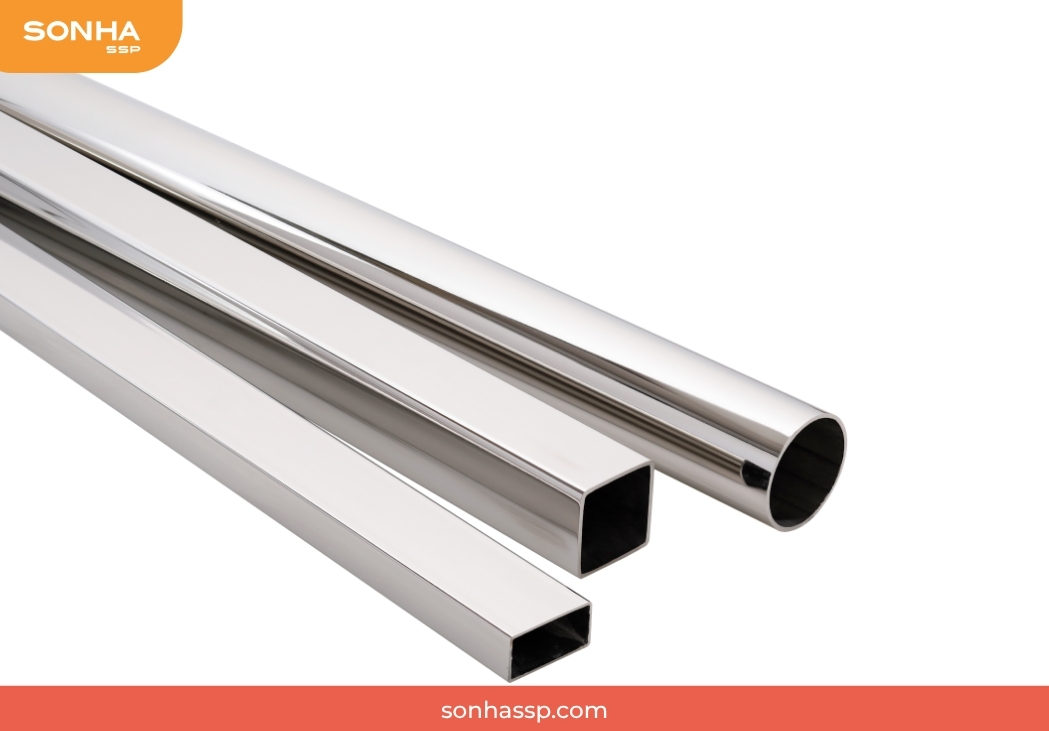
Son Ha SSP decorative stainless steel pipes
These products can be manufactured in various shapes, including round, square, rectangular, and custom profiles. They are primarily used in architectural and decorative applications, both indoors and outdoors, such as staircase handrails, window and gate grilles, table and chair frames, and household appliances that require high aesthetic appeal.
2. Characteristics of Decorative Stainless Steel Tubes
Thanks to their distinctive alloy composition and advanced manufacturing processes, decorative stainless steel tubes offer several outstanding technical properties, meeting the demanding requirements of architectural design and construction applications:
- Excellent Aesthetic Appeal: The tubes feature smooth, highly polished surfaces with a brilliant finish. They resist dirt accumulation, are easy to clean, and maintain their elegant appearance over time.
- Good Mechanical Strength and Ductility: These products offer excellent workability, allowing for bending, cutting, welding, and other fabrication processes while minimizing the risk of weld cracking or tube deformation when properly processed.
- Effective Corrosion Resistance: Depending on the stainless steel grade, the tubes can resist oxidation and corrosion under normal environmental conditions, humid environments, and exposure to certain mild chemicals.
- Strict Manufacturing Standards: Many high-quality decorative stainless steel tubes are manufactured in accordance with international standards such as ASTM A554, ensuring consistent wall thickness, dimensional accuracy, and compliance with specified tolerances.
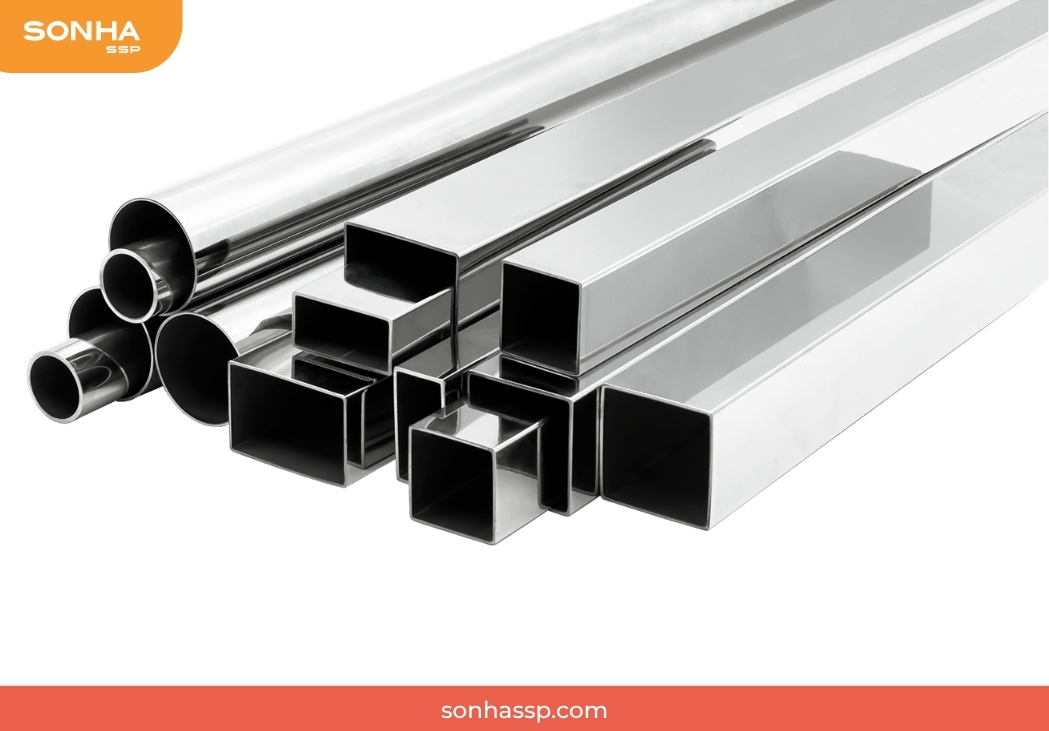
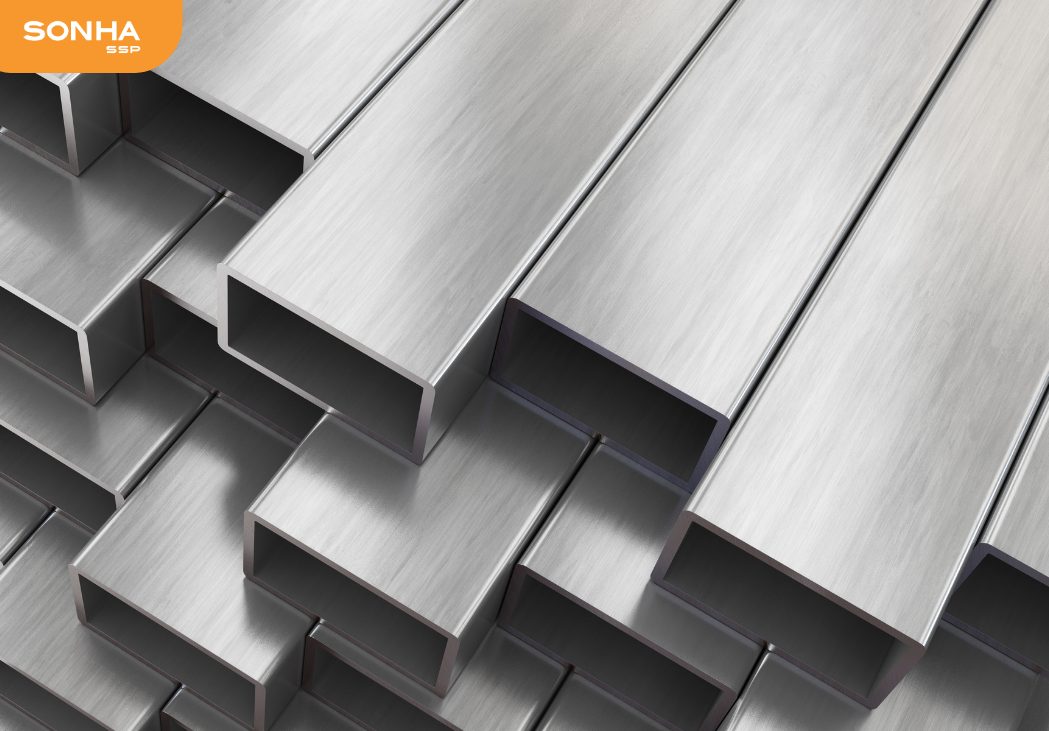
Decorative stainless steel tubing in various shapes: round, square, and rectangular
3. Common Types of Decorative Stainless Steel Tubes
Decorative stainless steel tubes are available in various grades, each with different chemical compositions and material properties, making them suitable for specific operating conditions and applications. Below are the four most commonly used stainless steel grades for decorative tubing.
3.1 Decorative Stainless Steel 201 Tubes
Chemical Composition and Technical Characteristics: Stainless Steel 201 belongs to the austenitic stainless steel family. It contains a lower nickel content, with manganese (Mn) and nitrogen (N) partially replacing nickel. This composition provides good mechanical strength, hardness, and impact resistance while maintaining an attractive surface finish under normal indoor conditions. Advantages: Stainless Steel 201 is generally more affordable than higher-nickel stainless steel grades, making it a cost-effective material for large-scale projects with limited budgets. Practical Applications: Commonly used in dry indoor environments with minimal exposure to rain, high humidity, or corrosive chemicals. Typical applications include household furniture frames, display shelves, clothing racks, indoor railings, and interior door handles.
3.2 Decorative Stainless Steel 304 Tubes
Chemical Composition and Technical Characteristics: Stainless Steel 304 is one of the most widely used stainless steel grades. It typically contains approximately 18% chromium and 8% nickel, forming a stable austenitic structure that provides excellent general corrosion resistance. This composition makes Stainless Steel 304 suitable for a wide range of indoor and outdoor applications, including environments exposed to moisture and normal weather conditions.
Advantages: Offers excellent corrosion resistance, good formability, and weldability. It can be bent, cut, welded, and polished using appropriate fabrication techniques while maintaining desirable mechanical properties. Its surface can achieve a high-quality finish and retain its appearance over time with proper maintenance.
Practical Applications: Widely used in outdoor architectural structures and premium interior applications requiring durability and aesthetic appeal. Typical uses include balcony railings, glass staircase posts, entrance gate frames, villa fences, hospital handrails, and decorative building facade systems.
3.3 Decorative Stainless Steel 316 Tubes
Chemical Composition and Technical Characteristics: Stainless Steel 316 is a premium austenitic stainless steel grade containing approximately 2–3% molybdenum (Mo). The addition of molybdenum enhances the stability of the passive protective layer on the steel surface, improving resistance to localized corrosion, particularly pitting and crevice corrosion in chloride-containing environments.
Advantages: Provides superior corrosion resistance compared with common decorative grades such as 201 and 304, especially in marine, coastal, and certain chemical environments. With appropriate material selection, design, and maintenance, Stainless Steel 316 can deliver a long service life even under demanding environmental conditions.
Practical Applications: Particularly suitable for coastal construction projects, areas with high airborne salt concentrations, seaside resorts, swimming pool facilities, and outdoor architectural structures exposed to salt spray and harsh weather conditions.
3.4 Decorative Stainless Steel 430 Tubes
Chemical Composition and Technical Characteristics: Stainless Steel 430 belongs to the ferritic stainless steel family. It typically contains approximately 16–18% chromium with little or no intentionally added nickel and exhibits magnetic properties.
Advantages: Generally offers a lower material cost than common austenitic stainless steel grades. It provides good formability and adequate oxidation resistance for many indoor applications. However, its corrosion resistance is generally lower than that of Stainless Steel 304 and may be insufficient for humid, chloride-rich, or highly corrosive environments.
Practical Applications: Suitable for decorative indoor products with limited moisture exposure, economical household appliances, display shelving, decorative frames, and other components that are not subjected to demanding outdoor conditions.
4. Practical Applications of Decorative Stainless Steel Tubes
Combining aesthetic appeal with functional material properties, decorative stainless steel tubes are widely used in various industries, from construction and architecture to household product manufacturing.
Some of the most common applications include:
- Interior Decoration: Used to manufacture table and chair frames, handrails, partitions, decorative frameworks, furniture components, and other products requiring attractive, polished surfaces.
- Railings and Staircases: Stainless steel tubes can be used as handrails, supporting posts, and other components in railing and staircase systems.
- Exterior Decoration: Suitable for building facades, gates, fences, and various outdoor architectural elements. For exterior applications, the stainless steel grade should be selected according to exposure to moisture, salt, and other corrosive agents.
- Household Products: Decorative stainless steel tubes are also used to manufacture household appliances, furniture, and mechanical components where surface appearance and durability are important.
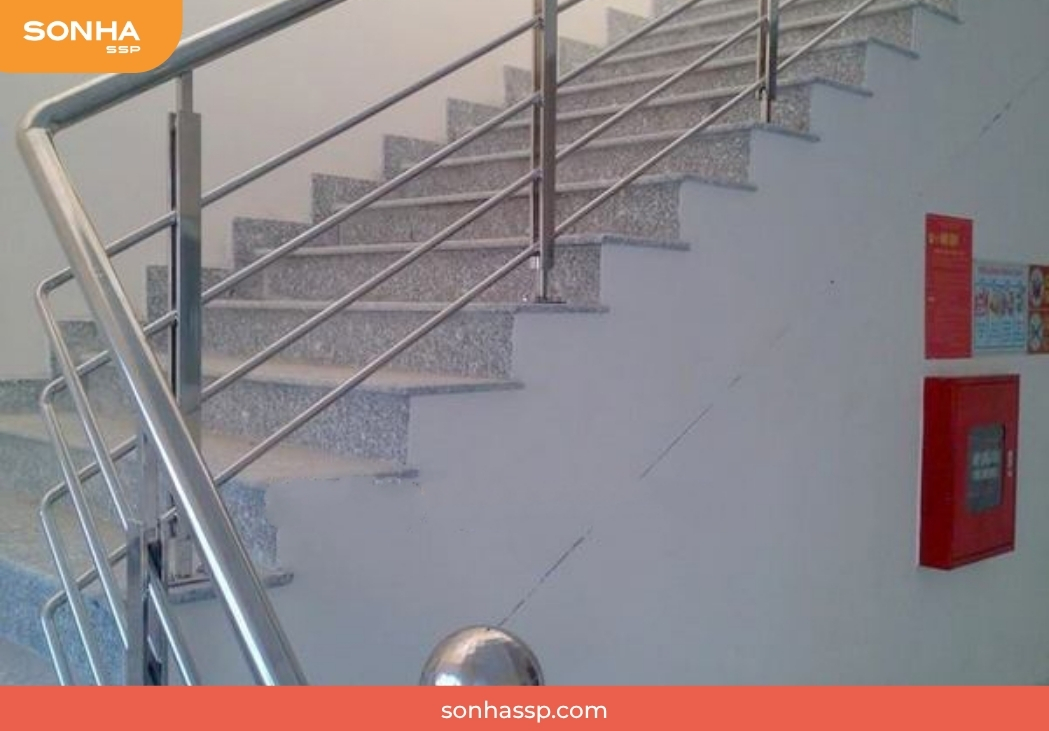
Decorative stainless steel tubing used for stair railings
5. SONHA SSP Decorative Stainless Steel Tube Price List
The prices of decorative stainless steel tubes are not fixed and may vary depending on the stainless steel grade, dimensions, wall thickness, surface finish, and manufacturer. In Vietnam, SONHA SSP offers a wide range of decorative stainless steel pipes and tubes, including square and rectangular hollow sections, manufactured using advanced production technologies and in accordance with applicable international standards. For the latest decorative stainless steel tube prices based on your required specifications and order quantity, please contact SONHA SSP via WhatsApp (+84) 986434303 or visit sonhassp.com for detailed product consultation and quotations.
| Thickness | 0.3 | 0.4 | 0.5 | 0.6 | 0.7 | 0.8 | 0.9 | 1 | 1.2 | 1.5 | 1.8 | 2 | 2.5 | 3 | Selling price | |
| Outer diameter | ||||||||||||||||
| in | mm | Contact | ||||||||||||||
| 8 | v | v | v | v | v | v | v | v | Contact | |||||||
| 3/8 | 9.5 | v | v | v | v | v | v | v | v | Contact | ||||||
| 10 | v | v | v | v | v | v | v | v | Contact | |||||||
| 12 | v | v | v | v | v | v | v | v | v | v | Contact | |||||
| 1/2 | 12.7 | v | v | v | v | v | v | v | v | v | v | Contact | ||||
| 5/8 | 15.9 | v | v | v | v | v | v | v | v | v | v | Contact | ||||
| 18 | v | v | v | v | v | v | v | v | Contact | |||||||
| 3/4 | 19.1 | v | v | v | v | v | v | v | v | v | v | v | Contact | |||
| 20 | v | v | v | v | v | v | v | v | Contact | |||||||
| 7/8 | 22.2 | v | v | v | v | v | v | v | v | v | v | Contact | ||||
| 1 | 25.4 | v | v | v | v | v | v | v | v | v | v | v | Contact | |||
| 1-1/4 | 27.2 | v | v | v | v | v | v | v | v | v | v | v | v | Contact | ||
| 30 | v | v | v | v | v | v | v | v | v | v | Contact | |||||
| 1-1/4 | 31.8 | v | v | v | v | v | v | v | v | v | v | Contact | ||||
| 32 | v | v | v | v | v | v | v | v | v | Contact | ||||||
| 33.34 | v | v | v | v | v | v | v | v | v | v | v | Contact | ||||
| 35 | v | v | v | v | v | v | v | v | v | Contact | ||||||
| 1-1/2 | 38.1 | v | v | v | v | v | v | v | v | v | v | v | Contact | |||
| 40 | v | v | v | v | v | v | v | v | v | Contact | ||||||
| 41.3 | v | v | v | v | v | v | v | v | v | Contact | ||||||
| 42.7 | v | v | v | v | v | v | v | v | v | v | v | Contact | ||||
| 48.26 | v | v | v | v | v | v | v | v | v | v | Contact | |||||
| 2 | 50.8 | v | v | v | v | v | v | v | v | v | v | Contact | ||||
| 60.5 | v | v | v | v | v | v | v | v | v | Contact | ||||||
| 2-1/2 | 63.5 | v | v | v | v | v | v | v | v | v | Contact | |||||
| 3 | 76.2 | v | v | v | v | v | v | v | v | Contact | ||||||
| 89. | v | v | v | v | v | Contact | ||||||||||
| 101.6 | v | v | v | Contact | ||||||||||||
Son Ha SSP Decorative Stainless Steel Pipe Specifications Table
In conclusion, decorative stainless steel tubes are an excellent material solution, offering outstanding aesthetic appeal and long-lasting durability for modern architectural projects. Understanding the characteristics of different stainless steel grades and choosing high-quality products from reputable manufacturers such as SONHA SSP can help optimize investment costs while ensuring the long-term durability and appearance of construction projects.
Frequently Asked Questions (FAQs)
1. Which Is Better for Decorative Applications: Stainless Steel 304 or 201?
In terms of overall quality and corrosion resistance, Stainless Steel 304 generally outperforms Stainless Steel 201 due to its higher nickel content and favorable chromium composition. Stainless Steel 304 offers excellent durability for both indoor and outdoor applications, while Stainless Steel 201 is a more cost-effective option for dry indoor environments with minimal exposure to moisture and corrosive conditions.
2. What Are the Common Surface Finishes for Decorative Stainless Steel Tubes?
Common surface finishes for decorative stainless steel tubes include: BA (Bright Annealed): A smooth, bright, reflective surface finish; HL (Hairline): A brushed finish featuring fine, continuous linear patterns; 400–600 Grit Polished Finish: A highly polished surface that provides an attractive, glossy appearance for decorative and architectural applications. These finishes enhance the aesthetic appeal of stainless steel tubes, making them suitable for a wide range of modern interior and exterior designs.
If you are looking for a high-quality stainless steel pipe supplier, please explore our products and contact Son Ha SSP immediately via our Hotline at (+84) 986434303 for the fastest support and consultation!
>> You May Also Be Interested In:
Next latest post
[New] International standard industrial pipe specification reference chart

VIETNAM NATIONAL BRAND 2026 HONORS FIVE SON HA PRODUCTS
Stainless steel pipe standards – Latest comprehensive guide 2026