

[New] International standard industrial pipe specification reference chart
Industrial pipe specifications include outside diameter, wall thickness, length, steel grade, manufacturing method, and applicable standards. Understanding these parameters helps businesses select the correct specifications, calculate weight, and verify the pipe’s suitability for project or production system requirements.
1. Overview of industrial pipe specifications
When selecting industrial pipes, geometric dimensions, material properties, and technical application requirements must be considered simultaneously. These interrelated parameters affect the pipe’s weight, assembly compatibility, and ability to meet actual working conditions. A standard set of industrial pipe specifications typically includes:
-
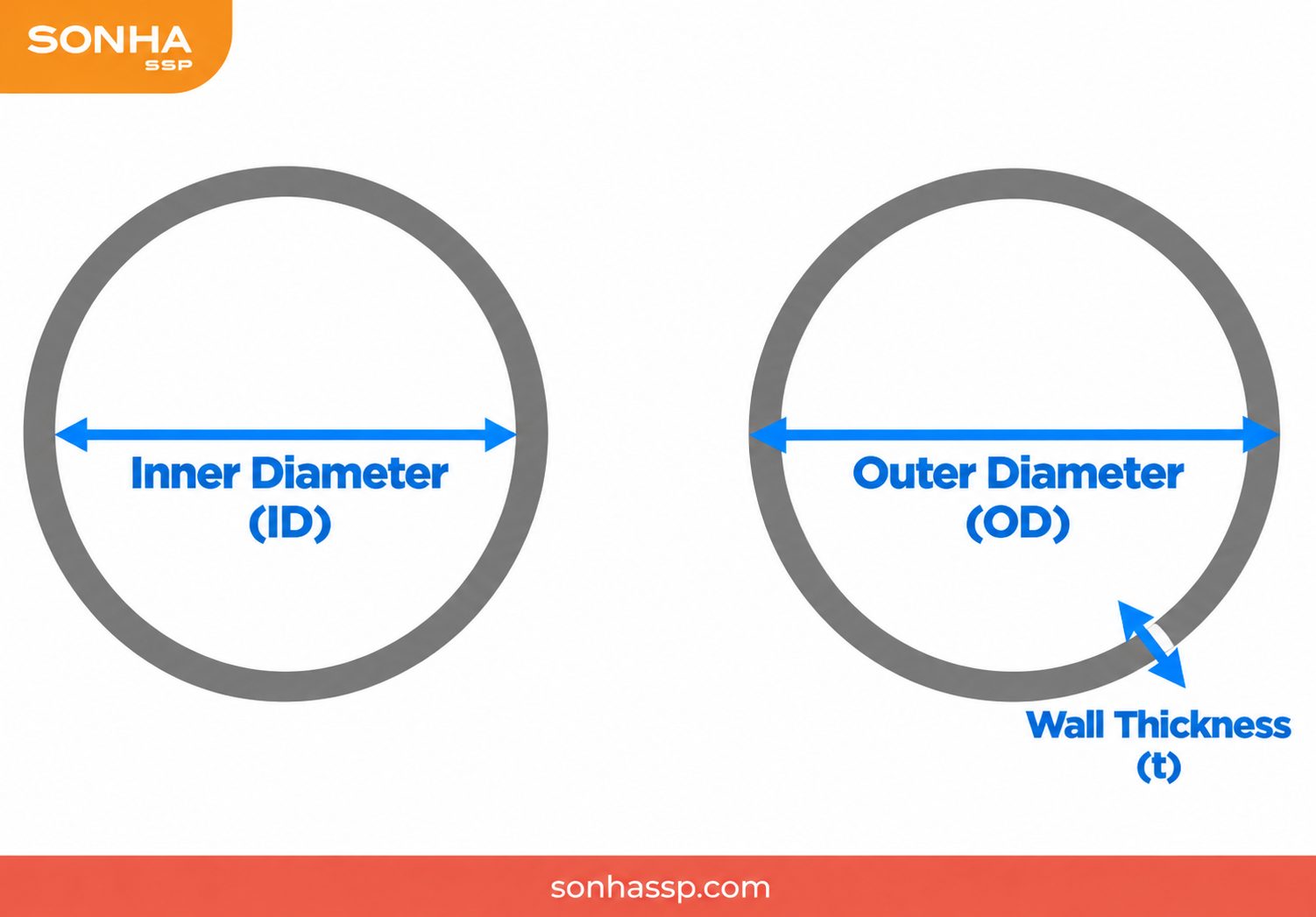
Outside Diameter (OD): The distance measured across the center from one outer edge to the other, which is crucial for determining assembly dimensions.
-
Nominal Diameter (DN/NPS): A conventional designation identifying pipe size according to the respective standard, which does not equal the actual measured outside diameter.
-
Wall Thickness (WT): The distance between the outer and inner surfaces of the pipe wall, typically measured in millimeters (mm), affecting the pipe’s weight and load capacity.
-
Pipe Length: The product length according to ordered specifications, which can be a fixed length or an agreed-upon length.
-
Steel Grade and Material Composition: Indicates the type of steel used (e.g., stainless steel 201, 304, 304L, 316, 316L, or 430), each with distinct mechanical properties and corrosion resistance.
-
Manufacturing Method: Commonly includes welded pipes and seamless pipes, with the selection depending on product standards and working conditions.
-
Technical Standards: Defines requirements regarding materials, dimensions, tolerances, testing, and product quality based on the scope of each standard.
Industrial pipe specifications and dimensional standards
Additionally, depending on the intended use, technical documentation may need to include tensile strength, yield strength, elongation, dimensional tolerances, heat treatment condition, and surface finish.
2. International standard industrial pipe specification reference chart
An industrial pipe specification reference chart helps buyers and technical departments verify specifications prior to ordering. However, standard dimensions may vary among fluid pipes, structural pipes, and mechanical stainless steel tubing. Therefore, it is necessary to identify the correct product type and applicable standards rather than using a universal dimension chart for all pipe types.
| Wall Thickness | SCH55 | SCH10S | SCH40S | ||
| Outside Diameter | |||||
| NPS | in | mm | |||
| 1/8 | 0.405 | 10.29 | 1.24 | 1.73 | |
| 1/4 | 0/540 | 13.73 | 1.65 | 2.24 | |
| 3/8 | 0.657 | 17.15 | 1.65 | 2.31 | |
| 1/2 | 0.840 | 21.34 | 1.65 | 2.11 | 2.77 |
| 3/4 | 1.050 | 26.67 | 1.65 | 2.11 | 2.87 |
| 1 | 1.1315 | 33.4 | 1.65 | 2.77 | 3.38 |
| 1-1/4 | 1.660 | 42.16 | 1.65 | 2.77 | 3.56 |
| 1-1/2 | 1.900 | 48.26 | 1.65 | 2.77 | 3.68 |
| 2 | 2.375 | 60.33 | 1.65 | 2.77 | 3.91 |
| 2 | 2.375 | 60.5 | 1.65 | 2.77 | 3.91 |
| 2-1/2 | 2.875 | 73.03 | 2.11 | 3.05 | 5.16 |
| 3 | 3.500 | 88.9 | 2.11 | 3.05 | 5.49 |
| 3 | 3.500 | 89.1 | 2.11 | 3.05 | 5.49 |
| 3-1/2 | 4.000 | 101.6 | 2.11 | 3.05 | 5.75 |
| 4 | 4.500 | 114.3 | 2.11 | 3.05 | 6.02 |
| 5 | 5.563 | 141.3 | 2.77 | 3.40 | 6.55 |
| 6 | 6.625 | 168.28 | 2.77 | 3.40 | 7.11 |
| 8 | 8.625 | 219.08 | 2.77 | 3.76 | 8.48 |
| Specification | 48.26 mm | >48.26 – 114.3 mm | >114.3 – 219.08 mm | ||
| Tolerance (mm) – OD (Outer Diameter) | -8 / +0.4 | 0.8 | -0.8 / +1.6 | ||
| Straightness | 7mm/6m | ||||
| Length tolerance (mm) | -0 / +20 | ||||
| Wall thickness tolerance (WT Tolerance) | 12.5% | ||||
Note: The thickness ranges provided above are for illustrative purposes only to show specifications that may be encountered in practice; they do not imply that every combination of diameter and thickness is covered by the relevant standards or is readily available. When placing an order, please refer to the tables for dimensions, tolerances, and product ranges specified in the applicable standard.
3. Applicable technical standards for industrial pipes
Technical standards serve as the basis for determining requirements regarding materials, dimensions, manufacturing methods, and pipe quality inspection. Among these, ASTM, EN/DIN, and JIS are the standard systems most frequently cited in the trade and application of industrial steel and stainless steel pipes. However, as each standard has its specific scope, they must be selected based on the intended application, not solely on the designation or steel grade.
ASTM, EN, DIN, and JIS standards applicable to industrial stainless steel pipes
3.1 ASTM Standards
ASTM is a standard system published by ASTM International, widely used in the materials and mechanical engineering industries. For industrial stainless steel pipes, it is necessary to distinguish between standards specifying material and manufacturing requirements and those specifying dimensions. Common standards include:
-
ASTM A312/A312M: Applicable to seamless, straight-seam welded, and heavily cold-worked welded austenitic stainless steel pipes intended for high-temperature and general corrosive service according to the standard’s scope.
-
ASTM A554: Applicable to welded stainless steel mechanical tubing intended for ornamental, structural, exhaust, and other applications where appearance, mechanical properties, or corrosion resistance are required.
ASTM A312 and ASTM A554 are not interchangeable in all applications. When selecting, it is essential to verify the correct scope of application, steel grade, dimensions, thickness, and testing requirements of the respective standards.
3.2 EN/DIN Standards
EN is the European standard system; DIN is the German national standard system. Many DIN standards are developed or published as DIN EN standards, reflecting the adoption of European standards in Germany. For industrial stainless steel pipes, EN 10217-7 is a key example. This standard specifies the technical delivery conditions for welded circular cross-section tubes made of austenitic and austenitic-ferritic stainless steel, intended for pressure and corrosion-resisting purposes at room, low, or elevated temperatures. When ordering according to EN/DIN, it is necessary to cross-reference the required standard number and version, material grade, dimensions, tolerances, and inspection conditions. It should not be assumed that specifications with the same diameter but belonging to two different standards are completely equivalent.
3.3 JIS Standards
JIS is the Japanese Industrial Standards system. In the field of stainless steel pipes, JIS G 3459 specifies the requirements for stainless steel pipes used in piping systems for corrosive environments, low temperatures, high temperatures, fire protection, and other related applications. Furthermore, JIS has specific standards for pipes serving different purposes, such as mechanical stainless steel tubing or light-gauge stainless steel tubes for ordinary piping. Therefore, the correct JIS code must be identified based on the application rather than merely making a general request for “Japanese standard stainless steel pipes.” When cross-referencing industrial pipe specifications according to JIS, buyers should check the outside diameter, thickness, material grade, tolerances, and accompanying inspection requirements. Complying with a standard does not automatically prove that the product is suitable for all pressure, temperature, or environmental operating conditions.
4. Son Ha SSP – A reputable and high-quality supplier of industrial stainless steel pipes.
In addition to selecting the correct industrial pipe specifications, businesses must consider the supplier’s production capacity, quality control capabilities, and compliance with standards. These are crucial factors in ensuring that the products meet the specific technical requirements of each project.
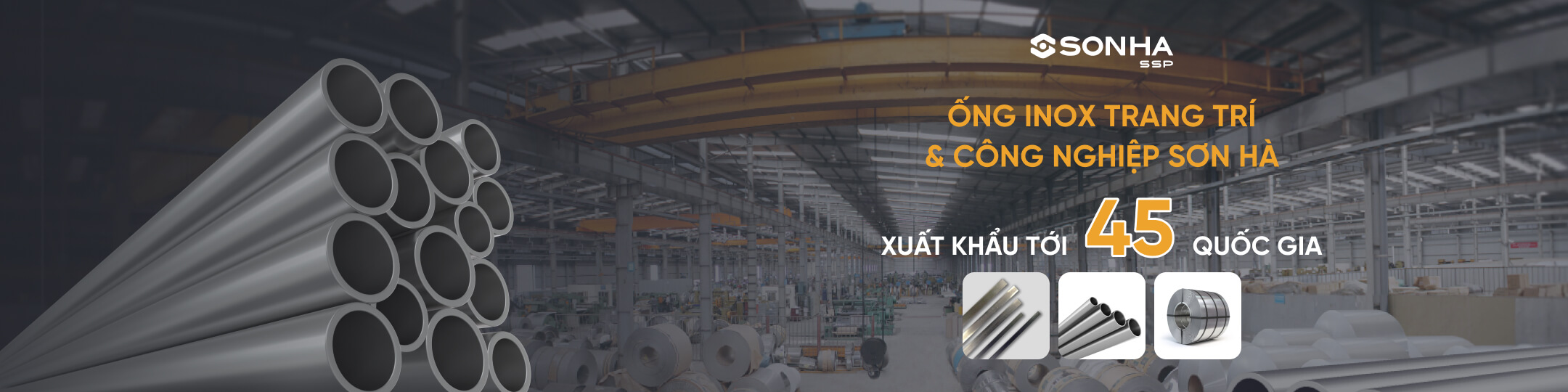
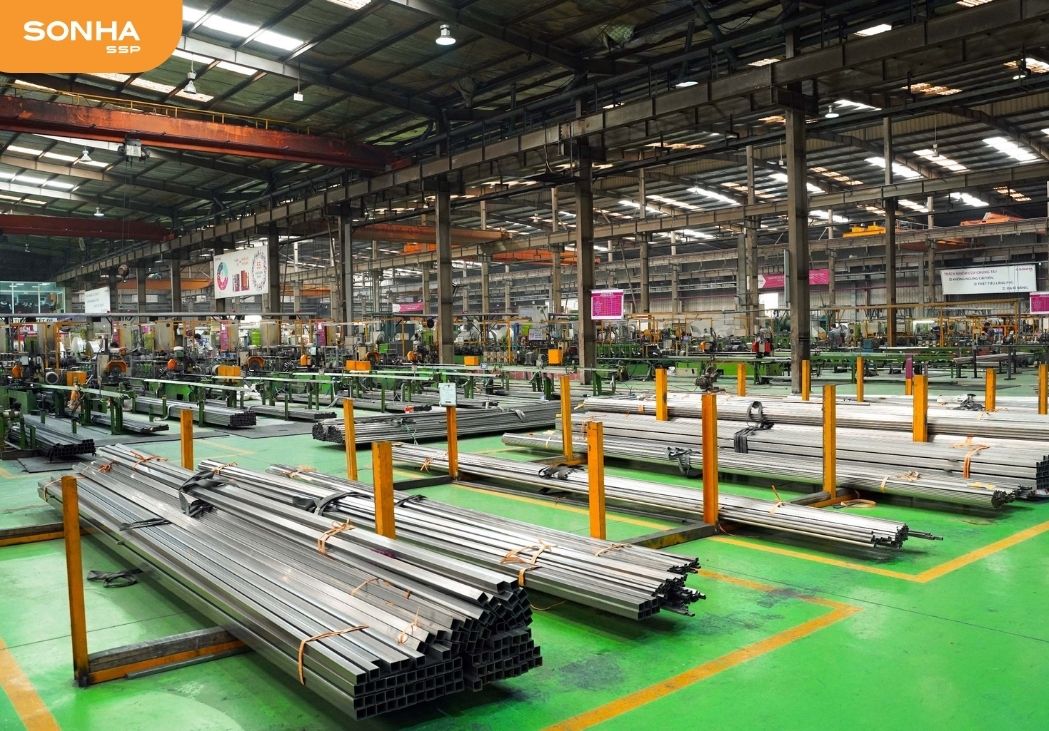
Leveraging large-scale production capacity and experience supplying international markets, Son Ha SSP manufactures and supplies industrial stainless steel pipes with a diverse product portfolio, meeting a wide range of specification and application requirements. The enterprise operates two factories equipped with over 200 production lines, boasting an annual capacity of approximately 80,000 tons. The product portfolio includes stainless steel pipes, welded pipes, stainless steel coils, and other stainless steel products, serving various industrial sectors and diverse usage needs. Notably, Son Ha SSP products are now present in over 50 countries, demonstrating the production and supply capabilities of Vietnamese enterprises in the global market.
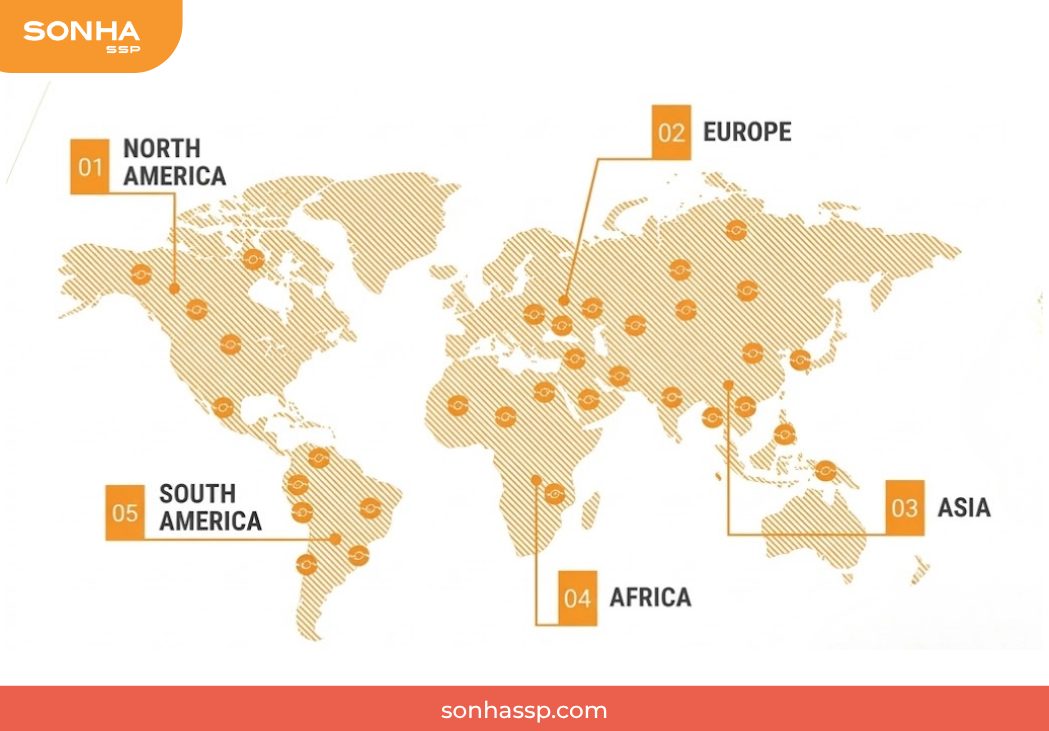
Son Ha SSP exports to more than 50 countries and territories
Son Ha SSP is an enterprise operating in the manufacturing and supply of industrial stainless steel products, including stainless steel pipes and tubes. When exploring products, customers can refer to the catalog on the official Son Ha SSP website to learn about the product lines and their corresponding specifications.
In summary, mastering and accurately referencing industrial pipe specifications is a crucial key to ensuring operational safety, optimizing costs, and enhancing project quality. Selecting products from reputable suppliers like Son Ha SSP will bring absolute peace of mind for all large and small-scale industrial projects.
Frequently Asked Questions
1. What do industrial pipe specifications include? Basic parameters include: Outside Diameter (OD), Inside Diameter (ID), Wall Thickness (Thickness/Schedule), standard length, material grade (carbon steel, 304/316 stainless steel, etc.), and maximum working pressure (Pressure rating).
2. What is the difference between outside diameter and nominal diameter? Nominal diameter (DN or NPS) is a conventional number used as a general designation for pipe size. Meanwhile, outside diameter (OD) is the actual dimension measured using mechanical measuring tools. For smaller pipes, DN and OD typically do not match exactly but depend on standard thickness charts.
If you are looking for a high-quality stainless steel pipe supplier, please explore our products and contact Son Ha SSP immediately via our Hotline at (+84) 986434303 for the fastest support and consultation!
Next latest post
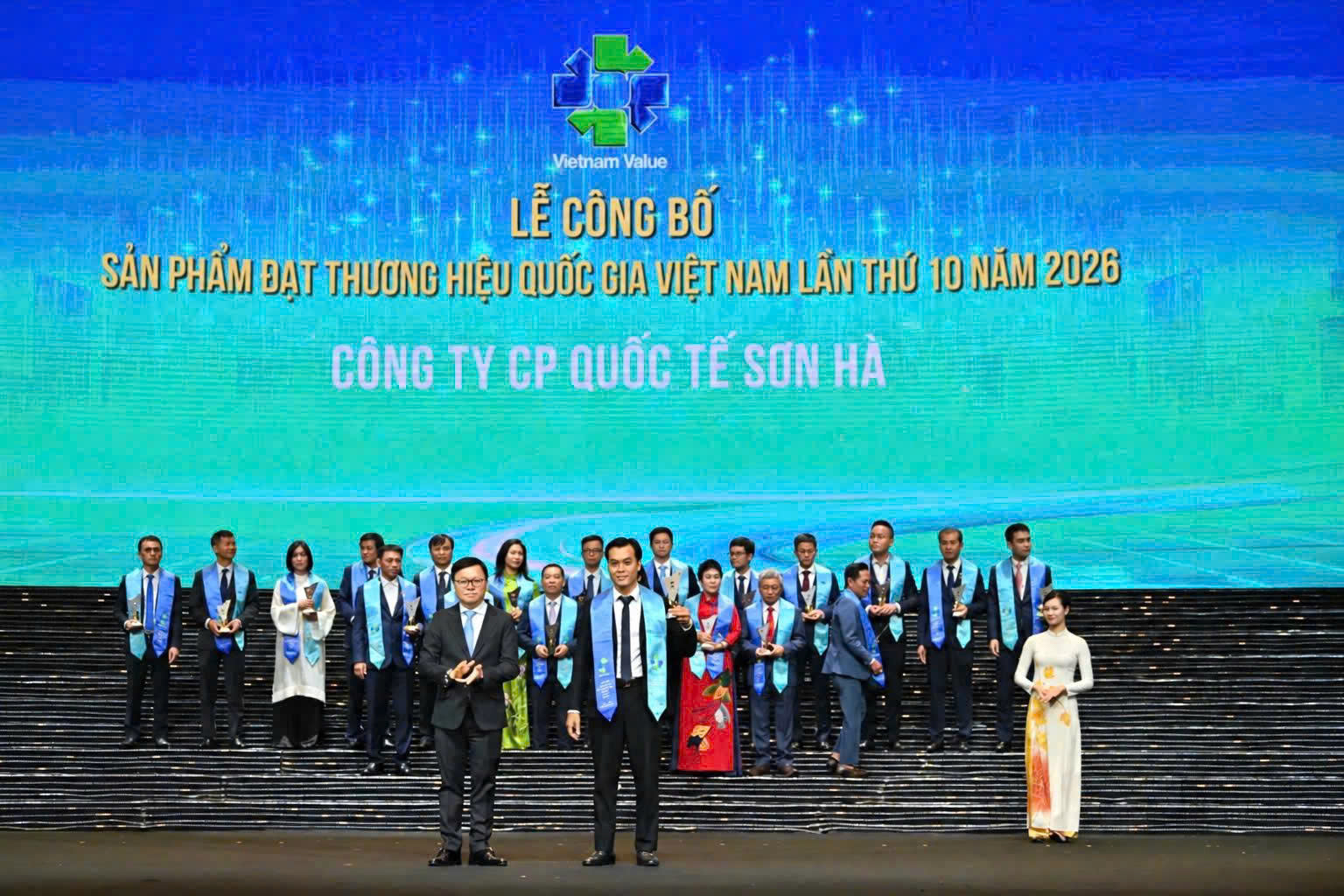
VIETNAM NATIONAL BRAND 2026 HONORS FIVE SON HA PRODUCTS
Stainless steel pipe standards – Latest comprehensive guide 2026
Stainless steel pipe specifications – The most complete and detailed guide for 2026