

Stainless steel pipe standards – Latest comprehensive guide 2026
Stainless steel pipe standards specify requirements for material composition, dimensions, mechanical properties, manufacturing methods, and quality inspection, depending on the type of pipe. Among these, ASTM A312 is commonly applied to industrial stainless steel pipes designed for high-temperature and corrosive environments, while ASTM A554 covers welded stainless steel tubes used in mechanical, structural, and decorative applications. Selecting the appropriate standard ensures that stainless steel pipes meet the intended application and technical requirements of each project.
1. What Are Stainless Steel Pipe Standards? Why Are They Important?
Stainless steel pipe standards are sets of technical specifications that standardize manufacturing processes, quality inspection procedures, and product classifications for stainless steel pipes and tubes. Compliance with the appropriate standards provides several practical benefits:
- Consistent Product Quality: Ensures precise control over the chemical composition of alloying elements (Chromium, Nickel, Molybdenum, etc.), enhancing corrosion resistance throughout the product’s service life.
- High Dimensional Accuracy: Establishes clear requirements for outside diameter (OD), wall thickness (WT), and length, ensuring accurate installation, fabrication, and welding while minimizing the risk of fluid leakage.
- Operational Safety: For high-pressure systems, compliance with the appropriate standards helps ensure that pipes can withstand high pressures and extreme temperatures without deformation, cracking, or failure.
2. Common Stainless Steel Pipe Standards
In the international market, ASTM, EN, JIS, and ISO standards are widely used for different applications. Each standardization system has its own requirements for product classification, designation methods, and technical specifications.
Therefore, when purchasing stainless steel pipes or comparing product specifications, it is essential to identify the exact standard designation and applicable edition rather than relying solely on the name of the standardization system.
2.1 ASTM Standards (USA)
ASTM standards, developed by ASTM International (formerly known as the American Society for Testing and Materials), are among the most widely recognized and commonly applied standards in Vietnam. Industrial stainless steel pipes typically comply with ASTM A312, which covers seamless, welded, and heavily cold-worked austenitic stainless steel pipes. Meanwhile, stainless steel tubes used for mechanical, structural, and decorative applications generally follow ASTM A554, which specifies requirements for welded stainless steel mechanical tubing.
ASTM standards for stainless steel pipes
2.2 EN Standards (Europe)
EN standards are European standards widely applied across various manufacturing and construction industries. For stainless steel pipes, it is essential to identify the specific EN standard based on the intended application, such as pressure applications, mechanical tubing, or dimensional requirements.
Stainless steel pipe standards according to EN
Some notable EN standards include:
- EN 10216-5: Part of the European standard series for seamless steel tubes used in pressure applications, with Part 5 specifically covering stainless steel tubes.
- EN 10217-7: Specifies requirements for welded stainless steel tubes intended for pressure applications.
- EN ISO 1127: Defines the outside diameter, wall thickness, dimensional tolerances, and conventional mass per unit length of stainless steel tubes.
When selecting stainless steel pipes according to EN standards, it is essential to verify the complete standard designation, applicable part, steel grade, and technical requirements. Simply stating that a product “complies with European standards” is insufficient to determine whether it meets the specific requirements of a project.
2.3 JIS Standards (Japan)
JIS (Japanese Industrial Standards) is Japan’s industrial standardization system, widely used in mechanical engineering, manufacturing, and construction industries.
Some key JIS standards related to stainless steel pipes include:
- JIS G 3448: Applies to light-gauge stainless steel tubes used in general piping systems, including water supply, hot water supply, drainage, and similar applications.
- JIS G 3459: Applies to stainless steel pipes used in piping systems requiring corrosion resistance, performance under low or high temperatures, and other applications specified within the standard.
JIS standards for stainless steel pipes
2.4 ISO & GB Standards (International & China)
ISO 1127 specifies requirements for the outside diameter, wall thickness, dimensional tolerances, and conventional mass per unit length of stainless steel tubes. Meanwhile, GB standards are China’s national standards, with specific requirements depending on the type of pipe and its intended application. When selecting stainless steel pipes according to ISO or GB standards, it is essential to verify the exact standard designation, steel grade, and scope of application to ensure compliance with the required technical specifications.
Stainless steel pipe standards according to ISO & GB
3. Differences Between Industrial and Decorative Stainless Steel Pipe Standards
Depending on the operating environment and load-bearing requirements, stainless steel pipe standards can be divided into two main product categories: industrial stainless steel pipes and decorative stainless steel tubes, each with distinct technical specifications and inspection methods.
3.1 Standards for Industrial Stainless Steel Pipes
Industrial stainless steel pipes are commonly used in fluid and gas transportation systems, process piping, manufacturing equipment, and industrial projects with specific technical requirements. Depending on the operating environment, these pipes must meet requirements for pressure resistance, temperature resistance, corrosion resistance, and mechanical strength.
Some commonly referenced standards include:
- ASTM A312/A312M: Applies to seamless and welded austenitic stainless steel pipes intended for high-temperature and corrosive service within the scope of the standard.
- EN 10216-5: Specifies requirements for seamless stainless steel tubes used in pressure applications.
- EN 10217-7: Applies to welded stainless steel tubes intended for pressure applications.
- JIS G 3459: Applies to stainless steel pipes used in piping systems under the operating conditions specified in the standard
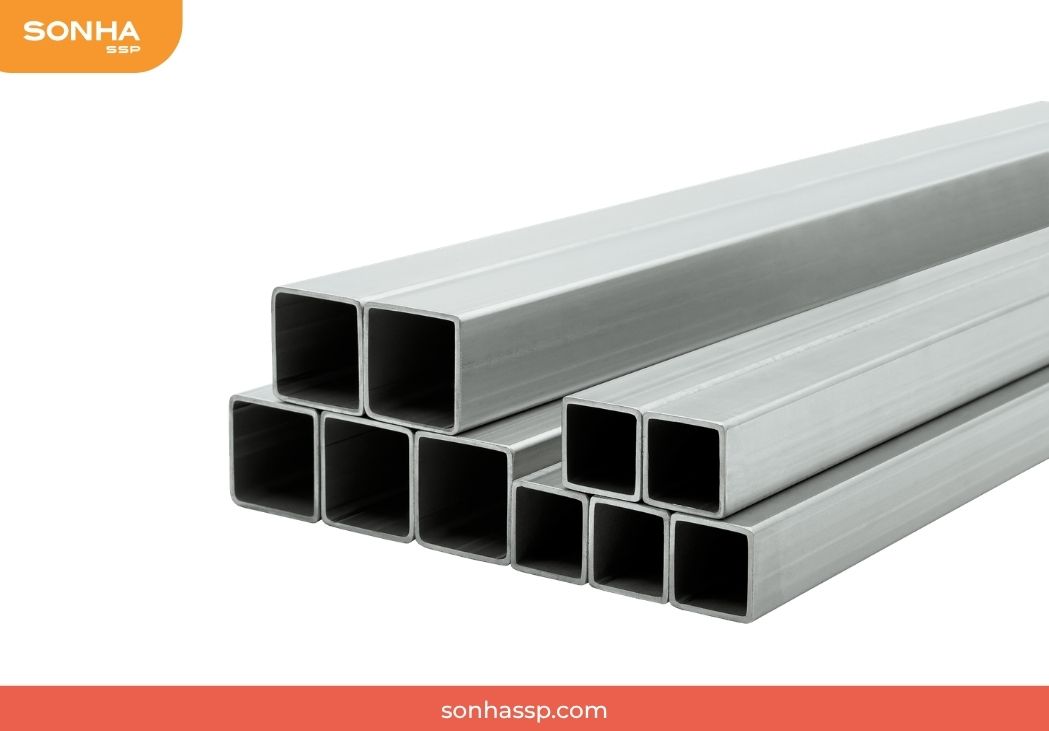
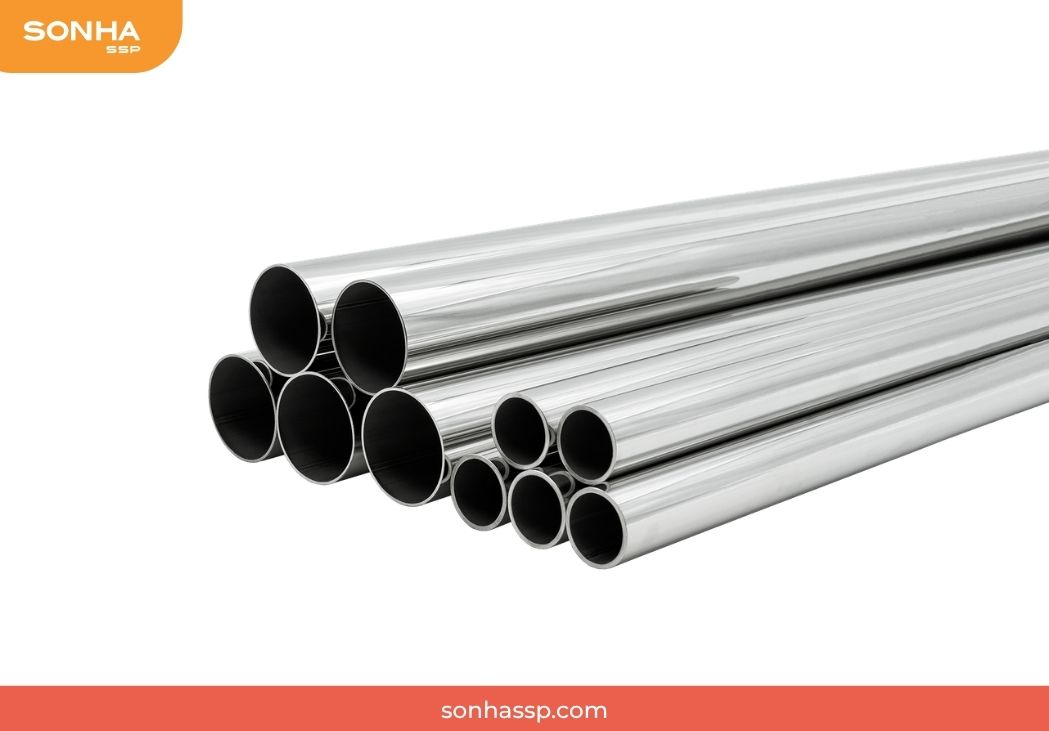
Industrial stainless steel pipes meeting the ASTM A312 standard
3.2 Standards for Decorative Stainless Steel Tubes
Decorative stainless steel tubes are widely used in the manufacturing of railings, staircases, door frames, furniture, display equipment, and architectural structures. In addition to requirements for mechanical properties and corrosion resistance, these products place particular emphasis on surface finish, surface uniformity, cross-sectional shape, and overall finishing quality.
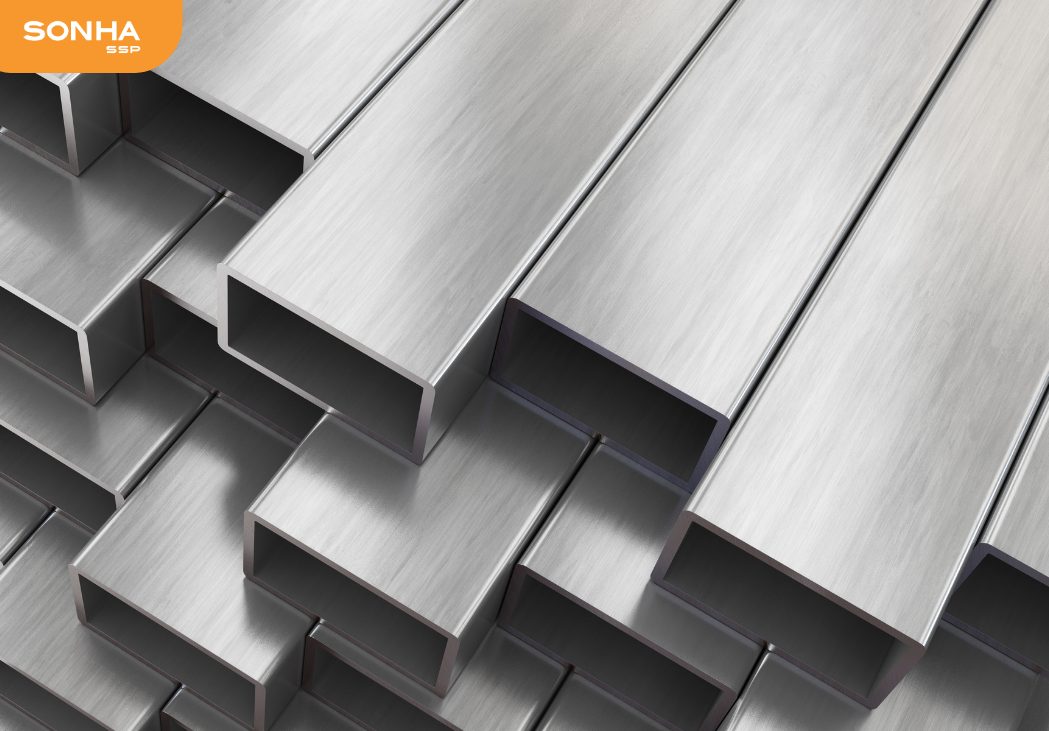
Decorative stainless steel tubing according to ASTM A554 standard
ASTM A554 is one of the commonly used standards for mechanical, structural, and decorative stainless steel tubing. This standard covers welded tubes with round, square, rectangular, or special cross-sectional shapes, meeting the applicable requirements for material composition and mechanical properties.
Understanding and correctly applying stainless steel pipe standards plays a crucial role in ensuring the success, durability, and safety of engineering projects. We hope this article has helped you better understand and distinguish between common standards such as ASTM, JIS, and EN, enabling you to select the most suitable stainless steel materials for your projects in 2026.
Frequently Asked Questions (FAQs)
1. What Is the Difference Between ASTM A554 and ASTM A312?
ASTM A312: This standard covers seamless, welded, and heavily cold-worked austenitic stainless steel pipes intended for high-temperature and general corrosive service. It is commonly applied in industrial piping systems, including oil and gas, chemical processing, and other applications with stringent technical requirements.
ASTM A554: This standard covers welded stainless steel mechanical tubing used in decorative, architectural, and interior applications. These tubes are generally not intended for high-pressure service, with greater emphasis placed on aesthetics, surface finish, and dimensional accuracy.
2. How Can You Verify Whether Stainless Steel Pipes Meet the Required Standards?
To verify compliance with applicable stainless steel pipe standards, you should follow these steps:
- Check Quality Certificates (CO/CQ): Review the manufacturer’s Certificate of Origin (CO) and Certificate of Quality (CQ), as applicable, along with the Material Test Certificate (MTC), to verify material specifications and compliance.
- Verify Actual Dimensions: Measure the outside diameter (OD) and wall thickness (WT), then compare the results with the permissible dimensional tolerances specified in the relevant standard.
- Conduct Chemical Composition Testing: For critical industrial projects, use spectroscopic analysis (Spectro Test) to verify the actual chemical composition of the stainless steel material.
3. Does Stainless Steel Grade 304 Automatically Mean Compliance with ASTM A312?
No. Stainless steel 304 is a material grade, typically containing approximately 18% Chromium and 8% Nickel, while ASTM A312 is a technical standard specifying manufacturing, testing, and quality requirements for certain stainless steel pipes.Stainless steel pipes made from grade 304 can be manufactured in accordance with different standards, such as ASTM A312, JIS G 3459, or EN 10216-5, depending on the manufacturing process, intended application, and specific project requirements. Therefore, specifying only “Stainless Steel 304” does not automatically guarantee compliance with ASTM A312 or any other particular pipe standard.
If you are looking for a high-quality stainless steel pipe supplier, please explore our products and contact Son Ha SSP immediately via our Hotline at (+84) 986434303 for the fastest support and consultation!
Next latest post
[New] International standard industrial pipe specification reference chart
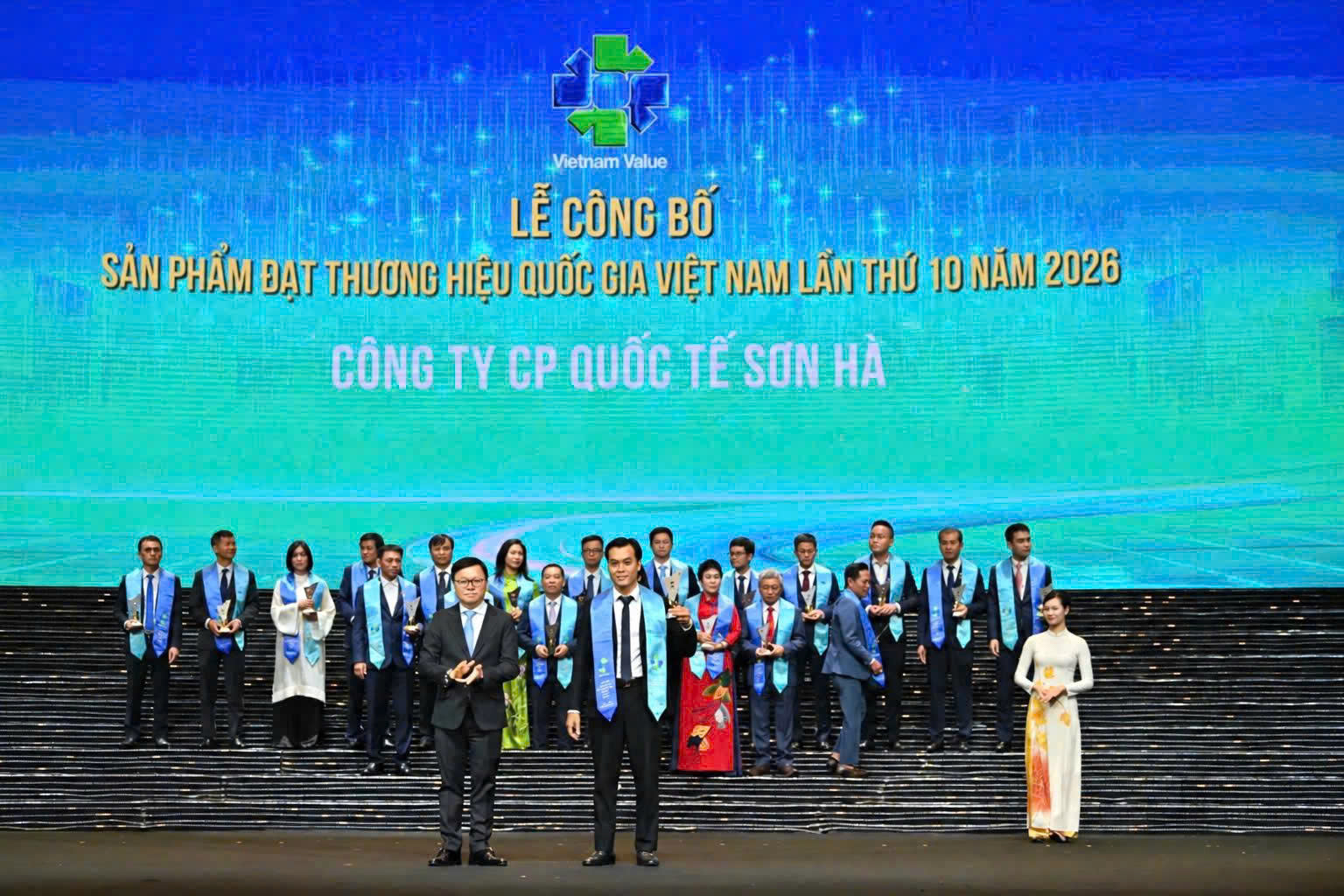
VIETNAM NATIONAL BRAND 2026 HONORS FIVE SON HA PRODUCTS
Stainless steel pipe specifications – The most complete and detailed guide for 2026