

Stainless steel pipe specifications – The most complete and detailed guide for 2026
Stainless steel pipe specifications include outside diameter, wall thickness, length, weight, steel grade, and manufacturing standards. These specifications determine whether the product meets the required dimensions, mechanical strength, and corrosion resistance for its intended application.
In this article, SONHA SSP provides a comprehensive overview of common stainless steel pipe dimensions, relevant technical standards, and guidelines for interpreting specifications to help customers select the most suitable stainless steel pipes for different applications.
1. What Are the Key Specifications of Stainless Steel Pipes?
Stainless steel pipe specifications cover dimensional parameters, material properties, mechanical characteristics, and quality requirements. The specific parameters depend on the product shape, steel grade, manufacturing method, and applicable standards.
Key specifications to consider when selecting stainless steel pipes include:
- Outside Diameter (OD): The diameter measured across the outer surface of a round pipe, typically expressed in millimeters (mm) or inches.
- Inside Diameter (ID): The internal diameter of the pipe, calculated from the outside diameter and wall thickness based on nominal dimensions.
- Wall Thickness (WT): The distance between the inner and outer surfaces of the pipe wall, affecting its weight and load-bearing capacity.
- Length (L): The length of each pipe section, determined by standard product dimensions, order specifications, or custom fabrication requirements.
- Weight: The mass per unit length (kg/m) or the total weight of an individual pipe section.
- Stainless Steel Grade: The material grade designation, such as 201, 304, 304L, 316, 316L, or 430.
- Manufacturing Standards: Specifications governing dimensions, material composition, mechanical properties, testing methods, and acceptance requirements.
- Manufacturing Method: Welded or seamless stainless steel pipes, depending on the product type and intended application.
- Surface Finish: Common finishes include 2B, BA, No. 4, Hairline (HL), Mirror, or other customized surface treatments.
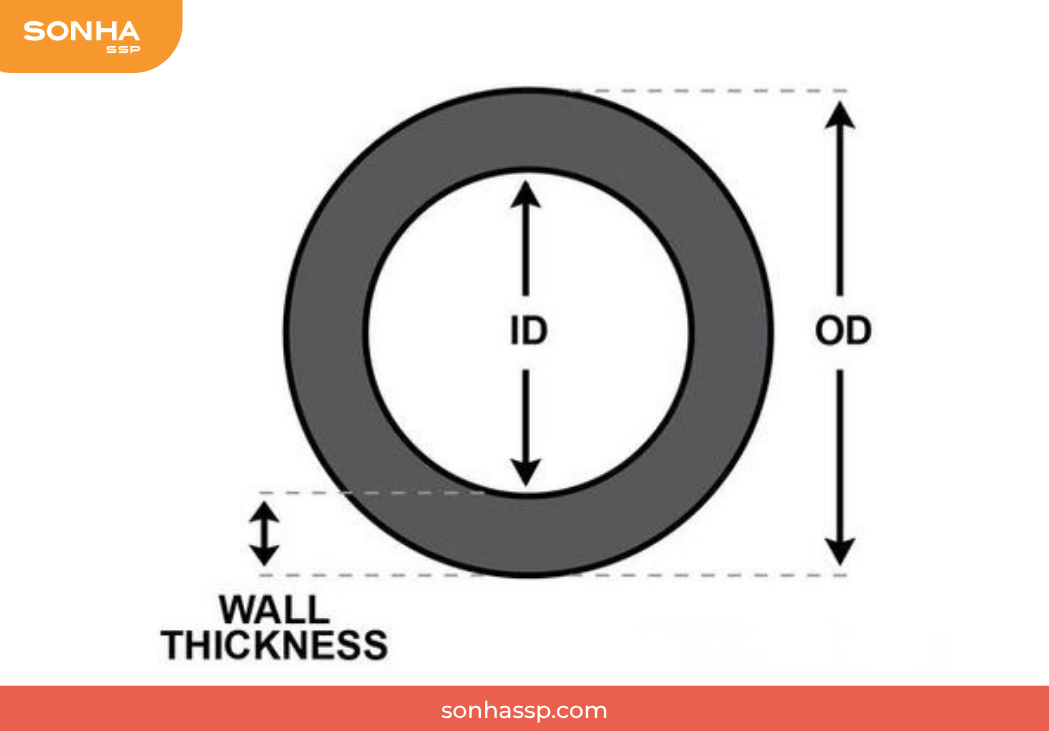
Technical specifications for round stainless steel pipes
In addition, technical documentation may include dimensional tolerance limits, tensile strength, yield strength, elongation, hardness, and quality inspection results. For pipes used in pressure systems or special operating environments, testing requirements and material certifications must be determined according to the applicable standards.
2. Common Stainless Steel Pipe Specifications
There is no single dimensional specification chart that applies to all types of stainless steel pipes. Pipes used in industrial piping systems are typically specified by nominal pipe size and wall thickness, while decorative and mechanical stainless steel tubes are generally ordered based on their actual outside dimensions and wall thickness. Therefore, the tables below provide reference information for preliminary specification selection. When placing an order, customers should verify the technical drawings, applicable product standards, and the manufacturer’s official dimensional specification charts.
2.1 Specifications by Diameter and Wall Thickness
For round stainless steel pipes, outside diameter (OD) and wall thickness (WT) are the two most important parameters used to determine their geometric dimensions. Common pipe sizes can be expressed in the following format: Outside Diameter × Wall Thickness (OD × WT).
| Outside Diameter (mm) | Reference Wall Thickness (mm) | Inside Diameter (mm) |
| 12,7 | 0,8 | 11,1 |
| 19,1 | 1,0 | 17,1 |
| 25,4 | 1,2 | 23,0 |
| 32,0 | 1,2 | 29,6 |
| 38,1 | 1,5 | 35,1 |
| 50,8 | 1,5 | 47,8 |
| 63,5 | 2,0 | 59,5 |
| 76,2 | 2,0 | 72,2 |
| 101,6 | 2,0 | 97,6 |
Reference table for some round stainless steel pipe specifications
Note: The table above illustrates dimensional combinations for reference purposes only and does not represent mandatory specifications under any particular standard. The inside diameter is calculated using the formula ID = OD − 2 × WT. Actual dimensions may vary depending on manufacturing tolerances.
For stainless steel pipes used in industrial piping systems, it is important to distinguish between the actual outside diameter and the nominal pipe size (NPS or DN). For example, NPS 1 does not mean that the pipe has an outside diameter of exactly 25.4 mm. Under standardized piping dimension systems, the outside diameter is specified for each nominal pipe size, while wall thickness is determined by the corresponding Schedule designation.
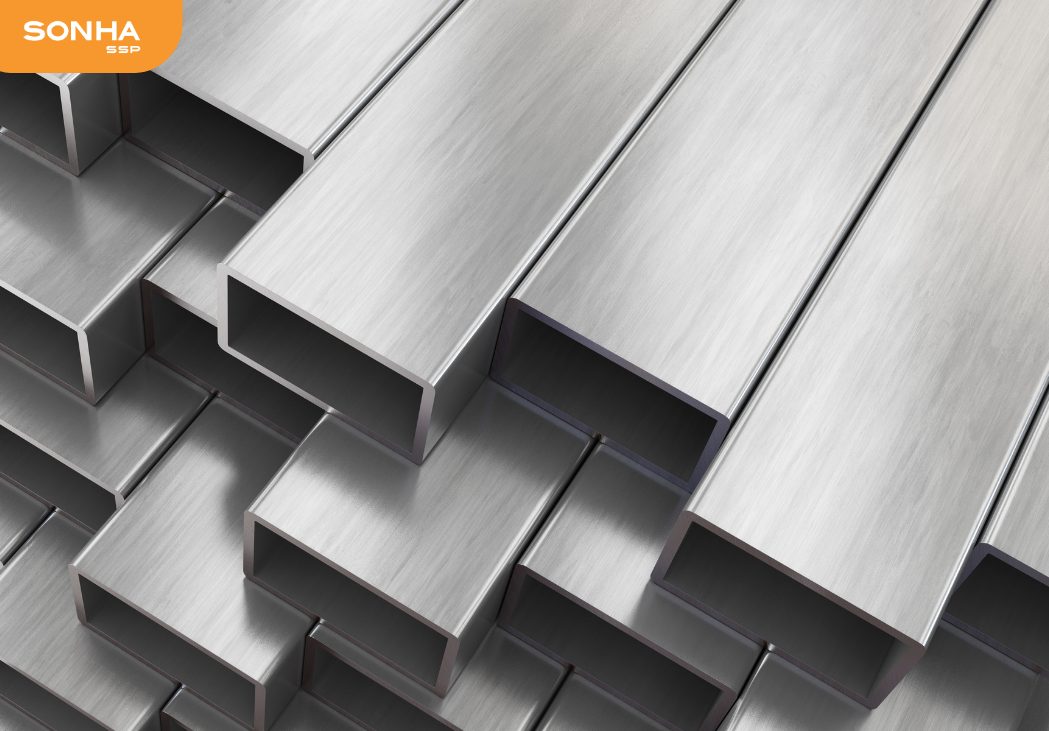
For square and rectangular stainless steel tubes, dimensions are typically expressed as Width × Height × Wall Thickness, such as 25 × 25 × 1.2 mm or 40 × 20 × 1.5 mm. These dimensions should be confirmed according to the applicable product standard or the agreement between the buyer and manufacturer.
2.2 Stainless Steel Pipe Weight by Size
The weight of a stainless steel pipe depends on its cross-sectional dimensions, wall thickness, length, and material density. For pipes with the same outside diameter, thicker walls generally result in greater weight. Similarly, for pipes with the same cross-sectional dimensions, longer sections have a higher total weight.
For round stainless steel pipes with a uniform cross-section, the theoretical weight per meter can be estimated using the following formula:
Weight (kg/m) ≈ 0.02491 × t × (D − t)
Where:
- D: Outside diameter of the pipe, measured in millimeters (mm).
- t: Wall thickness of the pipe, measured in millimeters (mm).
- 0.02491: An approximate coefficient calculated based on an assumed material density of 7,930 kg/m³.
For example, a stainless steel pipe with an outside diameter of 25.4 mm and a wall thickness of 1.2 mm has an approximate theoretical weight of:
0.02491 × 1.2 × (25.4 − 1.2) ≈ 0.72 kg/m
For a pipe section measuring 6 meters in length, the corresponding theoretical weight is approximately 4.32 kg.
Reference Table of Theoretical Weights for Round Stainless Steel Pipes
| Outside Diameter (mm) | Wall Thickness (mm) | Approximate Weight (kg/m) |
| 19,1 | 1,0 | 0,45 |
| 25,4 | 1,2 | 0,72 |
| 32,0 | 1,2 | 0,92 |
| 38,1 | 1,5 | 1,37 |
| 50,8 | 1,5 | 1,84 |
| 63,5 | 2,0 | 3,06 |
| 76,2 | 2,0 | 3,69 |
| 101,6 | 2,0 | 4,96 |
Reference table for the theoretical weight of round stainless steel pipes
The values above are calculated using a geometric formula, assuming a material density of 7,930 kg/m³, and have been rounded for reference purposes. These figures do not represent guaranteed weights certified by the manufacturer. Actual pipe weights may vary depending on material composition, dimensional tolerances, and manufacturing conditions.
For square, rectangular, or specially shaped stainless steel tubes, the appropriate cross-sectional area formula or the manufacturer’s official weight charts should be used. When preparing cost estimates, it is important to clarify whether calculations are based on theoretical weight or actual measured weight.
2.3 Stainless Steel Grades and Material Standards
The stainless steel grade indicates the material classification and directly influences corrosion resistance, workability, mechanical properties, and the range of applications.
Selecting the appropriate stainless steel grade should be based on the operating environment, design requirements, and specified material standards.
- Stainless Steel 304 / 304L: Among the most commonly used stainless steel grades, offering good corrosion resistance in general atmospheric conditions, food processing applications, and residential environments.
- Stainless Steel 316 / 316L: Contains added molybdenum, providing enhanced corrosion resistance, particularly in chloride-containing environments, chemical processing applications, and marine conditions.
- Stainless Steel 201: A more cost-effective alternative with good mechanical strength but generally lower corrosion resistance than grades 304 and 316. It is suitable for interior applications and relatively dry environments.
When purchasing stainless steel pipes, it is essential to verify the material grade against the applicable product standards and material certificates. Even when products share the same commercial grade designation, their dimensional requirements, mechanical properties, and inspection criteria may differ depending on the manufacturing standards applied.
3. Technical Standards for Stainless Steel Pipes
High-quality stainless steel pipes must comply with relevant international standards to ensure consistent product quality, technical reliability, and dimensional interchangeability.
Some of the most widely recognized standards include:
- ASTM Standards (USA): Among the most widely used international standards, including ASTM A312 for seamless and welded austenitic stainless steel pipes intended for high-temperature and corrosive service, and ASTM A554 for welded stainless steel mechanical tubing commonly used in decorative, architectural, and structural applications.
- JIS Standards (Japan): Commonly applied in industrial systems across Asian markets, with specific requirements for dimensional tolerances, chemical composition, and material properties.
- DIN / EN Standards (Europe): Establish detailed technical requirements for stainless steel pipes and tubes, including dimensional accuracy, material properties, and quality testing, making them suitable for demanding industrial processes and engineering applications.
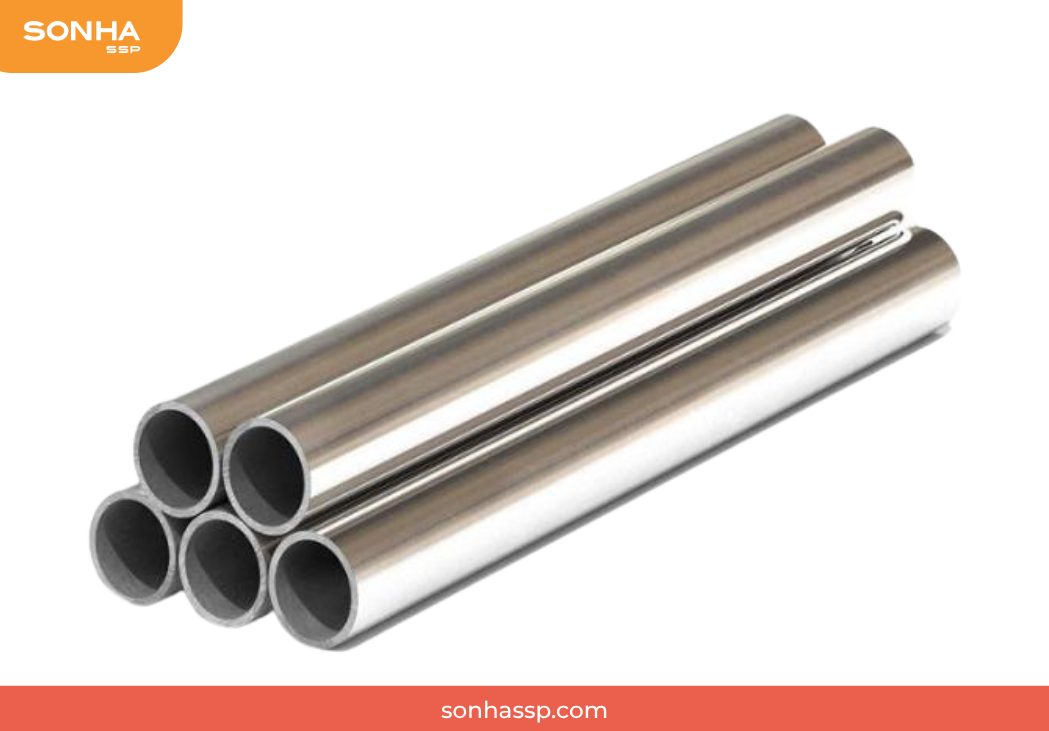
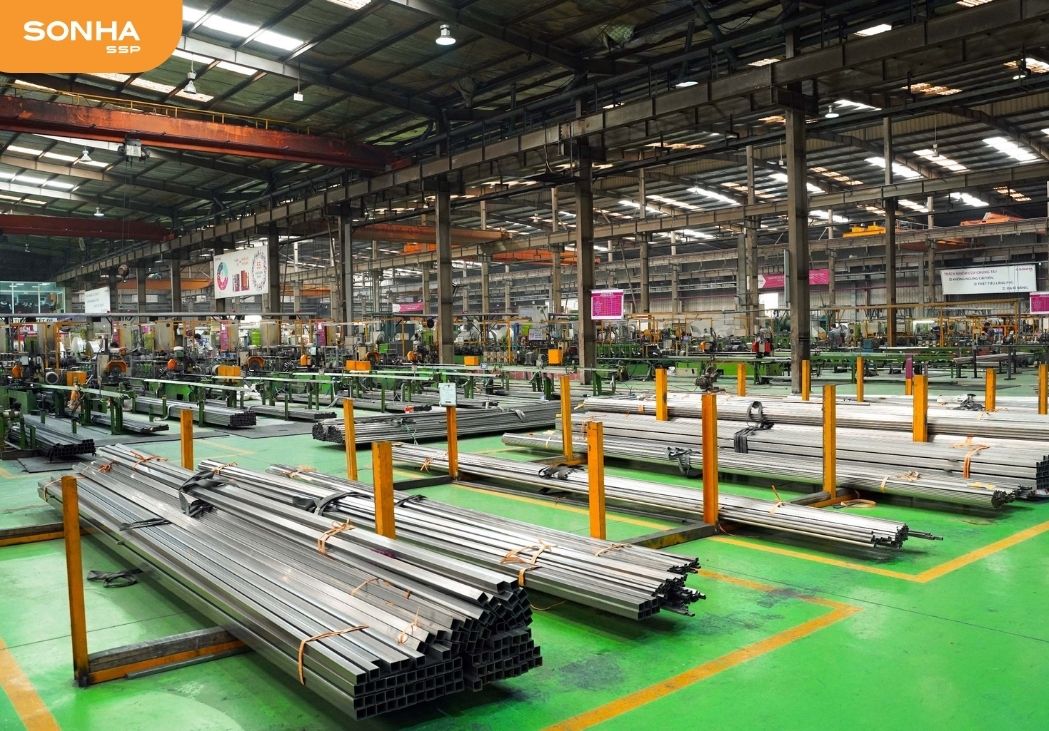
International production standards for stainless steel pipes
4. How to Read Stainless Steel Pipe Specifications
To avoid confusion during purchasing or installation, users should understand how to interpret the technical specifications commonly marked on the pipe surface or listed in the manufacturer’s quality certificates (CO/CQ).
The basic format for reading stainless steel pipe specifications is:
[Product Name] × [Outside Diameter (OD)] × [Wall Thickness (WT)] × [Length] × [Stainless Steel Grade] × [Manufacturing Standard]
Example: Stainless Steel Pipe 304 – OD 60.3 mm × WT 3.0 mm × Length 6 m – ASTM A312.
In this example, 60.3 mm represents the actual outside diameter of the industrial stainless steel pipe, corresponding to a nominal 2-inch pipe (NPS 2). Understanding this specification helps installers and engineers select compatible fittings, including elbows, tees, and valves.
5. Factors Affecting Stainless Steel Pipe Specifications
Stainless steel pipe specifications are not always fixed and may vary depending on several technical factors and manufacturing processes:
- Manufacturing Method: Seamless pipes have no welded seam and are often selected for demanding pressure applications. Welded pipes offer a wider range of shapes and can provide cost advantages, particularly in low-pressure applications. However, actual pressure ratings depend on the applicable standard, material grade, dimensions, and manufacturing quality.
- Dimensional Tolerances: Hot-rolling and cold-rolling processes may result in slight variations in wall thickness and diameter. These permissible deviations are specified in the relevant international standards.
- Forming and Heat Treatment Technologies: Rolling, cold forming, welding, annealing, and sizing processes can affect mechanical properties, cross-sectional geometry, material condition, and finished product tolerances. The extent of these effects depends on the manufacturing technology and applicable technical requirements.
- Intended Application: Stainless steel pipes used in food processing may require smooth, polished surfaces, such as BA or No. 4 finishes, depending on hygiene and application requirements. In contrast, pipes used in chemical processing systems typically place greater emphasis on mechanical properties, corrosion resistance, and wall thickness.
Frequently Asked Questions (FAQs)
1. Do Stainless Steel 304 and 316 Pipes Have the Same Technical Specifications?
In terms of dimensional specifications, stainless steel 304 and 316 pipes can be manufactured with exactly the same outside diameter, wall thickness, and length. However, the main difference lies in their chemical composition and material properties, which influence corrosion resistance and cost. Stainless steel 316 contains molybdenum, providing enhanced resistance to certain types of corrosion, particularly in chloride-containing environments, compared with stainless steel 304.
2. How Can You Distinguish Seamless and Welded Stainless Steel Pipes Based on Their Specifications?
You can distinguish seamless and welded stainless steel pipes by checking the manufacturing method indicated in the product markings, technical documentation, or material certificates.
- Seamless Stainless Steel Pipes: Typically identified by markings such as SEAMLESS or SMLS, indicating that the pipe is manufactured without a welded seam.
- Welded Stainless Steel Pipes: May be identified by markings such as WELDED, ERW (Electric Resistance Welded), EFW (Electric Fusion Welded), or SAW (Submerged Arc Welded), depending on the welding process used.
It is important to note that markings may vary depending on the manufacturer and applicable standard. Therefore, the manufacturing method should also be verified through the relevant material certificates and technical documentation. Understanding stainless steel pipe specifications is essential for engineers, contractors, and buyers to select the appropriate materials, optimize project costs, and ensure long-term performance and reliability.We hope this article has provided a comprehensive and detailed overview of stainless steel pipe dimensions, technical standards, and methods for interpreting specifications, helping you make informed decisions when selecting stainless steel pipes for your projects.
If you are looking for a high-quality stainless steel pipe supplier, please explore our products and contact Son Ha SSP immediately via our Hotline at (+84) 986434303 for the fastest support and consultation!
Next latest post
[New] International standard industrial pipe specification reference chart

VIETNAM NATIONAL BRAND 2026 HONORS FIVE SON HA PRODUCTS
Stainless steel pipe standards – Latest comprehensive guide 2026