

Decorative stainless steel material standards: Key criteria you need to know
Decorative stainless steel material standards are defined based on steel grade, chemical composition, dimensions, wall thickness, and product surface finish. Depending on the stainless steel form – such as pipes, sheets, or strips – the applicable standards may vary. For decorative stainless steel pipes, ASTM A554 is one of the most frequently cited standards for welded stainless steel mechanical tubing, while ISO, EN, and JIS provide corresponding standard systems for material composition and characteristics.
1. What Are Decorative Stainless Steel Material Standards?
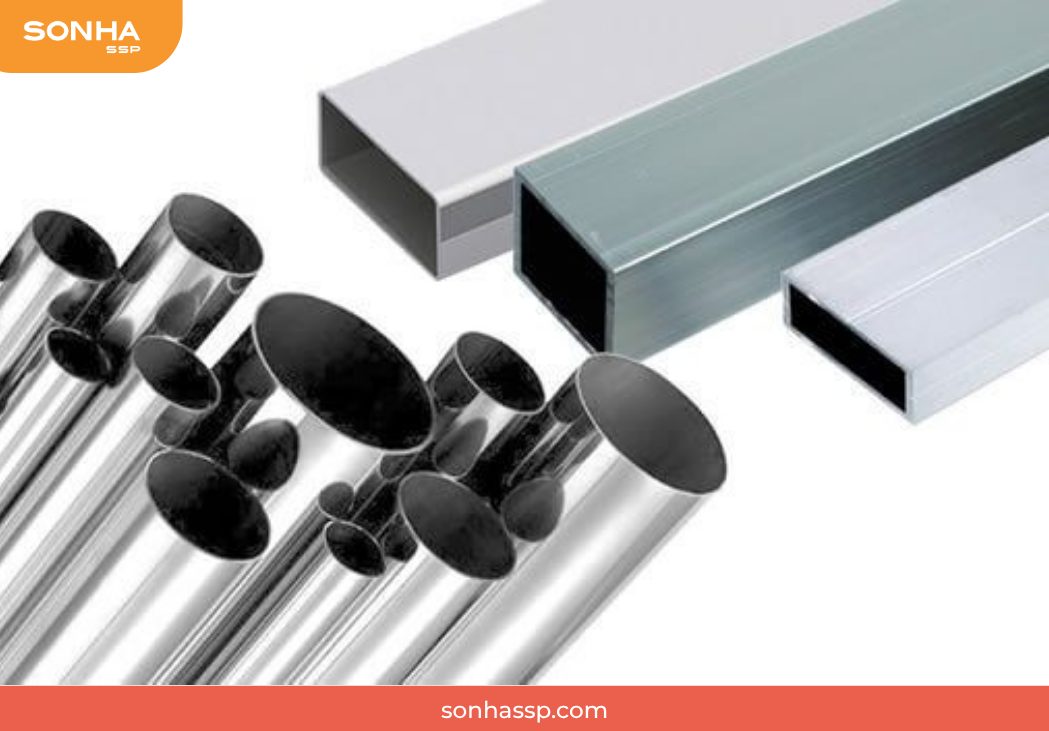
Standards and technical requirements for decorative stainless steel materials
For stainless steel products used in decorative applications, it is essential to distinguish between material standards, product standards, and product specifications. For example, ASTM A554 is a standard specifically designed for welded mechanical stainless steel tubing, covering applications that demand visual appeal, mechanical performance, or corrosion resistance. This standard applies to various tubing geometries, including round, square, rectangular, and custom shapes.
2. Decorative Stainless Steel Material Standards by Steel Grade
- Stainless Steel 304 (SUS 304): The most popular premium steel grade in the Austenitic family, containing approximately 18% Chromium and 8–10% Nickel. It excels in corrosion resistance, resists rust under normal atmospheric conditions, features a bright aesthetic surface, and is suitable for high-end interior and exterior applications.
- Stainless Steel 201 (SUS 201): Formulated with lower Nickel and higher Manganese content than Grade 304. It offers a lower cost but exhibits lower durability and corrosion resistance, making it preferred for dry indoor environments with minimal moisture exposure.
- Stainless Steel 316 (SUS 316): A premium grade containing Molybdenum, delivering high structural strength and superior corrosion resistance in severe environments such as coastal areas or chemical exposure.
- Stainless Steel 430 (SUS 430): Belongs to the Ferritic group, containing Chromium but no Nickel. It is magnetic, provides moderate corrosion resistance, and comes at a lower price point – ideal for dry, non-load-bearing interior decorative items.
3. Commonly Applied International Standards
- ASTM Standards (USA): Most notably ASTM A554 (welded stainless steel mechanical tubing for decorative and structural uses), ASTM A240 (chromium and chromium-nickel stainless steel plate, sheet, and strip), and ASTM A480 (flat-rolled stainless steel).
- JIS Standards (Japan): Strictly regulates chemical composition and tolerances under the “SUS” prefix (e.g., SUS 304, SUS 201).
- GB Standards (China) & EN Standards (Europe): Equivalent standards that assist in controlling the quality of imported raw material supplies.
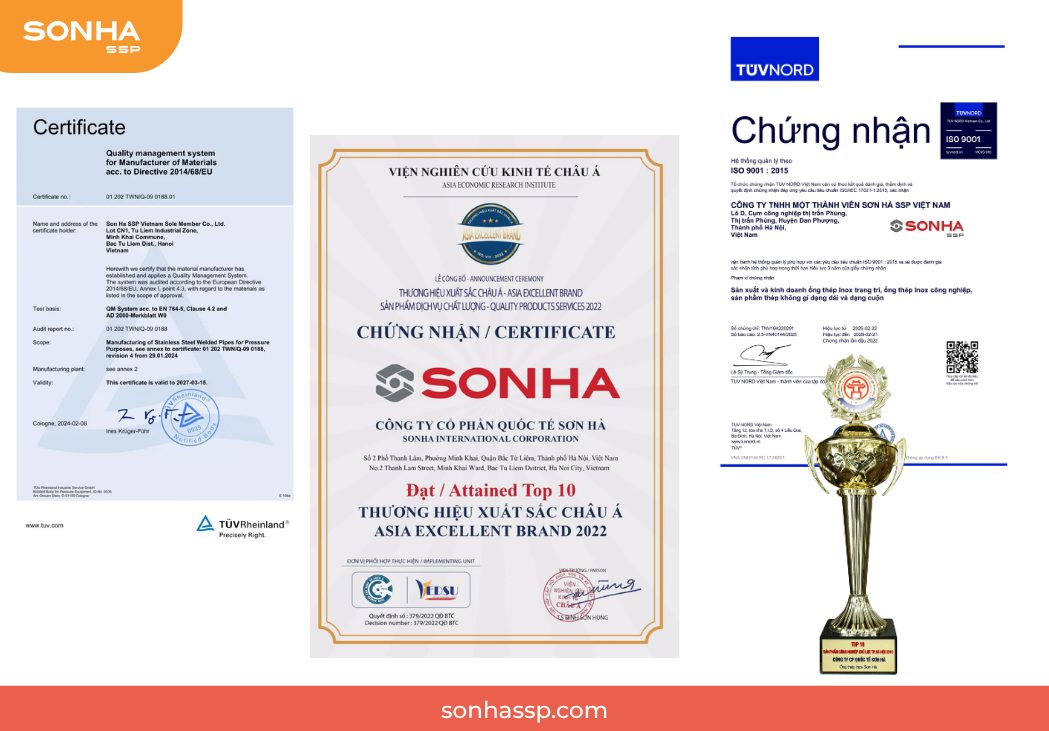
Son Ha SSP is committed to quality.
4. Key Technical Requirements When Selecting Decorative Stainless Steel
4.1 Chemical Composition of the Material
4.2 Actual Thickness vs. Nominal Thickness
4.3 Surface Finish Quality and Protective Film
- Color Uniformity & Detail Consistency: When ordering large quantities for a single project item, stainless steel sheets must originate from the same production batch to prevent color shade discrepancies in PVD coating or uneven Hairline scratch density.
- Protective Film Thickness (PVC/Laser Film): Decorative stainless steel always features a protective plastic film on its surface:
- For standard cutting and fabrication, a PVC film thickness of 70 µm to 100 µm is required.
- For laser-cutting intricate patterns, sheets must use a specialized laser-cutting protective film to prevent the film from melting, adhering tightly to the stainless steel surface, and causing burn marks or color damage.
4.4 Mechanical Workability Standards
Ductility During Bending/Forming: Decorative stainless steel is often bent at 90° angles, curved, or V-grooved before folding. Standard-compliant material must possess good ductility so that bending and folding operations do not cause surface cracking or peeling of the color-plated layer along the bend line.
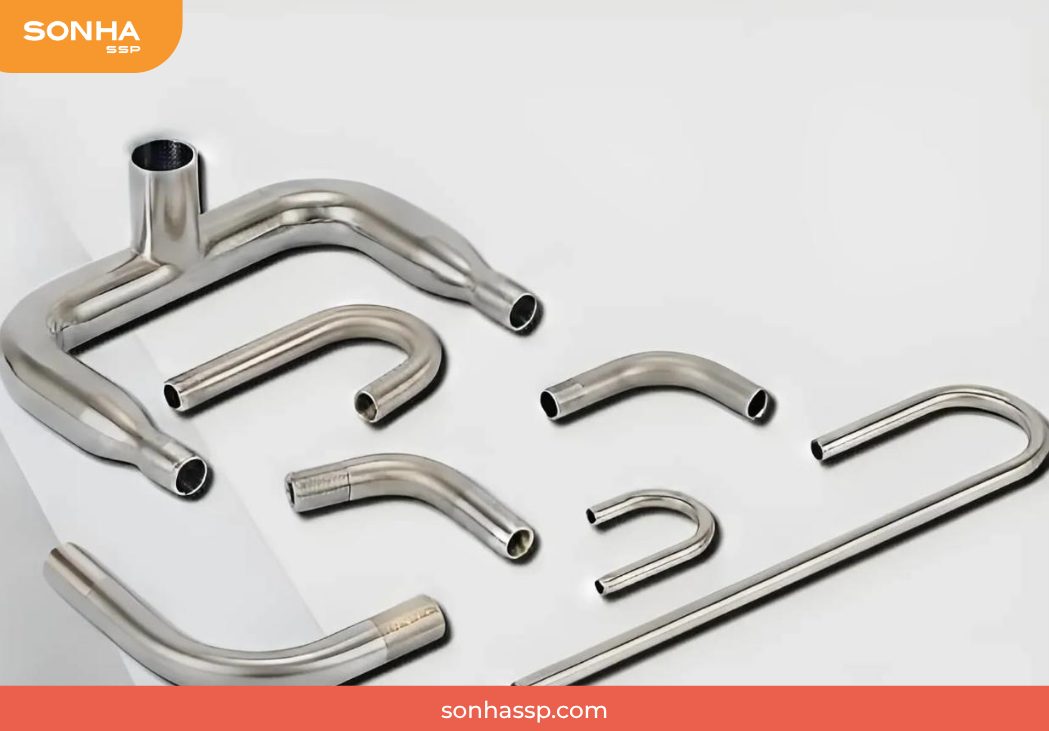
Ductility and machinability of stainless steel
5. Key Considerations When Selecting Decorative Stainless Steel
- Correctly identify the product form: pipes, sheets, foils, strips, or fabricated stainless steel parts.
- Choose the correct steel grade: 304, 304L, 316, 316L, 430, etc., based on environment and operational demands.
- Check product standards: e.g., ASTM A554 for welded mechanical tubing; ASTM A240/A240M for stainless steel plate, sheet, and strip.
- Verify chemical composition via material mill test certificates or conformity certifications.
- Clearly define dimensions, wall thickness, and tolerances before placing an order.
- Agree on surface finish requirements if the product is used for building facades, handrails, interior decor, or high-aesthetic features.
- Cross-reference standards in technical documentation and contracts to define explicit acceptance criteria.
6. Frequently Asked Questions (FAQ)
1. Which steel grades are most commonly used for decorative stainless steel?
Decorative stainless steel primarily uses SUS 304 (for premium outdoor/indoor applications) and SUS 201 (for standard interior use). In specialized coastal environments, SUS 316 is preferred.
2. Is ASTM A554 a material standard for stainless steel?
Yes, but it specifies requirements for stainless steel pipe/tubing products rather than defining the chemical material grade alone.
3. How do stainless steel standards differ from stainless steel specifications?
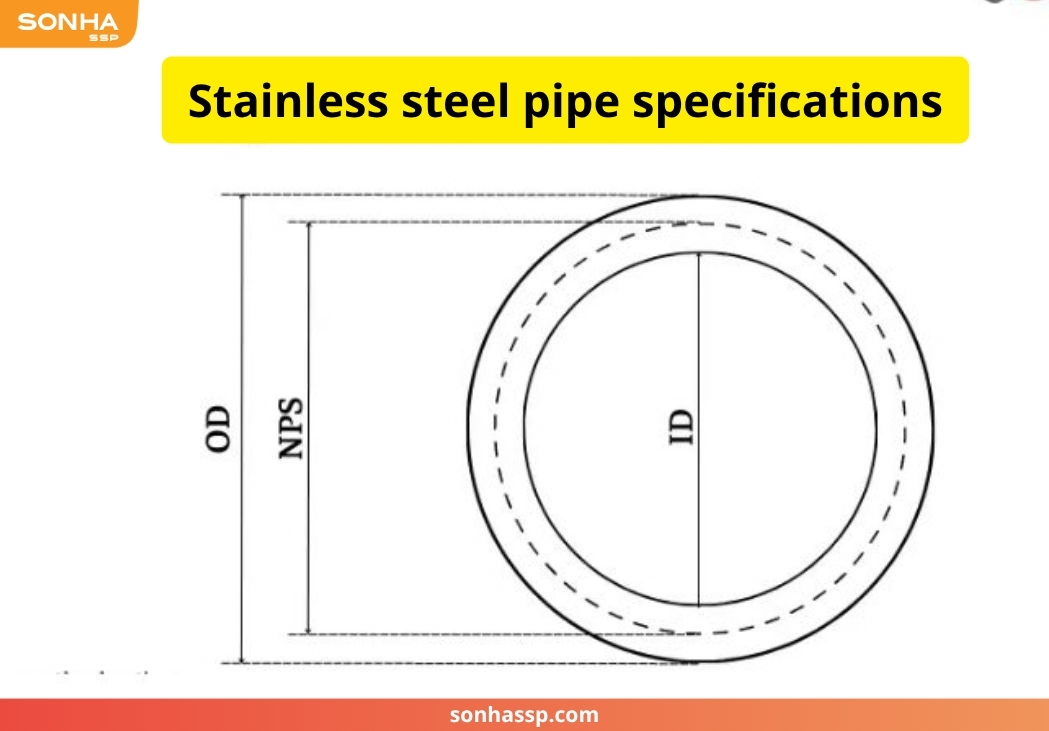
Stainless steel standards define chemical composition, mechanical properties, and overall quality parameters, whereas stainless steel specifications refer to specific physical dimensions such as wall thickness, length, outer diameter, or sheet size.
If you are looking for a high-quality stainless steel pipe supplier, please explore our products and contact Son Ha SSP immediately via our Hotline at (+84) 986434303 for the fastest support and consultation!
Next latest post

THƯƠNG HIỆU QUỐC GIA VIỆT NAM 2026 VINH DANH 5 SẢN PHẨM SƠN HÀ
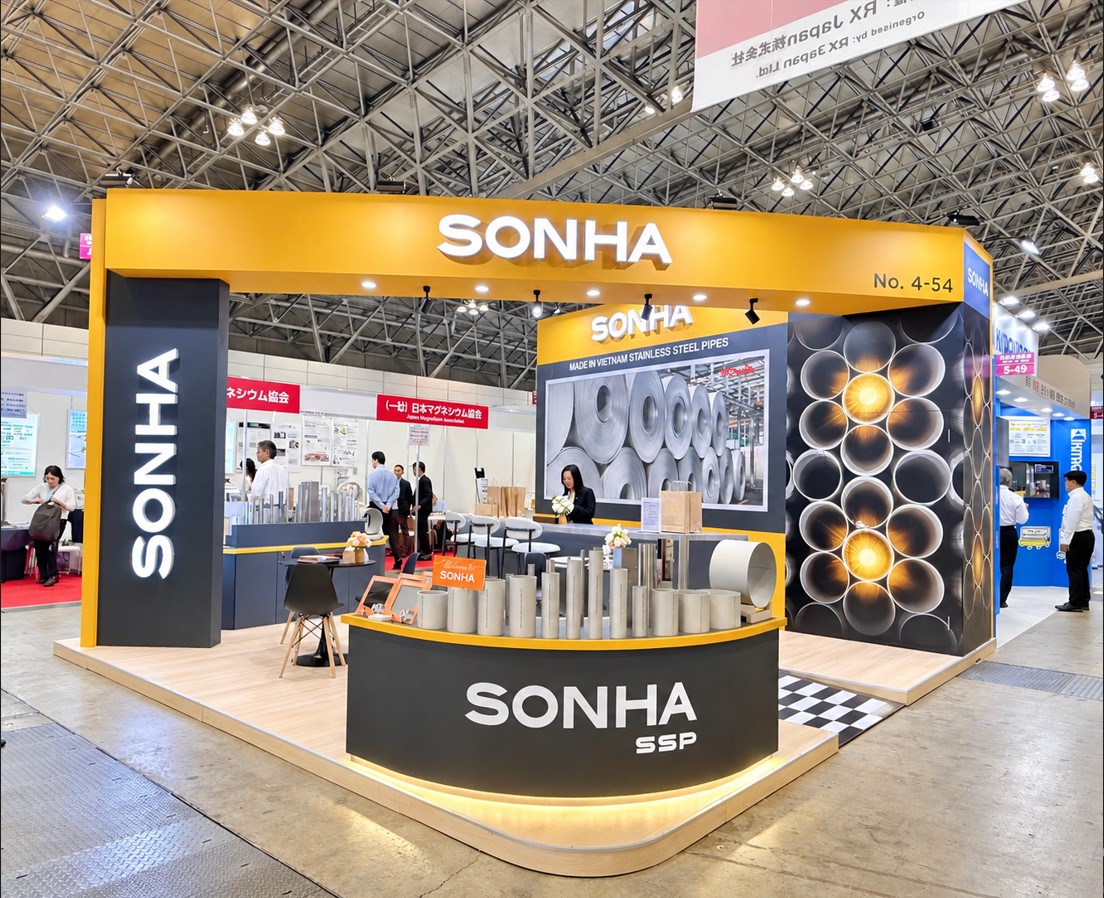
Looking back on SONHA SSP’s journey at highly-functional Material Week Tokyo 2026
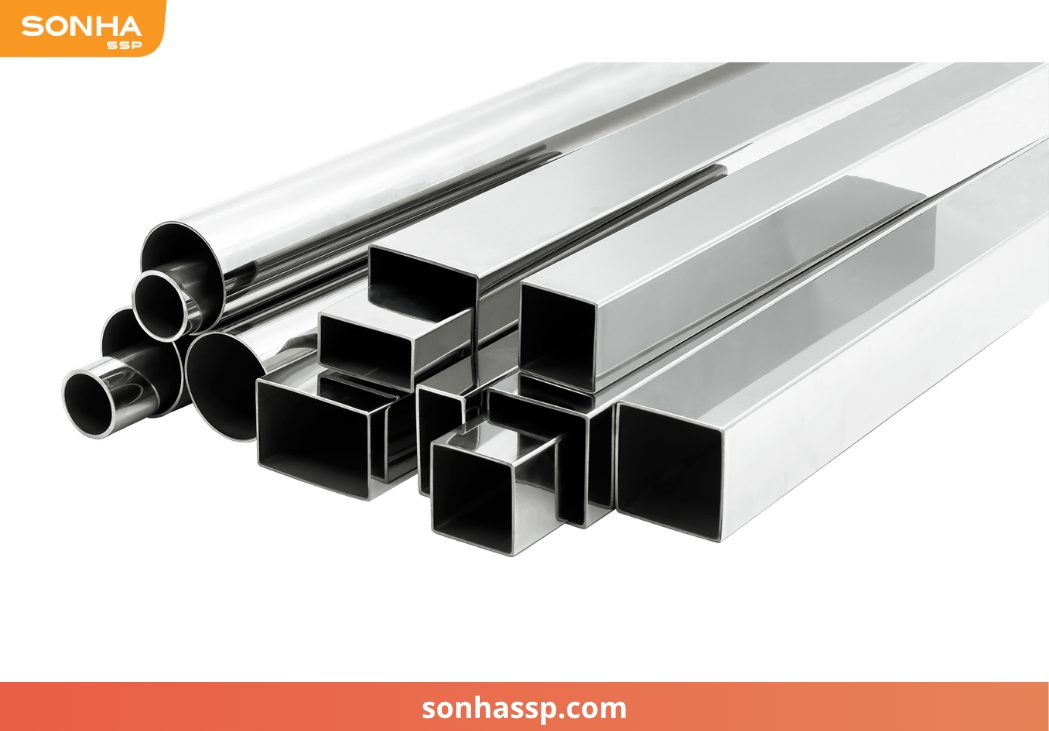
Detailed decorative stainless steel pipe size chart 2026