


304 vs 316 stainless steel: Which is better? Complete comparison and selection guide
304 vs 316 stainless steel: which is better? This is a common question among buyers, engineers, manufacturers, and businesses when selecting stainless steel materials for industrial, construction, and commercial applications.
Both 304 and 316 stainless steel belong to the Austenitic stainless steel family. They are widely recognized for their good corrosion resistance, mechanical strength, attractive surface appearance, and excellent formability. However, differences in chemical composition make each grade more suitable for specific operating environments.
So, what is the difference between 304 and 316 stainless steel, and which one should you choose? In this article, SONHA SSP VIETNAM explains their properties, similarities, differences, applications, and key selection criteria.
1. What Is 304 Stainless Steel?
304 stainless steel, also known as SUS 304 or grade 304 stainless steel, is one of the most widely used Austenitic stainless steel grades.
Its composition mainly consists of iron combined with Chromium, Nickel, and other alloying elements in controlled proportions. This composition provides good corrosion resistance, oxidation resistance, durability, and workability across a broad range of applications.
Thanks to its balance of performance, versatility, and cost efficiency, 304 stainless steel is commonly used for stainless steel pipes, industrial equipment, construction materials, food-processing equipment, household products, and many other applications.
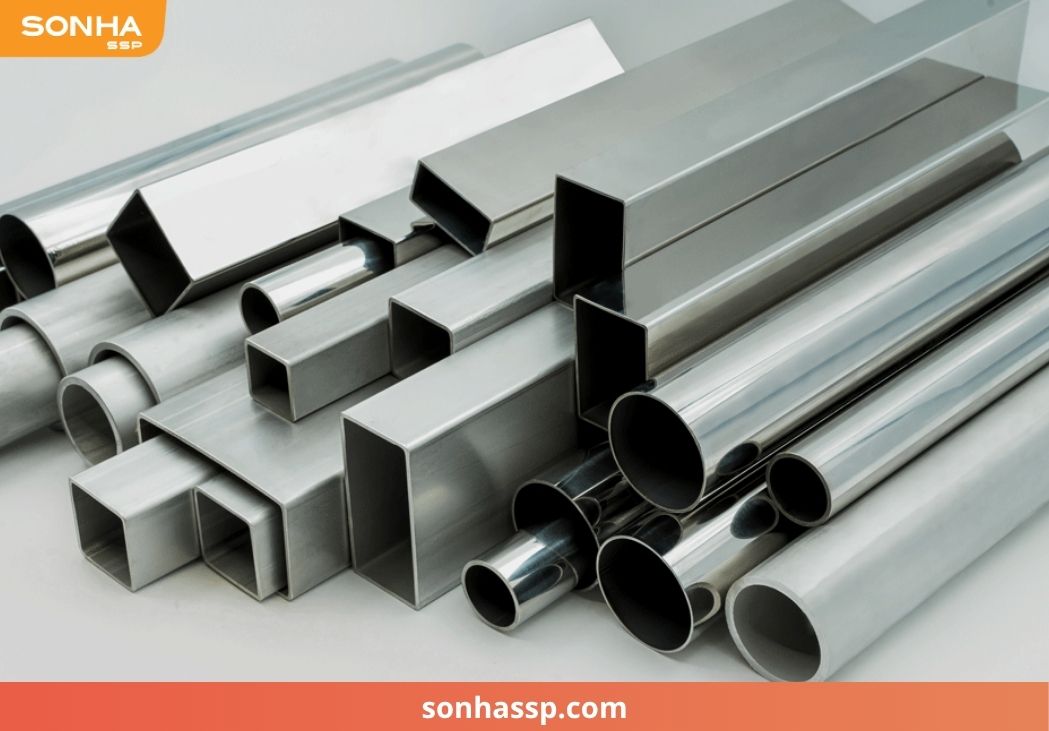
304 Stainless Steel
1.1 Types of 304 Stainless Steel
Depending on carbon content and intended operating conditions, 304 stainless steel is available in several variants. Two common grades are 304L and 304H.
- 304L Stainless Steel:
- 304L is a low-carbon version of 304 stainless steel. The letter “L” stands for Low Carbon.
- Its reduced carbon content helps minimize the risk of intergranular corrosion in heat-affected zones after welding. For this reason, 304L is often preferred for welded components, piping systems, tanks, and industrial structures.
- 304H Stainless Steel:
- 304H contains a higher carbon level than standard 304 and 304L stainless steel.
- Its higher carbon content helps improve mechanical strength at elevated temperatures, making 304H suitable for certain high-temperature industrial applications.
- The selection between 304, 304L, and 304H should therefore depend on welding requirements, service temperature, fabrication processes, and operating conditions.
1.2 Key Properties of 304 Stainless Steel
304 stainless steel is widely used because it offers a strong combination of durability, corrosion resistance, fabrication performance, and cost effectiveness.
- Good Mechanical Strength: 304 stainless steel provides reliable mechanical strength and good resistance to deformation under normal service conditions. It is suitable for many structural, industrial, and manufacturing applications where both durability and formability are required.
- Good Corrosion Resistance: The Chromium content in 304 stainless steel forms a passive oxide layer on the surface. This layer helps protect the material against oxidation and corrosion in many common environments. However, in environments containing high concentrations of salt or chlorides, 304 stainless steel may offer lower corrosion resistance than 316 stainless steel.
- Good Heat Resistance: 304 stainless steel can maintain good stability and oxidation resistance under elevated temperatures when used within suitable operating limits. This makes it applicable to industrial piping, heat-processing equipment, machinery components, and various thermal applications.
1.3 Excellent Formability and Fabrication
Another major advantage of 304 stainless steel is its fabrication flexibility.
It can be processed through various methods, including:
- Cutting
- Bending
- Forming
- Welding
- Rolling
- Polishing
- Stamping
Because of these characteristics, 304 stainless steel is widely used to manufacture stainless steel pipes, tubes, coils, sheets, and fabricated components.
2. What Is 316 Stainless Steel?
316 stainless steel is also an Austenitic stainless steel grade and shares many properties with 304 stainless steel.
The most important difference is the addition of Molybdenum (Mo) to the alloy composition. Molybdenum improves corrosion resistance, especially in environments containing chlorides, salt water, and certain chemicals.
For this reason, 316 stainless steel is commonly selected for more demanding applications where higher corrosion resistance is required.
Typical application areas include:
- Chemical processing
- Marine applications
- Shipbuilding
- Food-processing equipment
- Pharmaceutical equipment
- Medical applications
- Water treatment systems
- Industrial piping
- Coastal structures
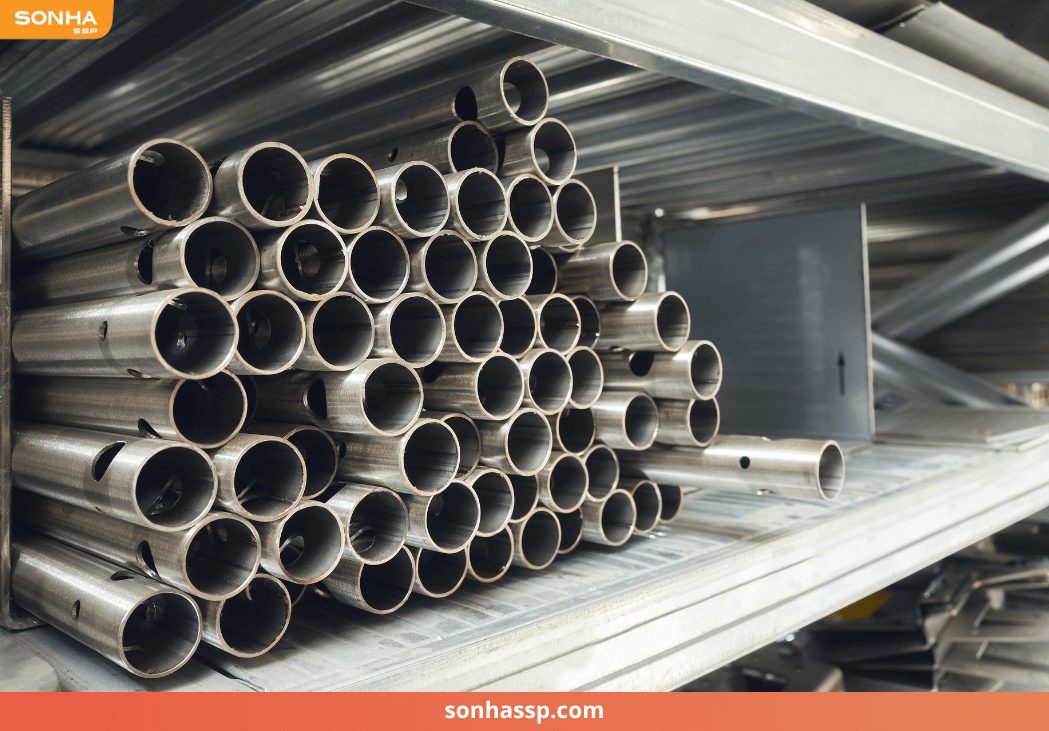
316 Stainless Steel
2.1 Higher Corrosion Resistance
One of the most important advantages of 316 stainless steel is its enhanced corrosion resistance.
Thanks to the addition of Molybdenum, 316 stainless steel offers better resistance to pitting and crevice corrosion than 304 stainless steel in many chloride-containing environments.
This makes it particularly suitable for marine applications, coastal areas, chemical-processing systems, and equipment exposed to salt water.
- Good Mechanical Strength: 316 stainless steel provides good mechanical strength, toughness, and ductility for a wide range of industrial applications. However, 316 stainless steel should not automatically be considered stronger or harder than 304 in every situation. The key advantage of grade 316 is generally its superior corrosion resistance in aggressive environments.
- Good Heat Resistance: 316 stainless steel can also maintain good mechanical and oxidation-resistant properties at elevated temperatures within appropriate service conditions. This makes it suitable for industrial systems requiring both temperature resistance and corrosion resistance.
- Suitable for Harsh Environments: Compared with 304 stainless steel, grade 316 is generally better suited for environments involving:
- High humidity
- Seawater
- Salt exposure
- Chlorides
- Certain chemicals
- Aggressive corrosive conditions
These characteristics make 316 stainless steel a preferred option for applications requiring long-term material reliability under challenging operating conditions.
3. 304 vs 316 Stainless Steel: Which Is Better?
3.1 Similarities Between 304 and 316 Stainless Steel
Both 304 and 316 belong to the Austenitic stainless steel family and share many useful characteristics.
Both grades offer:
- Good corrosion resistance
- Good oxidation resistance
- High durability
- Good mechanical strength
- Good heat resistance
- Excellent formability
- Good weldability
- Attractive surface appearance
- Long service life
- Low magnetic response in the annealed condition
After cold working, both grades may develop a certain degree of magnetism depending on the amount of deformation. Thanks to these characteristics, both 304 and 316 stainless steel are widely used in industrial manufacturing, construction, mechanical engineering, food processing, and commercial applications.
3.1 Differences Between 304 and 316 Stainless Steel
Although the two grades are similar, several important differences should be considered before choosing the right material.
| Comparison Criteria | 304 Stainless Steel | 316 Stainless Steel |
|---|---|---|
| Stainless steel family | Austenitic | Austenitic |
| Main alloying elements | Chromium, Nickel | Chromium, Nickel, Molybdenum |
| Corrosion resistance | Good | Higher in many aggressive environments |
| Chloride resistance | Moderate | Better |
| Saltwater resistance | More limited | Better suited |
| Formability | Excellent | Excellent |
| Weldability | Good | Good |
| Mechanical strength | Good | Good |
| Typical applications | Construction, food equipment, household products, industrial piping | Marine, chemical, pharmaceutical, coastal and high-corrosion applications |
| Cost | Usually lower | Usually higher |
3.2 Chemical Composition: 304 vs 316 Stainless Steel
One of the biggest differences between 304 and 316 stainless steel lies in their chemical composition.
304 stainless steel primarily relies on Chromium and Nickel to provide corrosion resistance and maintain its Austenitic structure.
316 stainless steel, on the other hand, contains Molybdenum in addition to Chromium and Nickel.
The presence of Molybdenum improves resistance to pitting corrosion, especially in chloride-containing environments.
This is one of the main reasons why 316 stainless steel is often preferred for harsher service conditions.
3.3 Corrosion Resistance: 304 vs 316 Stainless Steel
Under normal operating conditions, both 304 and 316 stainless steel provide good corrosion resistance.
However, 316 stainless steel generally performs better in environments containing:
- Salt
- Chlorides
- Seawater
- High humidity
- Certain industrial chemicals
For coastal projects, marine equipment, or components that frequently come into contact with salt water, 316 stainless steel may therefore be the more suitable option.
In general indoor, construction, food-processing, and industrial environments without significant chloride exposure, 304 stainless steel is often sufficient.
3.4 Strength: Is 316 Stainless Steel Stronger Than 304?
Both 304 and 316 stainless steel provide good mechanical strength and durability.
It is not always accurate to say that 316 stainless steel is significantly stronger or harder than 304.
The main advantage of 316 stainless steel is usually its improved corrosion resistance, particularly in chloride-rich environments.
Therefore, material selection should be based on the complete operating environment rather than mechanical strength alone.
4. Applications of 304 Stainless Steel
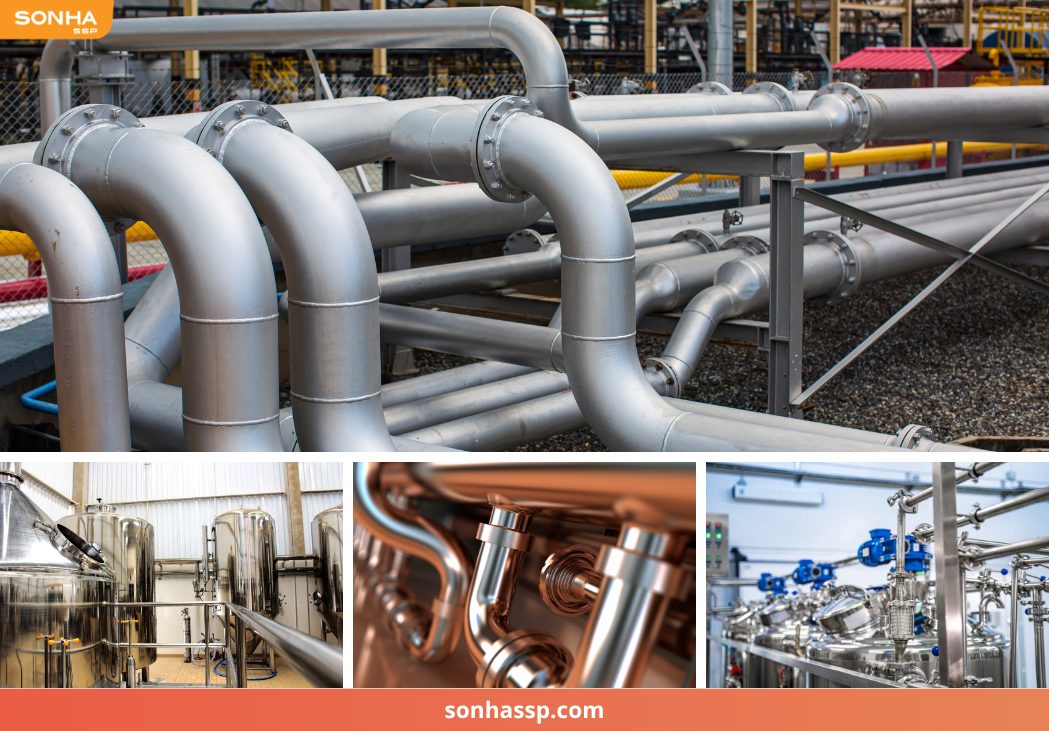
Applications of 304 and 316 stainless steel pipes
4.1 What Is 304 Stainless Steel Used For?
Thanks to its good corrosion resistance, easy fabrication, and competitive cost, 304 stainless steel is used across a wide range of industries.
Typical applications include:
- Stainless steel industrial pipes
- Stainless steel ornamental tubes
- Food-processing equipment
- Kitchen equipment
- Storage tanks
- Construction components
- Handrails and architectural structures
- Mechanical equipment
- Industrial piping systems
- Machine components
- Household appliances
4.2 Applications of 316 Stainless Steel
316 stainless steel is generally selected for applications requiring greater corrosion resistance.
Typical uses include:
- Marine equipment
- Shipbuilding
- Coastal construction
- Chemical-processing equipment
- Chemical piping systems
- Water-treatment equipment
- Food-processing systems
- Pharmaceutical equipment
- Medical equipment
- Chemical storage tanks
- Industrial components exposed to chlorides
4.3 304 vs 316 Stainless Steel: Which One Is Better?
When considering only corrosion resistance in aggressive environments, 316 stainless steel generally offers an advantage over 304 due to its Molybdenum content.
However, this does not mean that 316 stainless steel is always the better choice.
304 stainless steel offers several important advantages:
- Wide availability
- Good corrosion resistance
- Excellent fabrication performance
- Broad application range
- Competitive cost
316 stainless steel, meanwhile, offers:
- Higher resistance to corrosion in many aggressive environments
- Better resistance to chloride-induced pitting
- Better suitability for seawater exposure
- Better performance in certain chemical environments
Therefore, the answer to “304 vs 316 stainless steel: which is better?” depends on the specific operating conditions.
The best grade should be selected based on the environment, technical requirements, expected service life, fabrication requirements, and project budget.
5. Should You Choose 304 or 316 Stainless Steel?
The decision between 304 and 316 stainless steel should depend on actual operating conditions rather than assuming that one grade is always superior.
5.1 When Should You Choose 304 Stainless Steel?
304 stainless steel is generally suitable when:
- The material will be used in normal atmospheric conditions
- There is limited exposure to salt water or aggressive chemicals
- Good fabrication performance is required
- Good general corrosion resistance is sufficient
- Cost efficiency is an important consideration
- The application involves construction, food processing, machinery, or general industrial use
5.2 When Should You Choose 316 Stainless Steel?
316 stainless steel should be considered when:
- The project is located near the sea
- The material is regularly exposed to seawater
- Chlorides are present in the operating environment
- The application involves certain aggressive chemicals
- Higher corrosion resistance is required
- Maintenance or replacement costs are high
- Long-term performance in a harsh environment is important
Simply put, 304 stainless steel is suitable for many general-purpose applications, while 316 stainless steel is usually preferred when higher corrosion resistance is required.
5.3 Is 316 Stainless Steel More Expensive Than 304?
In most cases, 316 stainless steel is more expensive than 304 stainless steel.
One of the main reasons is its alloy composition, particularly the addition of Molybdenum.
However, stainless steel prices can vary depending on several factors, including:
- Raw material prices
- Stainless steel grade
- Dimensions
- Thickness
- Surface finish
- Product specifications
- Order quantity
- Processing requirements
- Market conditions
For this reason, buyers should consider both the initial material cost and the expected operating environment.
A higher initial investment in 316 stainless steel may be justified when improved corrosion resistance can help reduce maintenance, replacement, or downtime costs.
6. Frequently Asked Questions About 304 and 316 Stainless Steel
- Is 316 Stainless Steel Better Than 304?
- 316 stainless steel offers better corrosion resistance than 304 in many aggressive environments, particularly those containing chlorides or salt water.
- However, for general applications, 304 stainless steel often provides sufficient performance at a more competitive cost.
- Which Is More Corrosion-Resistant: 304 or 316 Stainless Steel?
- 316 stainless steel generally provides better corrosion resistance due to the addition of Molybdenum.
- This is especially important in marine, coastal, and chloride-containing environments.
- Which Is Better for Outdoor Use, 304 or 316 Stainless Steel?
- Both grades can be used outdoors.
- For normal outdoor environments, 304 stainless steel may be sufficient. In coastal regions or locations with significant salt exposure, 316 stainless steel is generally preferred.
- Are 304 and 316 Stainless Steel Magnetic?
- In the annealed condition, both 304 and 316 stainless steel generally have very low magnetic response.
- However, cold working may introduce some magnetism.
Therefore, a simple magnet test should not be considered a reliable method for identifying 304 or 316 stainless steel.
7. Conclusion: 304 or 316 Stainless Steel?
There is no single answer to which is better, 304 or 316 stainless steel, because each grade offers advantages for different applications.
If you require a versatile stainless steel grade with good corrosion resistance, excellent formability, wide availability, and competitive cost, 304 stainless steel is often an appropriate choice.
If the material will operate in seawater, coastal environments, chloride-rich conditions, chemical-processing systems, or other aggressive environments, 316 stainless steel may provide better long-term performance.
The most important factor is choosing the correct stainless steel grade according to the operating environment, technical requirements, expected service life, fabrication needs, and project budget.
8. SONHA SSP VIETNAM – Stainless Steel Manufacturer and Supplier
SONHA SSP VIETNAM manufactures and supplies stainless steel products for a wide range of industrial and commercial applications.
Our product portfolio includes stainless steel industrial pipes, ornamental tubes, cold-rolled stainless steel coils, and other stainless steel solutions in various grades, including:
- Stainless Steel 201
- Stainless Steel 304 / 304L
- Stainless Steel 316 / 316L
- Stainless Steel 430
With more than 25 years of manufacturing experience and products supplied to customers in over 50 countries, SONHA SSP VIETNAM provides factory-direct stainless steel solutions with flexible specifications for international buyers.
Our products can be manufactured according to various requirements for dimensions, thickness, surface finish, processing, packaging, and export conditions.
Furthermore, if you are looking for a high-quality stainless steel pipe supplier, please explore our products and contact Son Ha SSP immediately via our Hotline at (+84) 986434303 for the fastest support and consultation!
>> RELATED ARTICLES
Understanding the factors determining stainless steel pipe fabrication costs
Top 3 most reputable welded stainless steel pipe manufacturers in Hanoi
Next latest post

THƯƠNG HIỆU QUỐC GIA VIỆT NAM 2026 VINH DANH 5 SẢN PHẨM SƠN HÀ
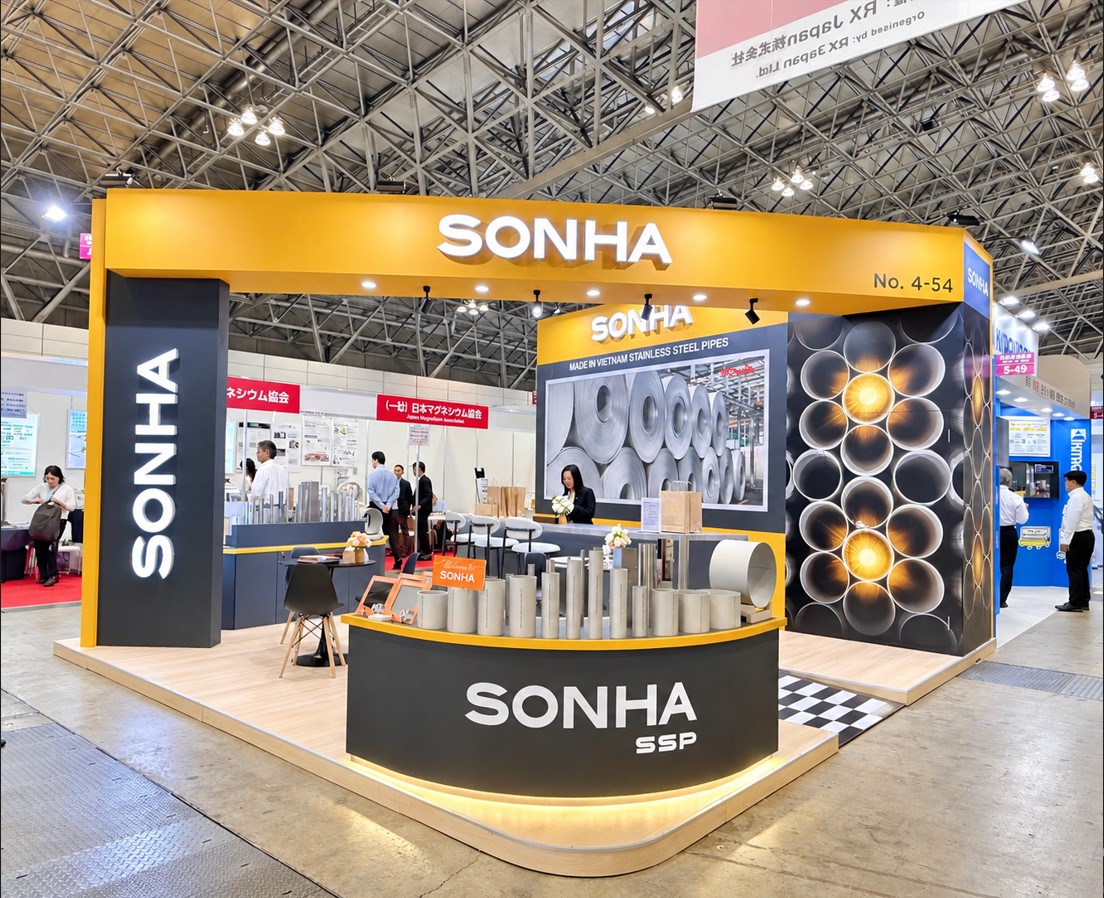
Looking back on SONHA SSP’s journey at highly-functional Material Week Tokyo 2026
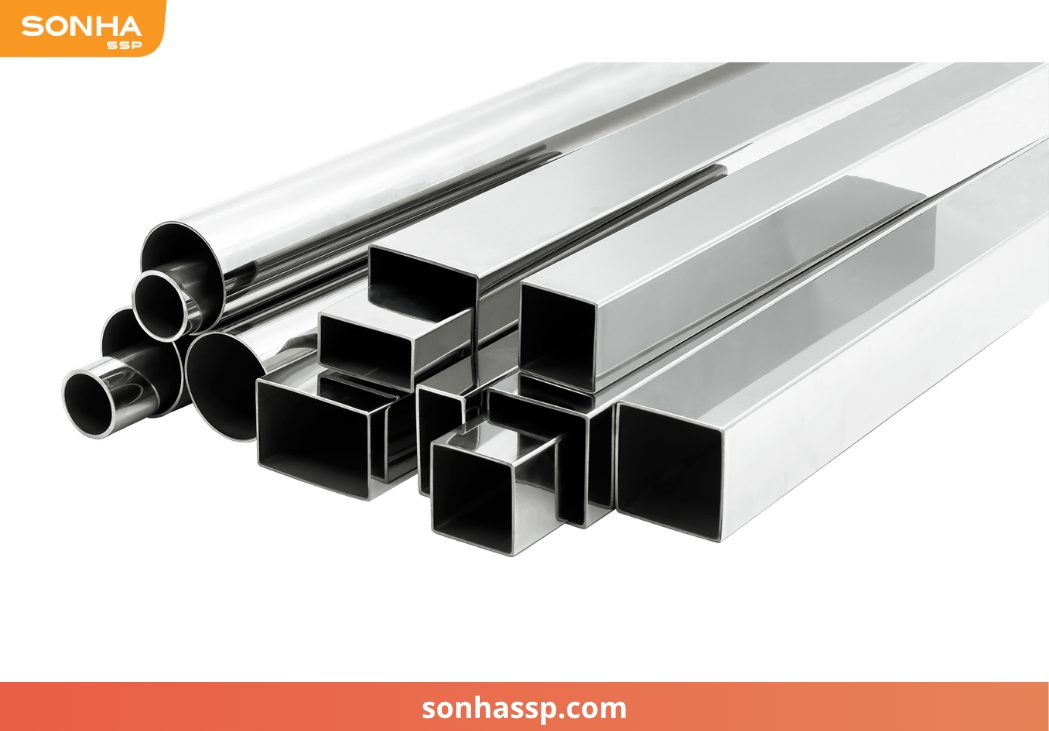
Detailed decorative stainless steel pipe size chart 2026

