

Which is better: 304 or 430 stainless steel? Which one should you choose?
Stainless steel is a familiar material in modern life, widely used in household products, kitchen equipment, construction projects, and industrial manufacturing. However, when choosing stainless steel products, many people wonder: which is better, 304 or 430 stainless steel? These are the two most common stainless steel grades on the market today, but each has different characteristics, durability, and pricing. So, let Son Ha SSP Vietnam help you explore the details below to make the most suitable choice.
1. What Is 304 Stainless Steel?
304 stainless steel (also known as SUS 304) is the most widely used stainless steel alloy today. Its main composition includes iron (Fe), approximately 18% chromium (Cr), around 8% nickel (Ni), along with other elements such as carbon (C), manganese (Mn), and silicon (Si). Thanks to its high chromium and nickel content, 304 stainless steel offers excellent corrosion resistance and oxidation resistance, along with good heat resistance and high ductility. These properties allow 304 stainless steel to remain durable and attractive in humid environments, mild acidic conditions, and food or chemical applications. It also typically has a bright polished surface, resists staining, and provides good antibacterial properties. As a result, 304 stainless steel is widely preferred for premium kitchenware (pots, pans, sinks, and cutlery), medical equipment, chemical storage tanks, and food processing industries.
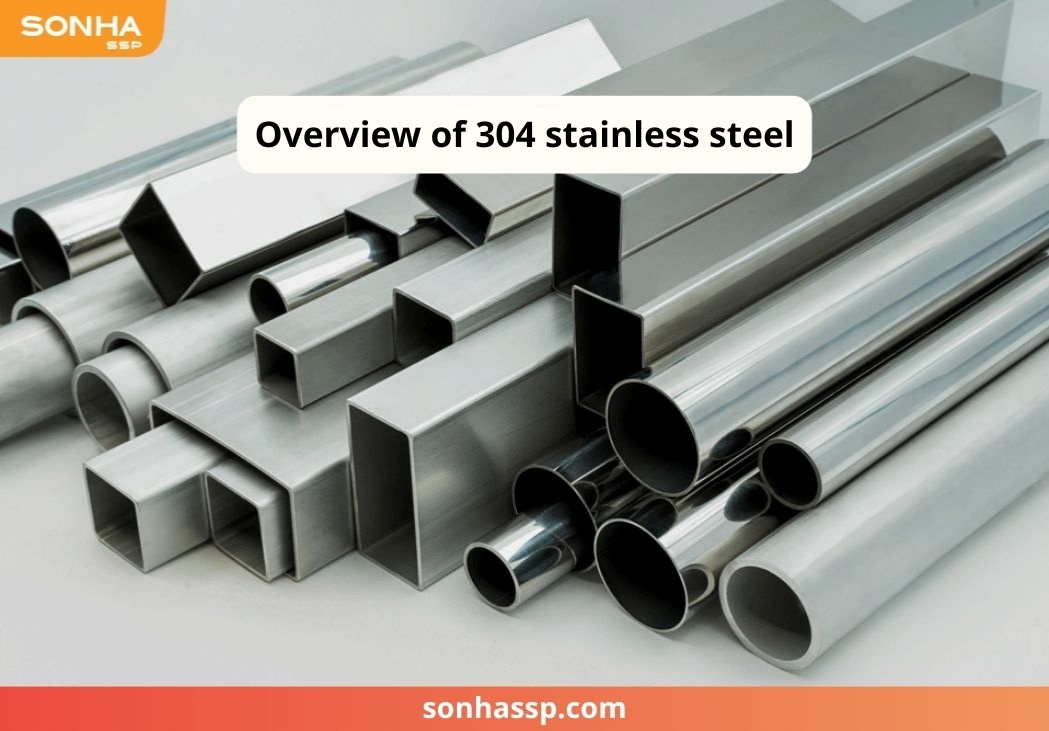
304 stainless steel offers excellent corrosion and oxidation resistance.
2. What Is 430 Stainless Steel?
430 stainless steel belongs to the Ferritic stainless steel group. Its main composition includes approximately 16–18% chromium (Cr) and iron (Fe), with a low carbon content of only around 0.08% and almost no nickel (Ni). This is the reason why 430 stainless steel has lower corrosion resistance and ductility compared to 304 stainless steel. However, it offers better heat resistance and lower production costs. 430 stainless steel is widely used for common household products such as pots, pans, gas stoves, thermal flasks, as well as interior and automotive accessories, doors, and kitchen equipment (oven covers, refrigerator panels, etc.). However, 430 stainless steel is not suitable for environments exposed to chemicals, salt, or strong acids, as it can rust more easily under such conditions.
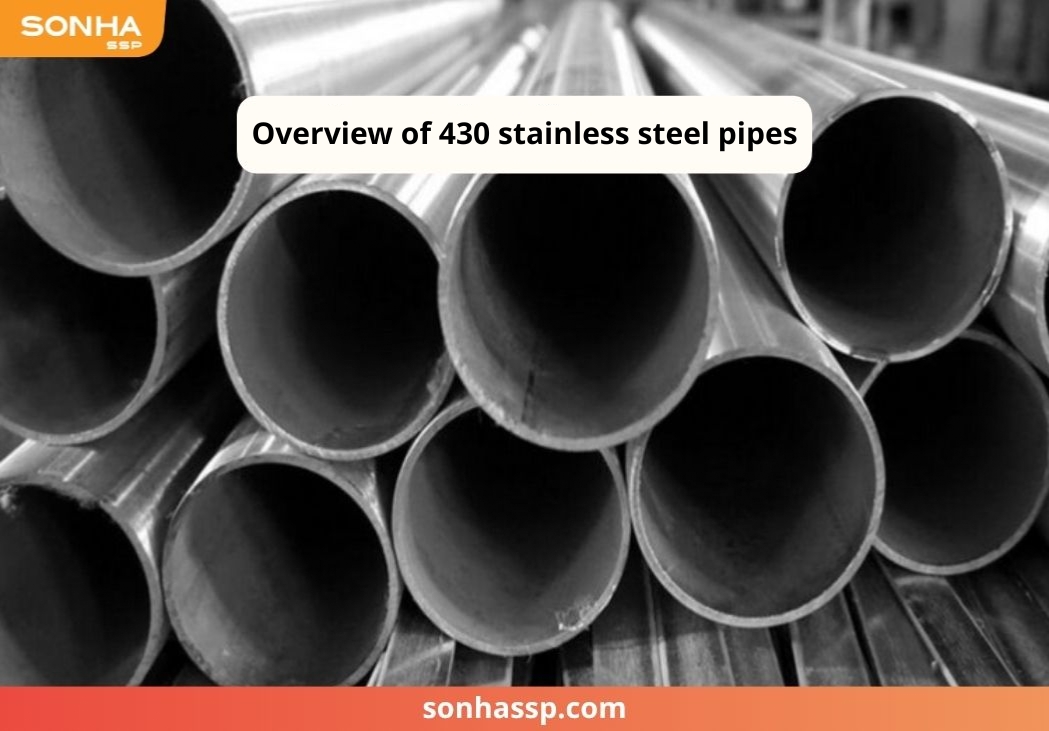
inox 430
3. Which Is Better: 304 or 430 Stainless Steel? A Detailed Comparison
3.1. Chemical Composition
In terms of chemical composition, the main difference between 304 and 430 stainless steel lies in their nickel content.
- 304 stainless steel: Contains approximately 18–20% chromium, 8–10.5% nickel, less than 0.08% carbon, along with manganese (Mn), silicon (Si), phosphorus (P), sulfur (S), and other elements. Nickel enhances ductility and corrosion resistance.
- 430 stainless steel: Contains 16–18% chromium and less than 0.5% nickel. Due to its low nickel content, 430 stainless steel is less flexible and has lower mechanical performance.
In practice, 304 stainless steel also has variants such as 304L (low carbon) and 304H (high carbon for improved high-temperature strength). However, the standard composition of 304 stainless steel generally maintains around 18% chromium and 8–10% nickel.
3.2. Corrosion Resistance
Thanks to its higher chromium and nickel content, 304 stainless steel offers significantly better corrosion resistance than 430 stainless steel. Specifically, 304 stainless steel maintains a bright, rust-free surface in humid environments, mild acidic conditions, and areas exposed to saltwater. Meanwhile, 430 stainless steel oxidizes and rusts more quickly in harsh environments.
3.3. Durability
Both 304 and 430 stainless steel are highly durable compared to ordinary carbon steel, but 304 stainless steel performs better overall.
- 304 stainless steel: Tensile strength: approximately 520–750 MPa, Yield strength: 200–230 MPa, Elongation: ≥45%, Hardness: around 70–90 HRB (equivalent to approximately 20 HRC), These properties give 304 stainless steel excellent ductility, making it easier to bend and fabricate.
- 430 stainless steel: Tensile strength: approximately 483 MPa, Yield strength: around 310 MPa, Elongation: about 22%, Hardness: approximately 85 HRB (Brinell hardness around 183 HB), Compared to 304, 430 stainless steel is slightly harder but has lower elongation and becomes more brittle at low temperatures due to its ferritic structure.
3.4. Practical Applications
Thanks to its superior properties, 304 stainless steel is widely used in industries requiring high durability and excellent corrosion resistance, such as:
- Premium household and kitchen products: pots, pans, sinks, faucets, knives, and cutlery.
- Medical and food industries: hospital equipment, food processing systems, and food storage tanks.
- High-end construction and interior design: railings, stainless steel handrails, hinges, ceilings, and partitions.
Chemical industry: storage tanks, pipelines, and wastewater treatment equipment.
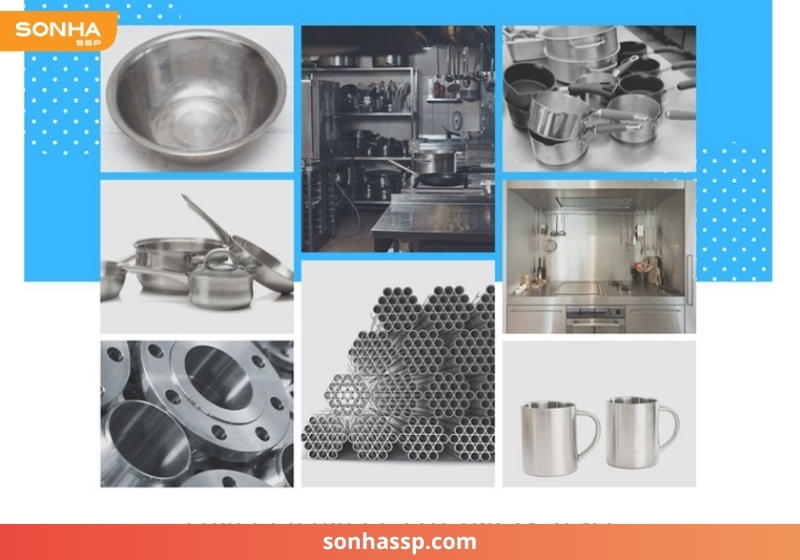
Some practical applications of stainless steel 430
On the other hand, 430 stainless steel is suitable for applications that do not require high corrosion resistance and where lower cost is preferred, such as:
- Common household products: pots, pans, gas stoves, budget shower heads, and tools with limited water exposure.
- Decorative and affordable interior applications: door frames, decorative panels, low-cost kitchen cabinets, and refrigerator back panels.
- Automotive industry: decorative trims, screws, wheel components, and other non-critical parts.
| Criteria | 304 Stainless Steel | 430 Stainless Steel |
| Chemical Composition | Cr ~18–20%, Ni ~8–10%, C ≤ 0.08% | Cr ~16–18%, Ni ~0–0.5%, C ≤ 0.08% |
| Corrosion Resistance | Very high – highly resistant to seawater and mild acids | Lower – more prone to corrosion in harsh environments |
| Durability | Excellent ductility, easy to bend and fabricate | Harder than 304, but lower elongation and more brittle |
| Applications | Premium kitchenware, medical equipment, food industry, high-end construction | Common household products, decorative accessories, automotive parts |
| Price | Higher (due to higher nickel content) | Much lower (due to low nickel content) |
4. How to Identify 304 and 430 Stainless Steel
There are two of the simplest ways to distinguish between 304 and 430 stainless steel on-site:
- Magnet Test: 430 stainless steel contains a higher iron content, so it strongly attracts magnets. In contrast, 304 stainless steel is almost non-magnetic or only slightly magnetic. This is an effective identification method because austenitic stainless steel (304) is non-magnetic, while ferritic stainless steel (430) has clear magnetic properties.
- Diluted Acid Test: Place a drop of diluted HCl or HNO₃ acid on the surface. 304 stainless steel usually does not change color or produce bubbles immediately, while 430 stainless steel is more likely to oxidize, discolor, or form bubbles due to its reaction with chloride ions (Cl⁻).
Note: For the most accurate identification, it is recommended to combine multiple testing methods when determining whether the material is 304 or 430 stainless steel.
5. Should You Choose 304 or 430 Stainless Steel?
The decision between 304 and 430 stainless steel depends on your intended application and budget. Specifically:
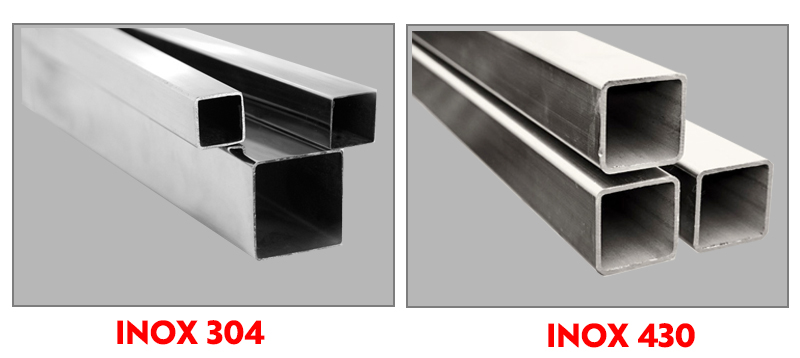
The decision to choose between 304 and 430 stainless steel largely depends on the intended use.
- If you require high corrosion resistance and durability, such as for industrial kitchens, marine environments, or medical equipment, then 304 stainless steel is the better choice due to its superior performance and reliability. Although it is more expensive, 304 stainless steel offers a longer lifespan and helps reduce maintenance costs over time.
- If the usage environment is relatively normal, with limited exposure to chemicals or water, and cost savings are a priority, then 430 stainless steel can still meet the requirements. For example, common household products, indoor decorative accessories, or less demanding applications can use 430 stainless steel to lower overall costs. In such cases, 430 stainless steel is the more economical option.
From the comparisons above, it is clear that both 304 and 430 stainless steel have their own advantages and are suitable for different applications. Therefore, instead of simply asking “Which is better: 304 or 430 stainless steel?”, you should consider your actual usage needs, operating environment, and budget.
Choosing the right stainless steel grade not only helps optimize costs but also ensures long-term performance and durability for your products.
RELATED ARTICLES:
How to Distinguish Between 201 and 304 Stainless Steel: 5 Accurate Identification Tips
Stainless steel export factories in Vietnam: Production capacity & trusted global partnerships
Son Ha SSP’s impression at the Wire & Tube Düsseldorf 2026 international exhibition
Next latest post

THƯƠNG HIỆU QUỐC GIA VIỆT NAM 2026 VINH DANH 5 SẢN PHẨM SƠN HÀ
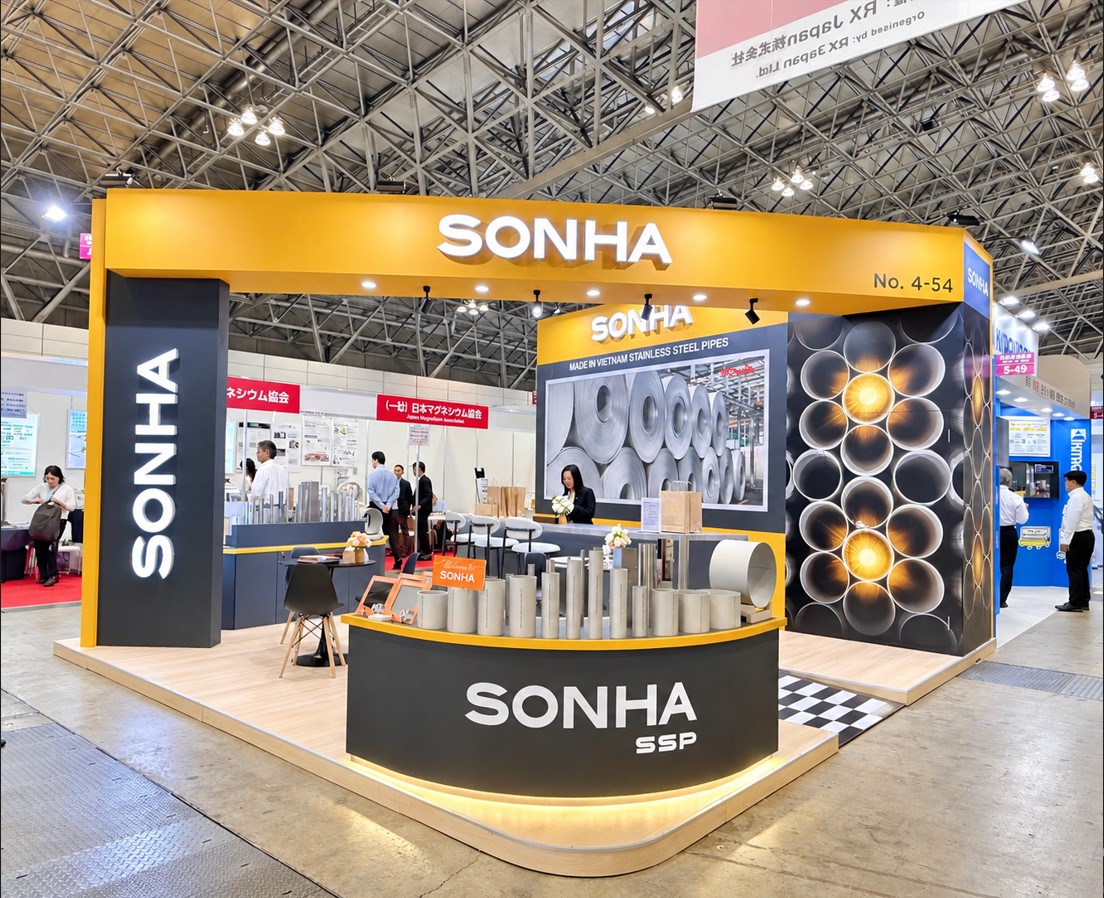
Looking back on SONHA SSP’s journey at highly-functional Material Week Tokyo 2026
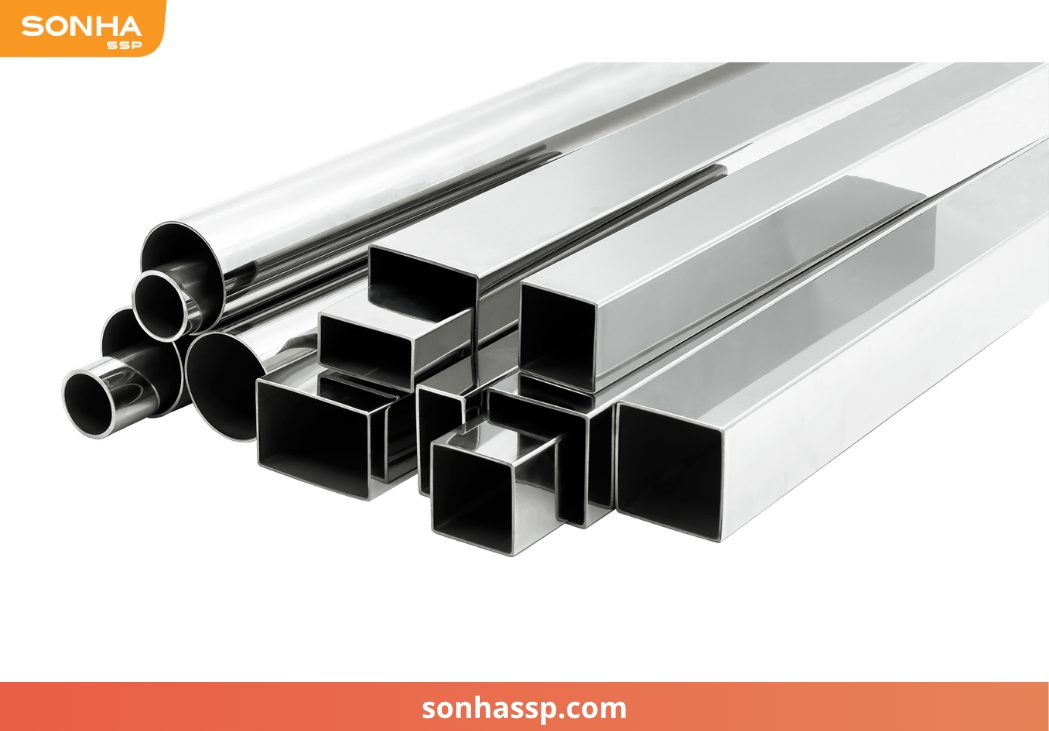
Detailed decorative stainless steel pipe size chart 2026