

How to distinguish between 201 and 304 stainless steel: 5 accurate identification tips
In the industrial and construction sectors, confusing 201 stainless steel with 304 stainless steel can not only cause financial losses but also seriously affect the lifespan of projects and products. So, how can you tell these two materials apart when they look almost identical?
The article below will provide a detailed overview and the most accurate methods for distinguishing between 201 and 304 stainless steel.
1. Why Is It Important to Distinguish Between 201 and 304 Stainless Steel?
Stainless steel (also known as inox) is an alloy of iron containing at least 10.5% chromium, along with other elements such as nickel, carbon, and manganese. However, the properties of each stainless steel grade depend on the proportion of these chemical components.
For example:
- 304 stainless steel:
Often referred to as the “king” of stainless steel grades for household and industrial applications. With a high nickel content (minimum 8%), 304 stainless steel offers excellent corrosion resistance and does not rust even in harsh environments. - 201 stainless steel:
A more economical alternative that replaces part of the nickel content with manganese. Although it still has high mechanical strength, the oxidation and corrosion resistance of 201 stainless steel is significantly lower than that of 304 stainless steel.
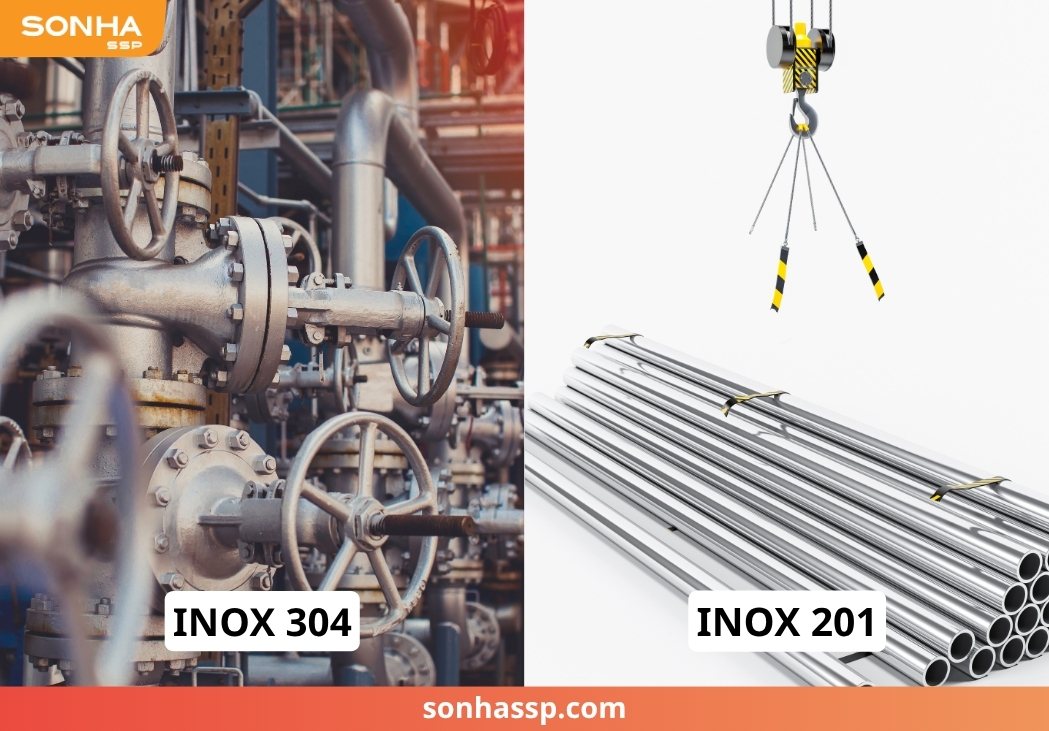
Inox 201 & inox 304
For industrial piping systems or chemical storage tanks, mistakenly using 201 stainless steel instead of 304 stainless steel can lead to leakage, corrosion, and rust after only a short period of use.
To better understand why they differ, take a look at the comparison table of their chemical composition and physical properties below:
| CRITERIA | 304 STAINLESS STEEL | 201 STAINLESS STEEL |
| Nickel Content | 8% – 10.5% (High) | 3.5% – 5.5% (Low) |
| Manganese Content | ~ 2% | 5.5% – 7.5% |
| Corrosion Resistance | Excellent, highly durable outdoors | More prone to rust when exposed to acids or salt |
| Surface Appearance | Bright and glossy with a deeper finish | Shiny but slightly darker in appearance |
| Price | Higher | Lower (30–40% cheaper) |
2. 5 Simple and Accurate Ways to Distinguish Between 201 and 304 Stainless Steel
In practice, you may not always have access to metal analysis equipment such as a spectrometer to identify stainless steel grades. However, with practical experience and several manual testing methods, you can still distinguish between 201 and 304 stainless steel relatively accurately on-site. Below are 5 common and easy-to-apply methods that provide reliable results when performed correctly.
2.1. Using Specialized Stainless Steel Testing Solution
This is one of the most widely used methods in the industry because it delivers fast, visual, and highly accurate results when identifying stainless steel grades.
Procedure:
Clean the stainless steel surface with fine sandpaper to remove the outer oxide layer. Then place one drop of the testing solution (usually a mixture of acid and specialized metal salts) onto the surface.
- Reaction of 201 stainless steel:
The liquid will immediately or within 30 seconds turn brick red. This happens because the high manganese content in 201 stainless steel reacts strongly with the testing solution. - Reaction of 304 stainless steel:
The liquid usually remains transparent or only turns slightly pale yellow due to the acid’s mild effect on the surface.
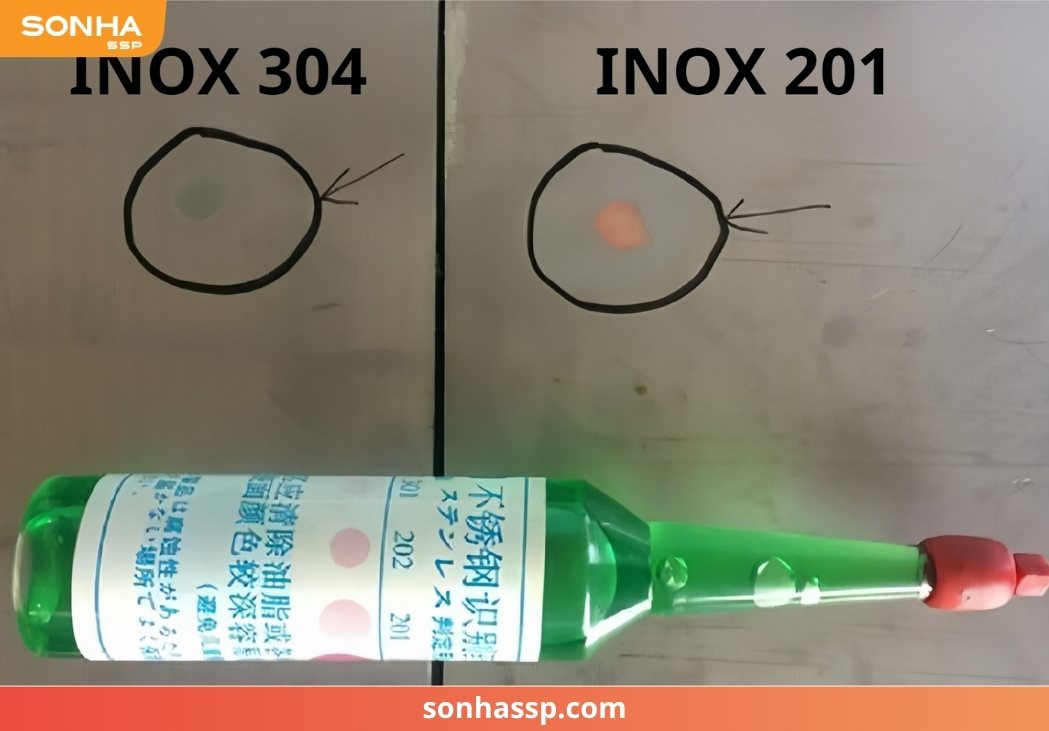
How to distinguish between 201 and 304 stainless steel using specialized stainless steel test reagents.
2.2. Using a Magnet to Identify Stainless Steel
Using a magnet to distinguish between 201 and 304 stainless steel is a simple method, but it is important to understand the nature of the materials to avoid incorrect conclusions.
Standard 304 stainless steel has an austenitic crystal structure, which makes it non-magnetic. However, after cold rolling or bending (which deforms the crystal structure), part of the austenite may transform into martensite, causing it to become slightly magnetic.
How to identify correctly:
- If the material is a flat sheet that has not been processed, 304 stainless steel will generally not attract a magnet.
- If both materials attract the magnet slightly, you should combine this method with a stainless steel testing solution for a more accurate conclusion.
2.3. Observing Grinding Sparks (For Technicians)
Identifying stainless steel grades by observing grinding sparks requires practical experience and is commonly used by mechanical technicians for quick material recognition.
Procedure:
Use an angle grinder with a standard grinding wheel. Press the stainless steel sample lightly against the wheel with consistent force.
- Spark characteristics of 201 stainless steel:
The spark stream is dense, with many branching spark tails (similar to a wheat-shaped pattern), and the sparks appear very bright. This is caused by the higher carbon and manganese content burning in the air.
Spark characteristics of 304 stainless steel:
The spark stream is thinner, straighter, and has fewer branches at the tail. The spark color is usually dark red or dark orange-yellow.
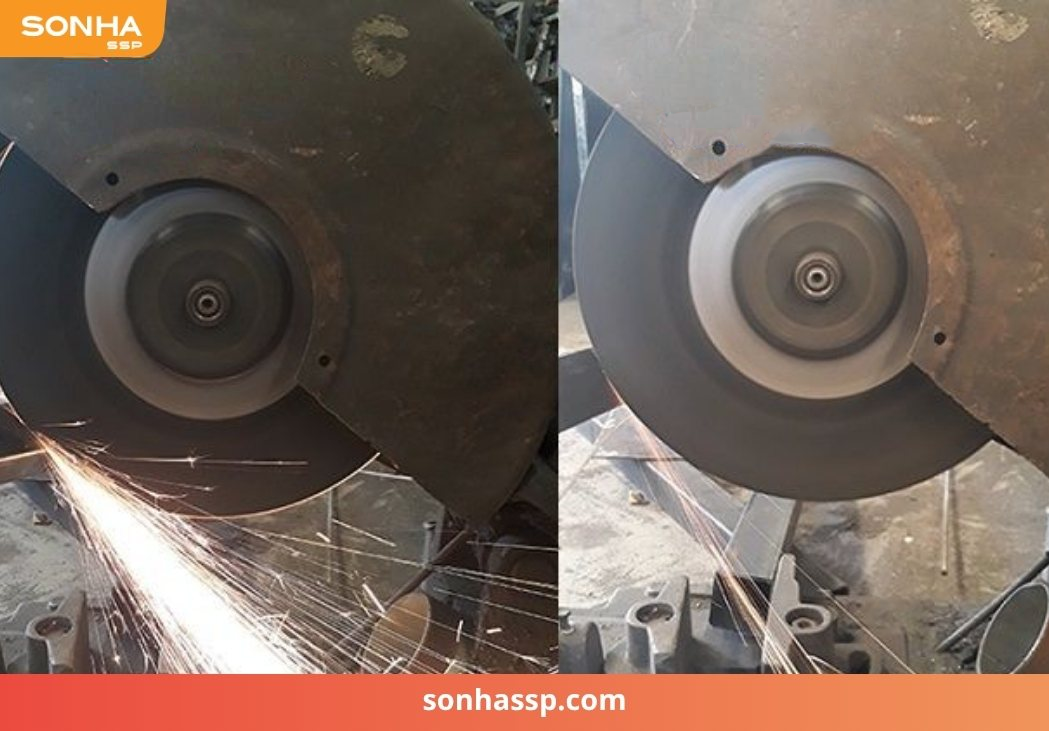
Distinguishing between 201 and 304 stainless steel using the spark test during grinding.
2.4. Checking CO/CQ Certificates and Product Markings
This is one of the most reliable methods for businesses that need to verify material quality for project owners or export purposes.
How to do it: Check the product markings and request CO/CQ certificates (Certificate of Origin / Certificate of Quality) from the supplier. If necessary, send samples to testing centers such as Quatest 1, 2, or 3 for verification.
Result: You will receive an analysis report showing the exact percentage of elements such as Ni, Cr, Mn, and C. This serves as the highest legal basis for project acceptance and quality verification.
2.5. Inspection Method (Spectral Analysis)
While the four methods above are practical ways to distinguish between 201 and 304 stainless steel in many situations, spectral analysis is the most accurate method for businesses that need certified material verification for construction projects or export activities.
How to do it: Send the stainless steel sample to professional inspection centers such as Quatest 1, 2, or 3.
Result: You will receive a detailed analysis report showing the precise percentage composition of nickel (Ni), chromium (Cr), manganese (Mn), carbon (C), and other elements. This is considered the most reliable legal evidence for quality inspection and project acceptance.
3. Should You Choose 201 or 304 Stainless Steel to Optimize Cost and Durability?
Choosing between 201 and 304 stainless steel is not simply about selecting the “better” material, but rather choosing the one that is most suitable for your operating environment and project budget.
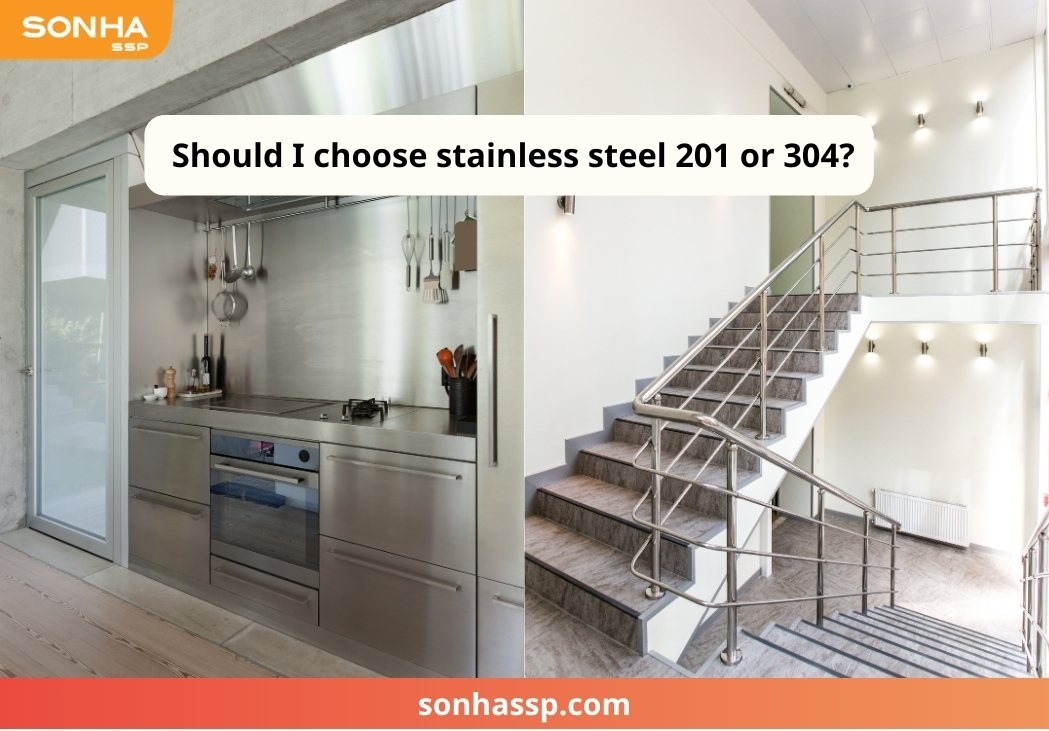
You must choose stainless steel grades 201 and 304 that are suitable for the intended use.
3.1. When Should You Prioritize 304 Stainless Steel?
304 stainless steel is a long-term investment for environments with high corrosion risks. You should choose 304 stainless steel in the following cases:
- Food and medical industries: Used for milk storage tanks, food processing equipment, and surgical instruments. 304 stainless steel ensures food safety and does not chemically react with food products.
- Outdoor and coastal environments: Suitable for railings, staircases, gates, and door systems. 304 stainless steel can withstand salty air and high humidity without yellowing or rusting.
- Industrial piping systems: Used for clean water pipes, gas pipelines, or mild chemical transportation systems. The corrosion resistance and pressure durability of 304 stainless steel help minimize leakage risks.
3.2. When Should You Choose 201 Stainless Steel?
201 stainless steel is an economical solution for projects that require cost optimization while still maintaining hardness and an attractive appearance.
- Interior decoration: Table and chair frames, shelves, cabinets, and sofa legs used in dry, air-conditioned environments.
- Motorcycle and bicycle accessories: Parts requiring high hardness and strength but with limited exposure to harsh cleaning chemicals.
- Advertising structures: Stainless steel channel letters and signboard frames installed in locations with limited exposure to acid rain or severe weather.
- Affordable household products: Dish racks, clothes hangers, and other budget-friendly home accessories.
Hopefully, this article has helped you better understand how to distinguish between 201 and 304 stainless steel. Investing in the right material from the beginning can help reduce maintenance and replacement costs in the long run.
If you are looking for a reliable stainless steel pipe supplier with complete inspection and certification documents, please contact Son Ha SSP Vietnam for the best consultation and support.
RELATED ARTICLES:
Stainless steel export factories in Vietnam: Production capacity & trusted global partnerships
Son Ha SSP’s impression at the Wire & Tube Düsseldorf 2026 international exhibition
Next latest post

THƯƠNG HIỆU QUỐC GIA VIỆT NAM 2026 VINH DANH 5 SẢN PHẨM SƠN HÀ
Looking back on SONHA SSP’s journey at highly-functional Material Week Tokyo 2026
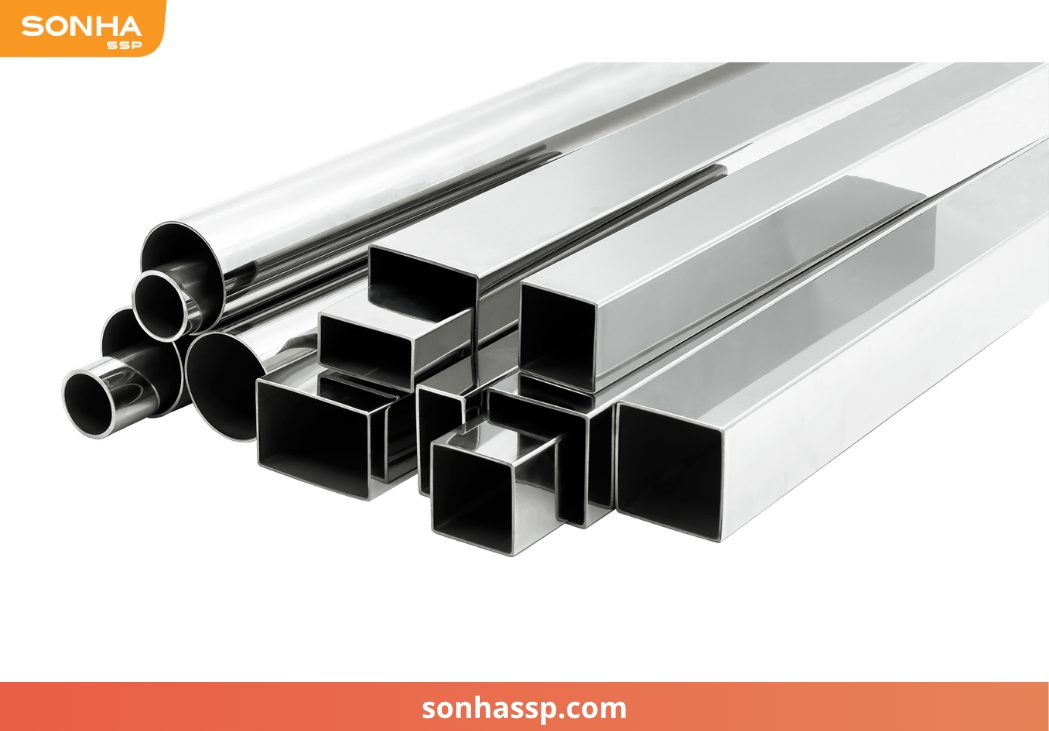
Detailed decorative stainless steel pipe size chart 2026