

Stainless steel pipe welding: Methods, techniques & best practices
Stainless steel pipe welding requires careful control of heat input, filler metal, shielding gas and joint preparation. Unlike ordinary carbon steel, stainless steel is particularly sensitive to excessive heat and contamination, both of which can reduce corrosion resistance and affect the mechanical properties of the finished weld.
Selecting the right welding process and maintaining proper welding conditions are therefore essential for producing strong, clean and corrosion-resistant stainless steel pipe joints.
This guide covers the main stainless steel pipe welding methods, filler metal selection, shielding gases, heat management and practical considerations for achieving reliable weld quality.
1. Why Is Stainless Steel Pipe Welding Different?
Stainless steel depends on a chromium-rich oxide layer for its corrosion resistance. During welding, excessive heat or inappropriate filler material can affect this protective layer and increase the risk of corrosion around the weld and heat-affected zone.
For this reason, successful stainless steel pipe welding should focus on:
- Controlling heat input
- Selecting compatible filler metal
- Using the correct shielding gas
- Preventing contamination
- Maintaining accurate pipe fit-up
- Limiting oxidation at the weld root
Proper control of these factors helps preserve both the appearance and performance of stainless steel piping.
2. Choosing the Right Filler Metal for Stainless Steel Pipe Welding
Filler metal selection is an important part of welding stainless steel pipe because it influences weld strength, carbon content and corrosion resistance.
2.1 Low-Carbon Filler Metals
Filler metals with an “L” designation, such as ER308L, have lower maximum carbon content.
These filler metals are commonly used with low-carbon stainless steel because they help reduce carbide formation and maintain corrosion resistance.
For example, using standard 308 filler instead of 308L when welding 304L stainless steel may introduce additional carbon into the weld and increase the risk of corrosion.
2.2 High-Carbon Filler Metals
Filler metals marked with an “H” designation contain more carbon and can provide greater strength at elevated temperatures.
They may be suitable for specific high-temperature applications where mechanical strength is a greater priority.
2.3 Silicon-Enhanced Filler Metals
Some filler metals, such as ER309LSi, contain higher silicon levels.
Higher silicon content can:
- Improve weld puddle fluidity
- Improve weld tie-in
- Increase travel speed
- Support higher welding productivity
The 309 series is also useful for joining dissimilar stainless steels and certain overlay welding applications.
3. Preventing Sensitization During Stainless Steel Pipe Welding
One of the major concerns in stainless steel pipe welding is sensitization.
Sensitization occurs when carbon combines with chromium to form chromium carbides under certain thermal conditions. This reduces the chromium available to maintain the protective oxide layer, potentially lowering corrosion resistance around the weld.
The sensitization temperature range is generally around 500°C to 800°C.
How to Reduce the Risk of Sensitization
Three important approaches include:
- Use low-carbon materials: Low-carbon stainless steel and filler metals reduce the amount of carbon available for carbide formation.
- Control welding heat: The weld and heat-affected zone should spend as little time as practical within the sensitization temperature range. For multi-pass welding, minimizing the number of passes and controlling interpass temperature can help reduce total heat exposure.
- Select suitable alloyed filler metals: Certain filler metals contain alloying elements such as titanium or niobium that can help limit undesirable reactions between chromium and carbon.
Shielding Gas for Stainless Steel Pipe Welding
Shielding gas protects the molten weld pool from atmospheric contamination and plays an important role in weld quality.
The correct gas depends on whether TIG, MIG or flux-cored welding is being used.
4. TIG Welding Stainless Steel Pipe
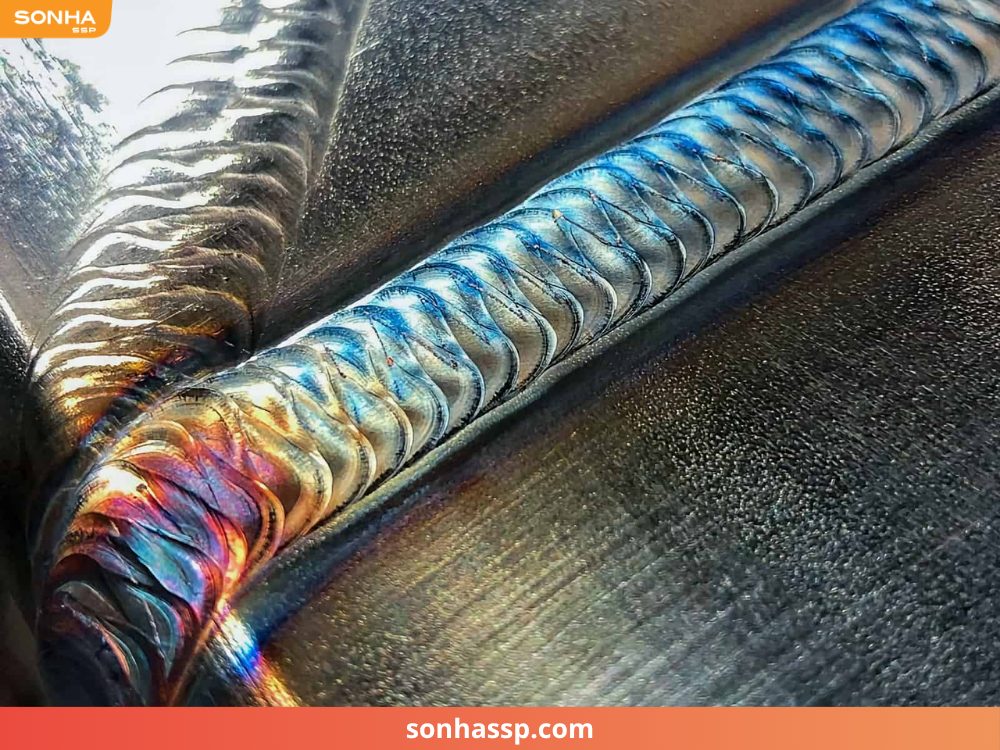
TIG Welding Stainless Steel Pipe
TIG welding, also known as Gas Tungsten Arc Welding or GTAW, is one of the most commonly used methods for stainless steel pipe welding.
It provides precise arc control, low heat input and high-quality welds, making it especially suitable for sanitary piping, high-purity systems and relatively thin stainless steel pipe.
4.1 Recommended Shielding Gas for TIG Welding
For TIG welding stainless steel pipe, 100% argon is commonly used for both:
- Torch shielding gas
- Back purging
Argon provides stable arc performance while protecting the weld from oxidation.
4.2 Why Back Purging Is Important
Back purging introduces inert gas into the inside of the pipe during welding.
Its main purpose is to protect the backside of the weld root from oxygen and excessive oxidation.
Proper back purging helps maintain:
- Clean weld roots
- Corrosion resistance
- Weld integrity
For duplex stainless steel, inert gas purging is particularly important for maintaining weld performance.
5. MIG Welding Stainless Steel Pipe
MIG welding can provide higher productivity than TIG welding and is often considered for thicker stainless steel pipes or applications where welding speed is important.
Common shielding gas combinations include:
- Argon and CO₂
- Argon and O₂
- Tri-mix shielding gases
These mixtures generally use a high proportion of argon or helium with relatively low levels of carbon dioxide.
Why CO₂ Should Be Controlled
High carbon dioxide levels can introduce additional carbon into the weld pool during welding.
This can increase the risk of sensitization and potentially reduce corrosion resistance.
Small amounts of CO₂ or oxygen, however, can help stabilize the MIG welding arc.
6. TIG vs. MIG for Stainless Steel Pipe Welding
Both TIG and MIG can be used for stainless steel pipe welding, but they serve different requirements.
TIG Welding Advantages
TIG welding provides:
- Precise heat control
- High-quality weld appearance
- Excellent weld pool control
- Suitability for thin-wall pipe
- Strong performance in sanitary and high-purity applications
TIG is especially effective where weld cleanliness and corrosion resistance are critical.
MIG Welding Advantages
MIG welding offers:
- Faster travel speeds
- Higher deposition rates
- Greater productivity
- Better suitability for thicker pipe sections
In some larger pipe applications, manufacturers may use TIG for the root pass and MIG or another wire process for the fill and cap passes.
7. Weld Preparation for Stainless Steel Pipe
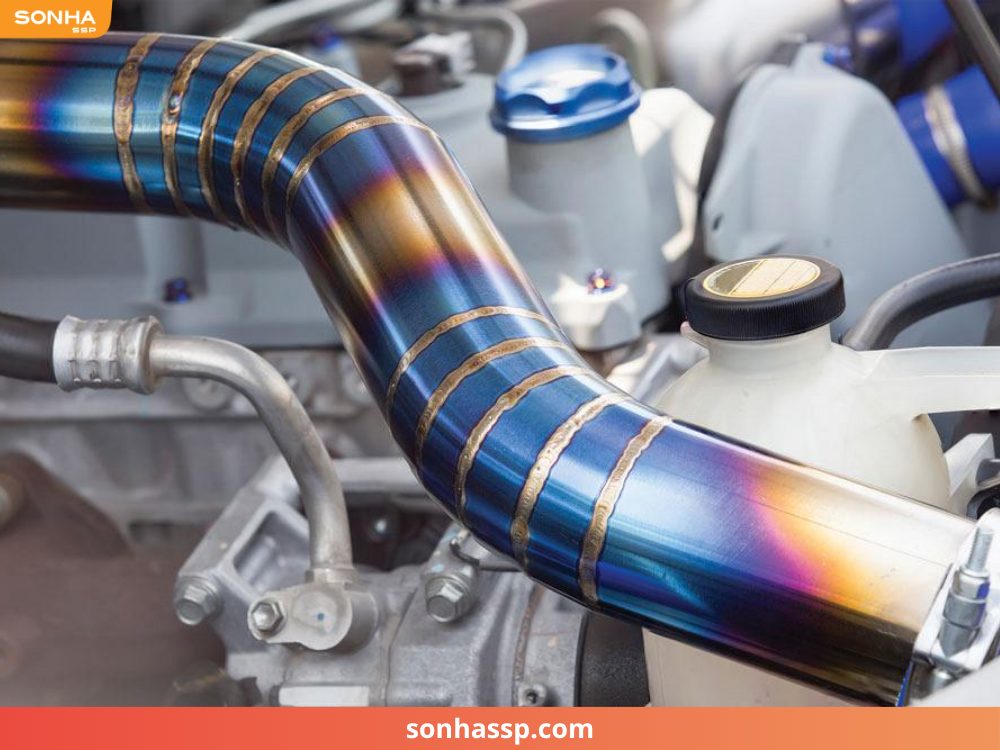
Weld Preparation for Stainless Steel Pipe
Good welding results start before the arc is struck.
Joint preparation and cleanliness are critical because stainless steel can easily become contaminated by tools that have previously been used on carbon steel or other materials.
Tools such as:
- Wire brushes
- Grinding wheels
- Files
- Cutting tools
should ideally be dedicated exclusively to stainless steel fabrication.
Contamination introduced during surface preparation can reduce corrosion resistance and create weld defects.
8. Importance of Accurate Pipe Fit-Up
Poor pipe fit-up increases the amount of filler metal required and often results in slower welding speeds.
This produces additional heat in the weld area and can increase distortion.
Accurate fit-up is particularly important when welding:
- Sanitary stainless steel pipe
- Food-processing piping
- Pharmaceutical piping
- High-purity systems
A consistent joint gap and properly prepared edges make it easier to control penetration and heat input.
9. Controlling Heat Input During Stainless Steel Pipe Welding
Heat management is one of the most important factors in stainless steel pipe welding.
Excessive heat can cause:
- Distortion
- Larger heat-affected zones
- Surface discoloration
- Reduced corrosion resistance
- Changes in material properties
Welders should therefore use sufficient heat to achieve proper penetration while avoiding unnecessary thermal exposure.
Pulsed TIG Welding
Modern TIG welding systems can use high-frequency pulsing to alternate rapidly between peak current and background current.
This helps:
- Focus the welding arc
- Improve penetration
- Increase travel speed
- Reduce overall heat input
- Limit the heat-affected zone
These advantages make pulsed TIG useful for precision stainless steel pipe welding.
10. Welding Food-Grade Stainless Steel Pipe
Food-grade stainless steel piping requires particularly clean and smooth welds.
For thin-wall applications, an autogenous TIG square butt weld can be used.
This method joins the stainless steel without adding filler metal.
Advantages include:
- Lower heat input
- No additional filler chemistry
- Cleaner internal weld profile
- Better suitability for sanitary applications
Autogenous TIG welding is most effective on relatively thin materials.
Thicker pipe typically requires edge preparation and filler metal.
11. Welding Larger Stainless Steel Pipes
Larger and thicker pipes may require a combination of welding processes to improve productivity.
A typical welding sequence can include:
- A controlled root pass
- Pulsed MIG or another suitable process for filling
- Final cap welding
Modified short-circuit MIG processes can also provide improved metal transfer, easier weld puddle control and reduced heat input in selected applications.
These techniques can increase welding speed without significantly increasing thermal input.
12. Common Stainless Steel Pipe Welding Mistakes
Several problems can reduce weld quality and corrosion resistance:
- Using tools contaminated with carbon steel
- Applying excessive welding heat
- Choosing the wrong filler metal
- Using an unsuitable shielding gas
- Poor back purging
- Incorrect pipe fit-up
- Excessive interpass temperature
- Allowing oxidation at the weld root
Avoiding these issues can significantly improve weld consistency and reduce post-weld rework.
13. Best Practices for Stainless Steel Pipe Welding
For reliable stainless steel pipe welding, consider the following practices:
- Keep stainless steel surfaces clean before welding.
- Use dedicated stainless steel fabrication tools.
- Match filler metal to the stainless steel grade and application.
- Control heat input and interpass temperature.
- Use argon shielding and appropriate back purging for TIG welding.
- Maintain accurate pipe alignment and joint preparation.
- Minimize unnecessary welding passes.
- Select the welding process according to pipe thickness and quality requirements.
14. Conclusion
Stainless steel pipe welding requires more than simply joining two sections of pipe. Maintaining corrosion resistance, mechanical performance and weld quality depends on proper control of filler metal, shielding gas, heat input, joint preparation and welding technique.
TIG welding remains a preferred method for high-quality, sanitary and high-purity stainless steel pipe applications because of its excellent heat and arc control. MIG and other wire welding processes can provide higher productivity for larger or thicker pipe when properly qualified and controlled.
By applying the right stainless steel pipe welding method and carefully managing welding conditions, manufacturers can achieve strong, consistent and corrosion-resistant pipe joints for a wide range of industrial applications.
The above is the technically standard and effective stainless steel pipe polishing process. We hope that these shared insights will help you easily apply the process in practice. Executing the steps correctly not only provides a shiny and aesthetic appearance but also extends the lifespan of the stainless steel pipes.
Furthermore, if you are looking for a high-quality stainless steel pipe supplier, please explore our products and contact Son Ha SSP immediately via our Hotline at (+84) 986434303 for the fastest support and consultation!
>> RELATED ARTICLES
Understanding the factors determining stainless steel pipe fabrication costs
Top 3 most reputable welded stainless steel pipe manufacturers in Hanoi
Next latest post

THƯƠNG HIỆU QUỐC GIA VIỆT NAM 2026 VINH DANH 5 SẢN PHẨM SƠN HÀ
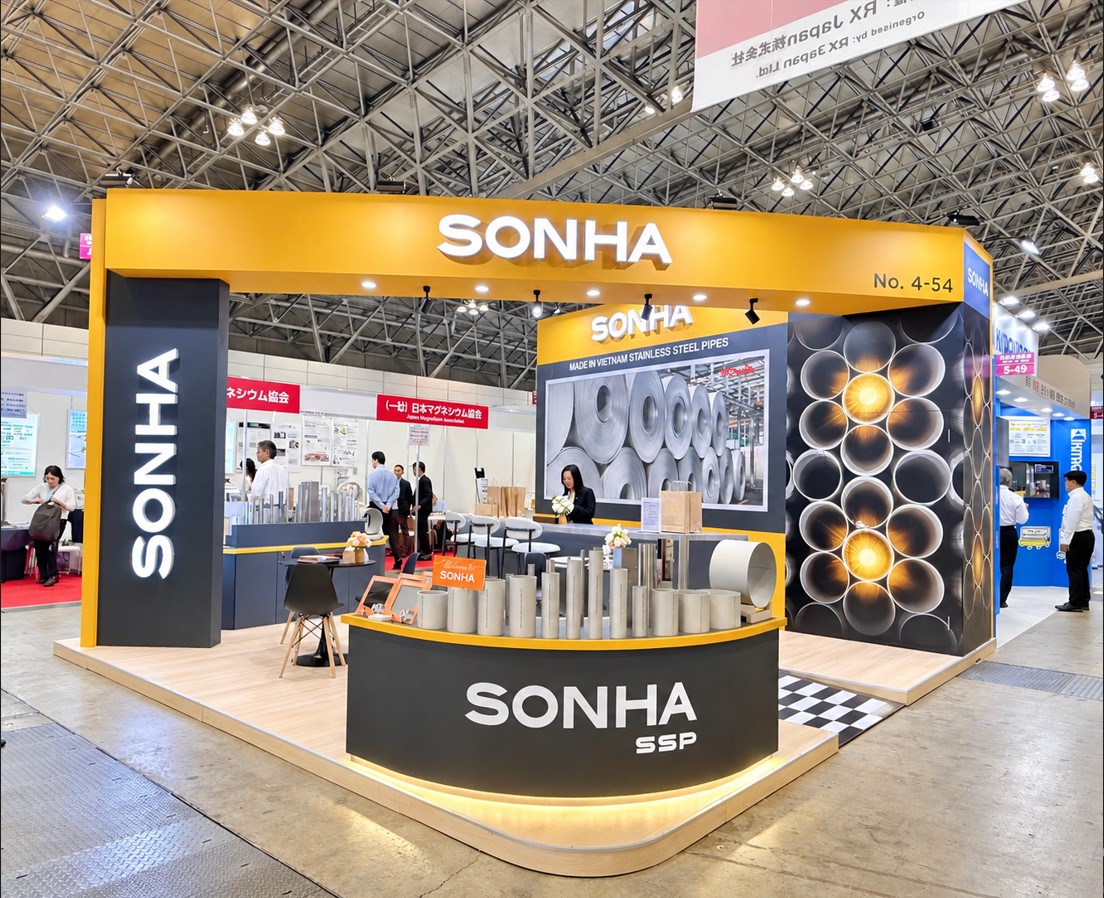
Looking back on SONHA SSP’s journey at highly-functional Material Week Tokyo 2026
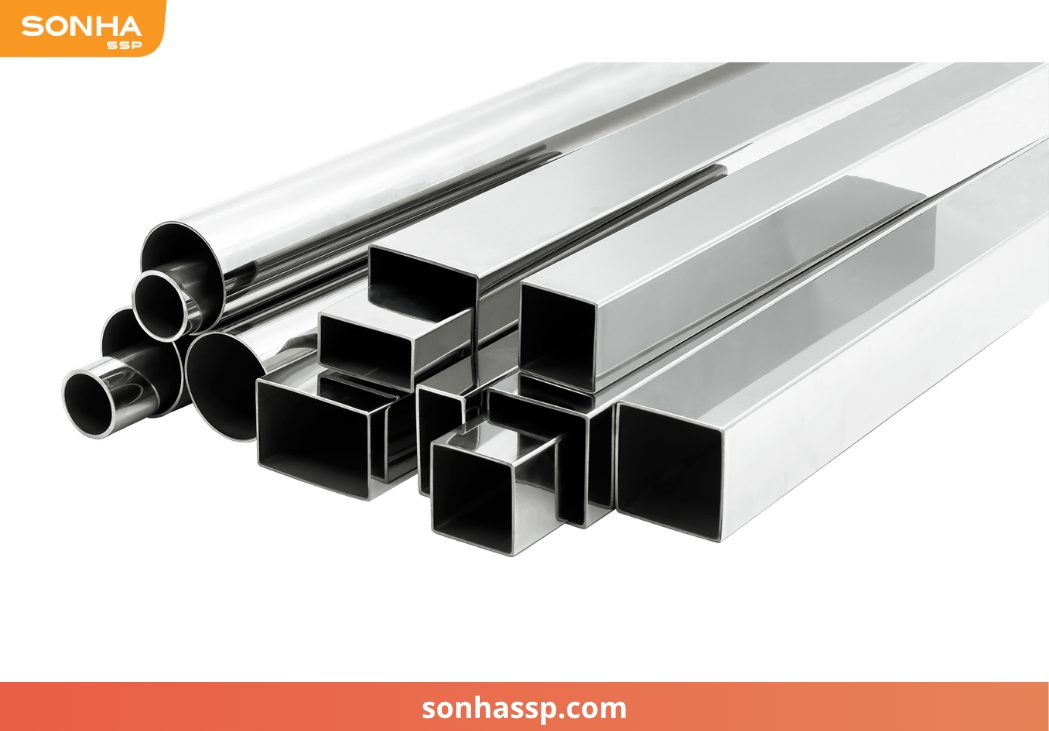
Detailed decorative stainless steel pipe size chart 2026