

316 vs. 304 stainless steel: Key differences & material selection guide
1. Comparison of 304 and 316 Stainless Steel
As members of the austenitic stainless steel group, both 304 and 316 exhibit good corrosion resistance, ductility, and workability. However, chemical composition variations – specifically the addition of molybdenum in 316 – result in distinct corrosion resistance levels and application scopes.
| Criteria | 304 Stainless Steel | 316 Stainless Steel |
| Characteristic Composition | Chromium and Nickel | Chromium, Nickel, and Molybdenum |
|
Molybdenum (Mo) Content
|
Not a primary alloying element | Typically contains 2–3% Molybdenum |
| Corrosion Resistance | Suitable for general conditions and fresh water | Higher than 304, especially against localized corrosion in chloride environments |
| Pitting & Crevice Corrosion Resistance | Good, but inferior to 316 in chloride environments | Excellent, even in environments containing chlorides |
|
Workability & Weldability
|
Excellent | Excellent |
| Common Applications | Kitchen equipment, food processing, household appliances, architecture, and general industrial uses | Chemical processing equipment, pharmaceuticals, marine environments, and high-corrosion applications |
| Material Cost | Generally lower | Generally higher due to alloying elements, particularly molybdenum |
| Suitable Environment | Standard environments with moderate corrosion levels | Environments containing chlorides or requiring superior corrosion resistance |
Overall, 304 and 316 stainless steel share many physical properties but differ significantly in corrosion performance. Grade 316 holds a clear advantage in chloride – bearing environments due to its molybdenum content, whereas Grade 304 performs reliably in standard conditions while offering a cost advantage. Therefore, Grade 316 should not automatically be assumed as the best choice for every scenario; selection must depend on the operating environment, technical specifications, and budget constraints.
2. How to Choose Between 304 and 316 Stainless Steel
Selecting between 304 and 316 stainless steel should be based on actual operating conditions rather than simply choosing the material with higher technical parameters. Key evaluation factors include exposure environment, presence of chlorides or chemicals, operating temperature, service life requirements, technical standards, and budget.
2.1 When Should You Choose 316 Stainless Steel?
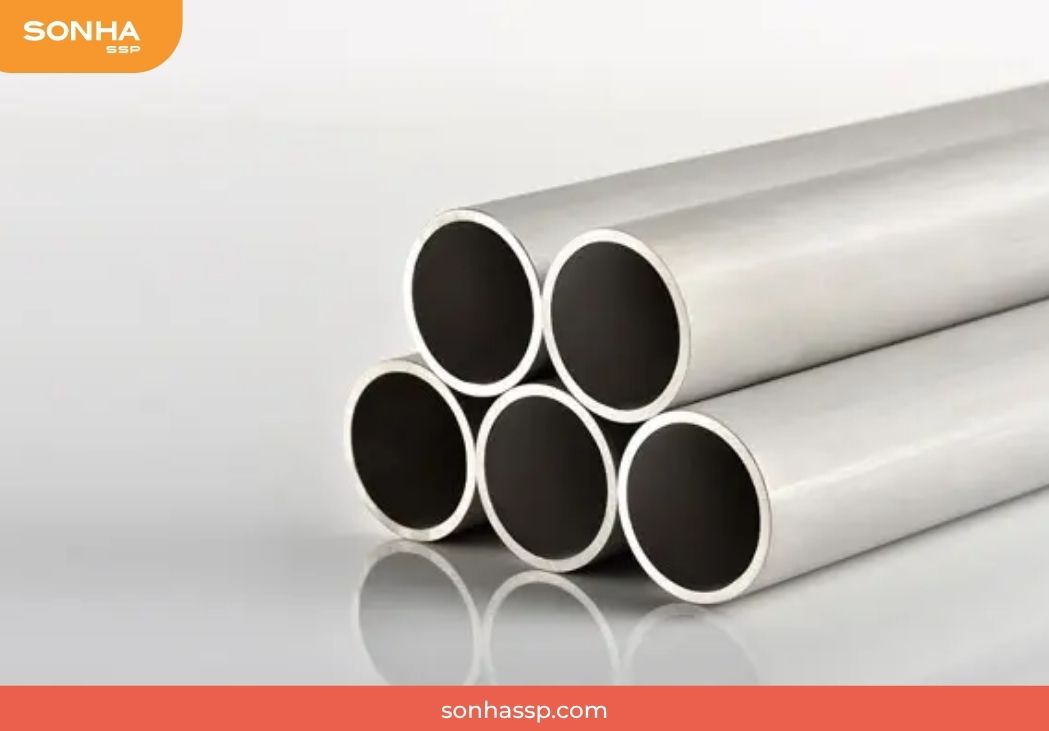
Common Applications Of Stainless Steel Grade 316
- Equipment exposed to chloride environments.
- Coastal applications or environments exposed to salt spray/mist.
- Chemical and petrochemical processing equipment.
- Containers and processing equipment for highly acidic food and beverages.
- Pharmaceutical and medical equipment.
2.2 When Should You Choose 304 Stainless Steel?
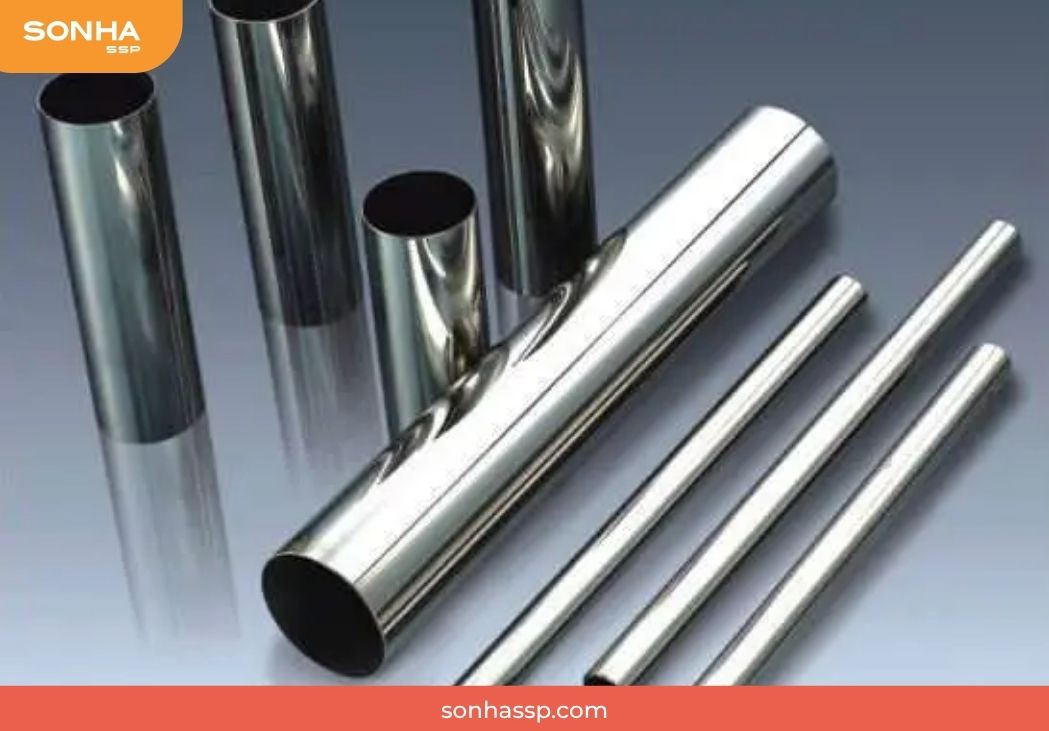
Practical Applications Of 304 Stainless Steel
- Humid operating environments.
- Products not regularly exposed to harsh chemicals or salts.
- Applications requiring high workability, formability, and weldability.
- Projects requiring a balance between material performance and cost.
- Kitchenware, home appliances, or general structural frameworks.
3. Son Ha SSP – Stainless Steel Manufacturer & Supplier
Frequently Asked Questions (FAQ)
1. Which is better: 316 or 304 stainless steel?
Technically, 316 stainless steel is superior in durability and corrosion resistance under severe conditions. However, for standard residential or general commercial needs, 304 stainless steel is fully adequate and more cost-effective.
2. Can 316 stainless steel rust?
316 stainless steel can still rust under theoretical conditions, but the likelihood is extremely low and occurs only under extremely aggressive environmental conditions.
3. Can you distinguish between 304 and 316 stainless steel using a magnet?
No. In their raw/annealed state, both 304 and 316 are non-magnetic or only weakly magnetic. Accurate differentiation requires specialized chemical testing reagents or optical emission spectrometers.
If you are looking for a high-quality stainless steel pipe supplier, please explore our products and contact Son Ha SSP immediately via our Hotline at (+84) 986434303 for the fastest support and consultation!
Next latest post

THƯƠNG HIỆU QUỐC GIA VIỆT NAM 2026 VINH DANH 5 SẢN PHẨM SƠN HÀ
Looking back on SONHA SSP’s journey at highly-functional Material Week Tokyo 2026
Detailed decorative stainless steel pipe size chart 2026