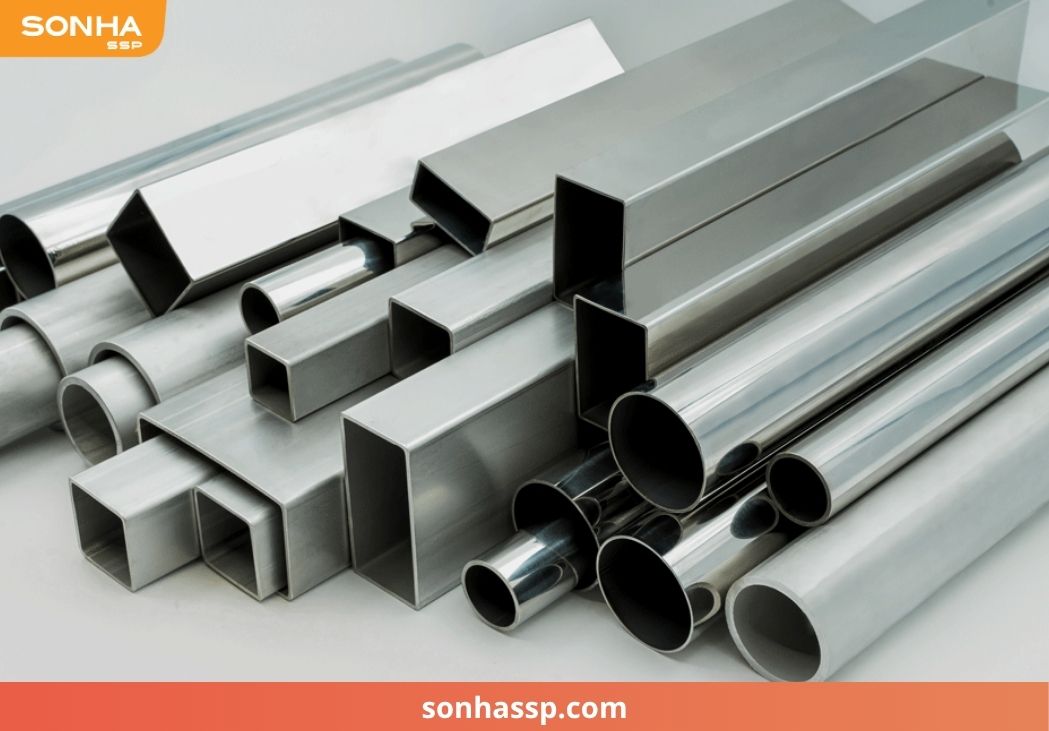


Overview of stainless steel pipes: Characteristics, classification, specifications & detailed pricing
Stainless steel pipes (or tubes) are long, hollow, cylindrical products. They are manufactured in various sizes primarily to serve industrial installation projects and are less commonly used in residential housing. Due to their use in industrial installations, stainless steel pipes must meet standard thickness requirements. The required wall thickness prevents denting and deformation during transportation and construction. Stainless steel pipes are widely used in industry, construction, interior decoration, as well as food and medical processing. Thanks to their outstanding durability, high corrosion resistance, and aesthetic appeal, stainless steel pipes are increasingly preferred by businesses and consumers alike.
In Vietnam, Son Ha SSP is one of the leading manufacturers and exporters of stainless steel pipes, with products meeting international standards such as ASTM A778 – A312, ASTM A554, DIN-EN-10296-2, JIS G3448-G3459, and TC 01, along with PED (TÜV Germany) and ISO 9001:2015 certifications.
This article will help you understand:
-
What stainless steel pipes are.
-
Common types of stainless steel pipes.
-
Specifications, wall thickness, and steel grades.
-
Practical applications.
-
The latest stainless steel pipe pricing.
-
Why Son Ha SSP is a reliable choice.
1. What Are Stainless Steel Pipes? Characteristics & Key Advantages
Stainless steel pipes are hollow products in the form of round tubes or square/rectangular sections, manufactured from stainless steel grades such as 201, 304, 316L, among others. Depending on the intended use, stainless steel pipes can be classified as:
-
Industrial stainless steel pipes (Welded Industrial Pipe).
-
Decorative stainless steel tubes (Welded Ornamental Tube).
-
Seamless stainless steel pipes.
-
Welded stainless steel pipes.
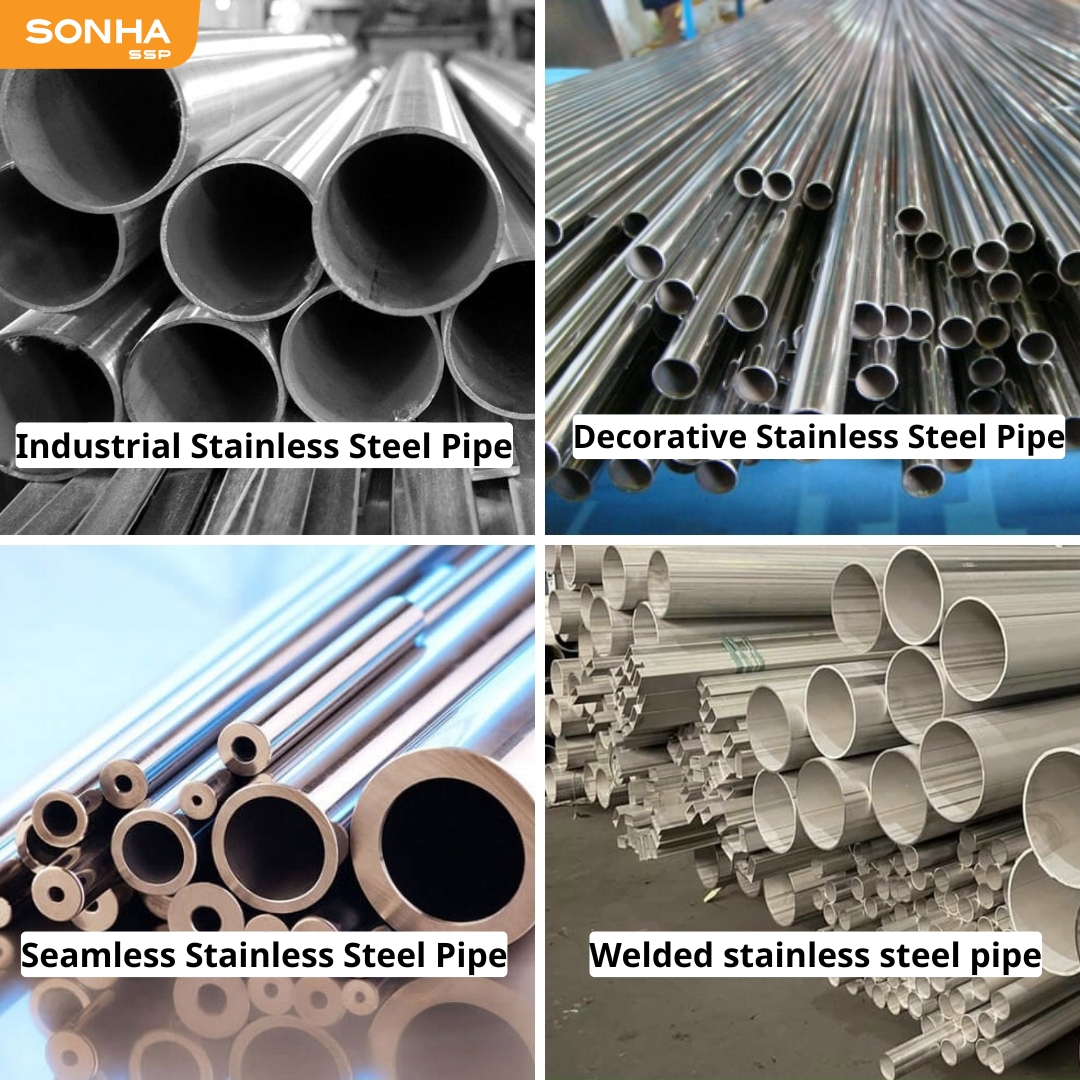
What are stainless steel pipes? Classification of stainless steel pipes.
Advantages of Stainless Steel Pipes
Stainless steel pipes offer numerous benefits, making them a preferred choice across various industries:
- Excellent corrosion resistance
- High strength and durability
- Bright, attractive surface with easy maintenance
- Safe and hygienic for food-contact applications
- Versatile and suitable for a wide range of industries
2. Common Types of Stainless Steel Pipes on the Market
The following are the most common categories of stainless steel pipes and tubes, classified by application and stainless steel grade.
2.1 Stainless Steel 201 Pipes
- More cost-effective than Stainless Steel 304.
- Good hardness and mechanical strength.
- Suitable for applications such as handrails, furniture, decorative structures, gates, and fencing systems.
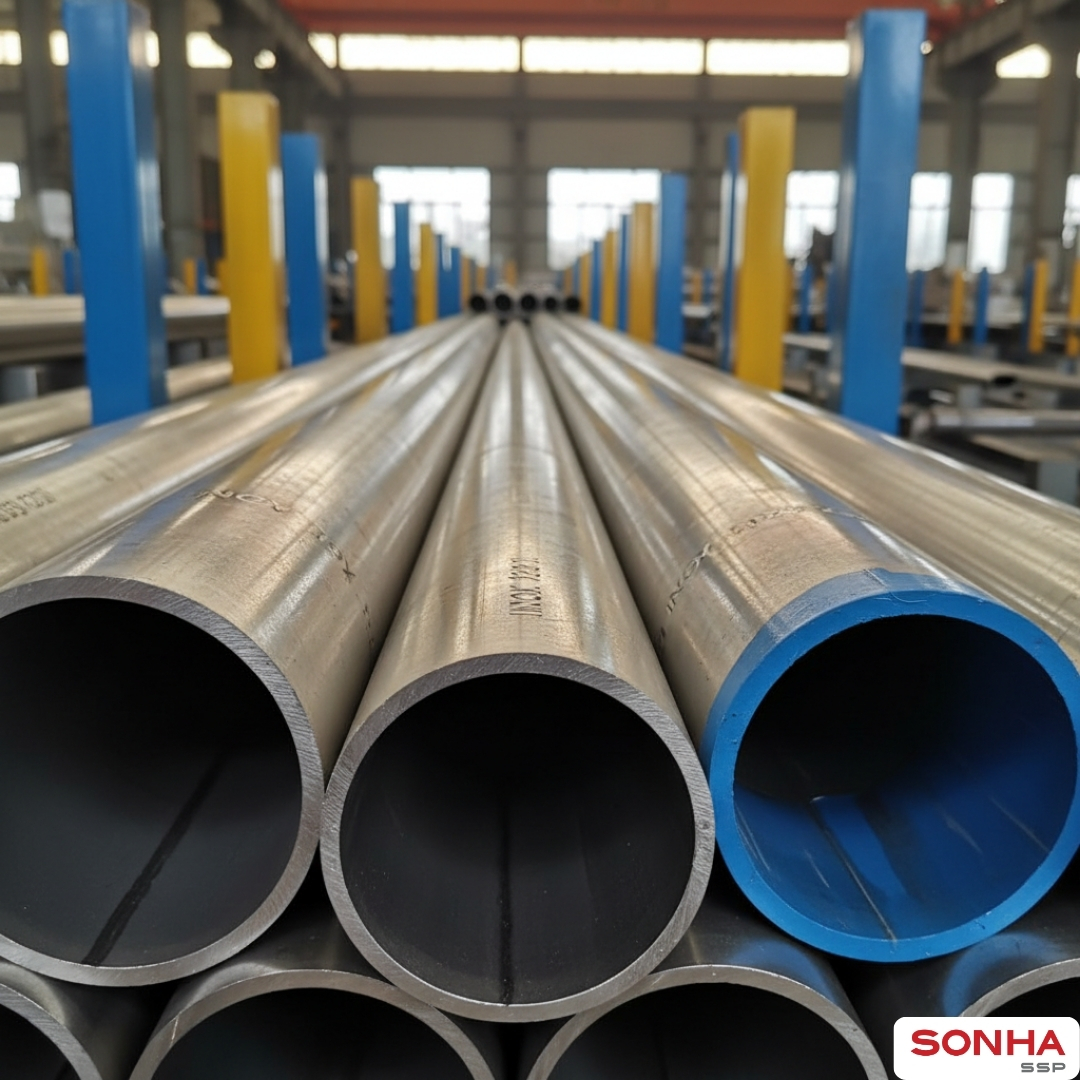
201 Stainless Steel Pipe
2.2 Stainless Steel 304 Pipes
- Excellent corrosion resistance.
- Suitable for outdoor applications and humid environments.
- Widely used in light industrial applications, residential projects, kitchen equipment, architectural structures, and construction works.
Stainless Steel 304 is the most commonly used stainless steel grade due to its excellent balance of corrosion resistance, durability, aesthetics, and cost-effectiveness.
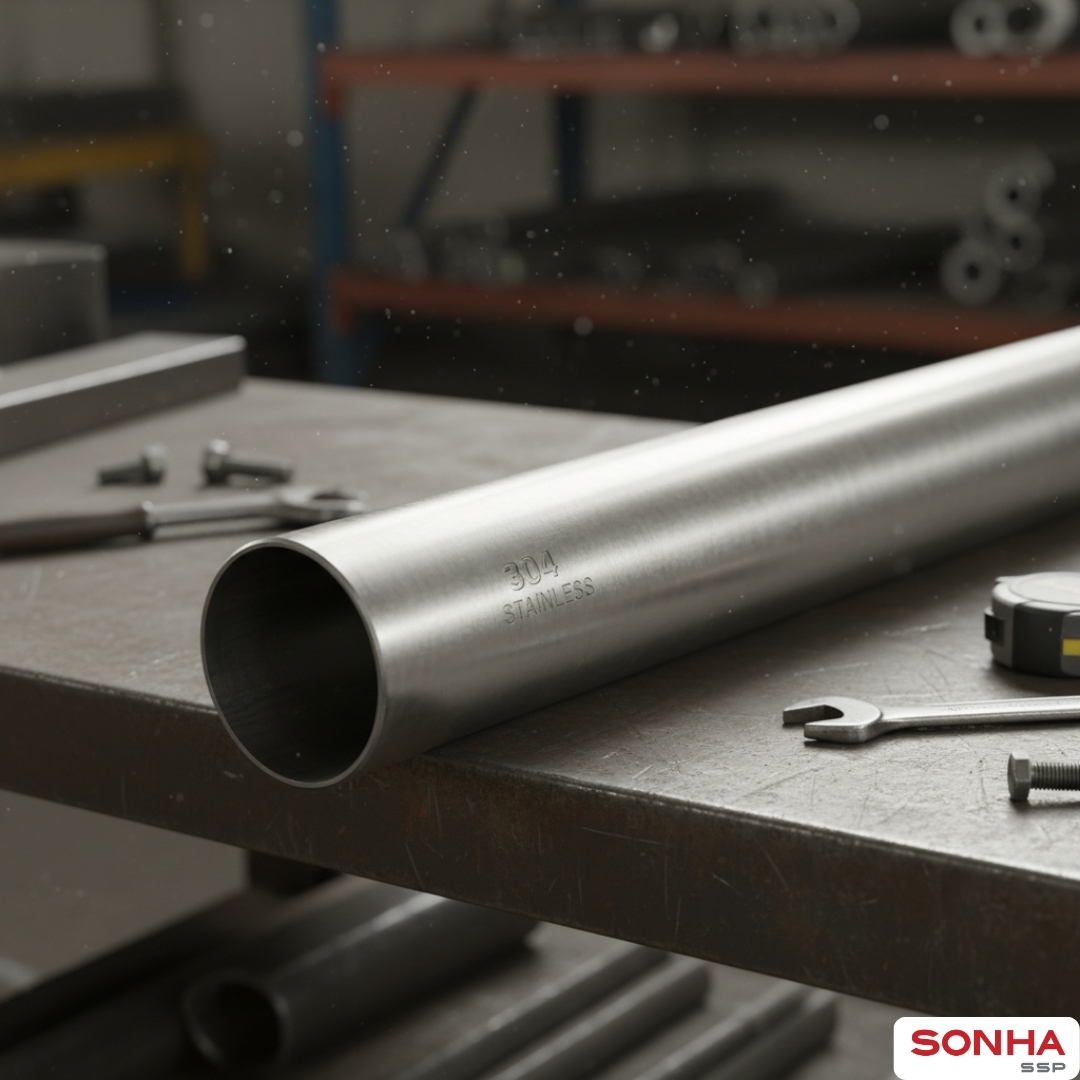
304 stainless steel pipe
2.3 Stainless Steel 316L Pipes
- Offers the highest level of corrosion resistance among the three grades.
- Specifically designed for use in highly corrosive environments, including marine, chemical processing, and food manufacturing applications.
- Contains molybdenum (Mo), which significantly enhances resistance to chlorides, saltwater, and aggressive chemicals.
- Ideal for offshore facilities, coastal construction projects, chemical plants, pharmaceutical equipment, and food processing systems.
Stainless Steel 316L is the preferred choice for applications requiring superior corrosion resistance, long service life, and reliable performance in demanding environments.
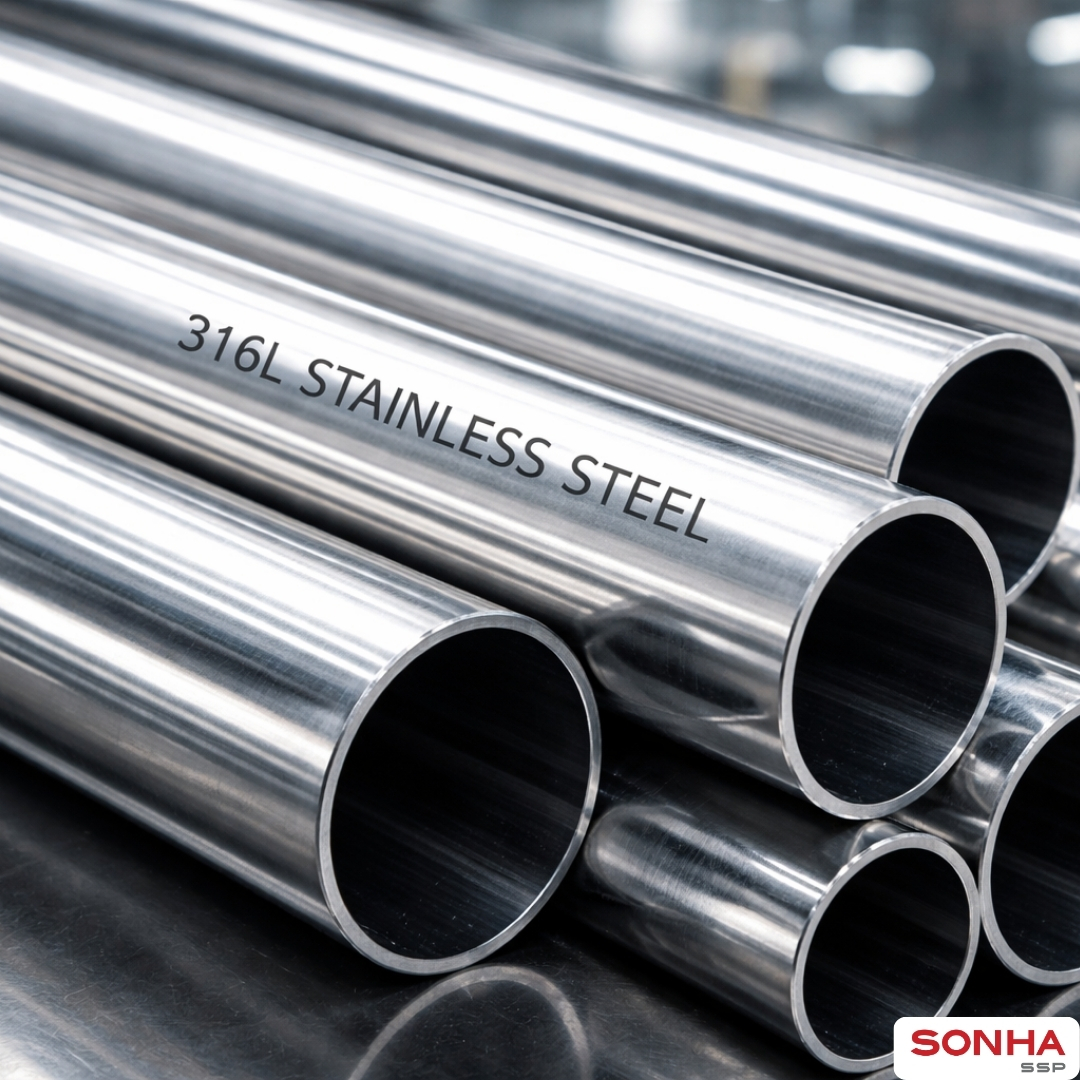
316L stainless steel pipe
2.4 Seamless Stainless Steel Pipes
- Manufactured without a welded seam.
- Capable of withstanding high pressure and elevated temperatures.
- Commonly used in demanding industries such as oil and gas, petrochemical processing, power generation, and chemical manufacturing.
- Offers excellent structural integrity and reliability for critical applications where safety and performance are essential.
3. Stainless Steel Pipe Specifications – Diameter, Wall Thickness, and Surface Finish
The following specification tables provide general references commonly used in the stainless steel industry and are applicable to products manufactured by Son Ha SSP.
3.1 Round Stainless Steel Pipe Specifications
The table below outlines the standard dimensions of round stainless steel pipes, including outside diameter (OD), wall thickness, and available grades. These specifications are widely used for industrial, decorative, and construction applications.
| Outside Diameter (OD, mm) | Wall Thickness (mm) | Standard Length | Stainless Steel Grade | Standard |
| 9.5 – 19 | 0.5 – 1.2 | 6m | 201/304 | ASTM A554 |
| 21 – 38 | 0.7 – 1.5 | 6m | 201/304 | ASTM A554 |
| 42 – 63.5 | 0.8 – 2.0 | 6m | 304 | ASTM A312 |
| 76 – 114 | 1.0 – 3.0 | 6m | 304/316L | ASTM A312 |
| 141 – 219 | 1.2 – 3.5 | 6m | 304/316L | ASTM A312 |
3.2 Stainless Steel Box Tube Specifications
| Tube Type | Size (mm) | Wall Thickness (mm) | Stainless Steel Grade | Standard |
| Square Tube | 10×10 → 100×100 | 0.5–2.0 | 201/304 | ASTM A554 |
| Rectangular Tube | 10×20 → 60×120 | 0.5–2.0 | 201/304 | ASTM A554 |
3.3 Surface Finish Classification
- 2B Finish – The most common surface finish, widely used for industrial applications.
- BA (Bright Annealed) Finish – Smooth, reflective, mirror-like surface with excellent appearance.
- Hairline (HL) Finish – Fine brushed finish with a premium and elegant aesthetic.
- No.4 Finish – Satin-brushed finish with a uniform matte appearance.
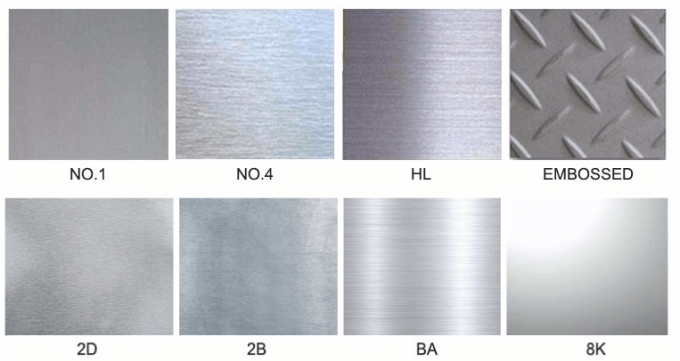
Stainless Steel Pipe Surface Finishes
4. Practical Applications of Stainless Steel Pipes
Stainless Steel Pipes in Industrial Infrastructure
Stainless steel pipes are widely used in industrial infrastructure thanks to their excellent corrosion resistance, durability, and long service life.
Common applications include:
- Fluid transportation systems
- Water treatment and distribution systems
- Food and beverage processing facilities
- Renewable energy projects
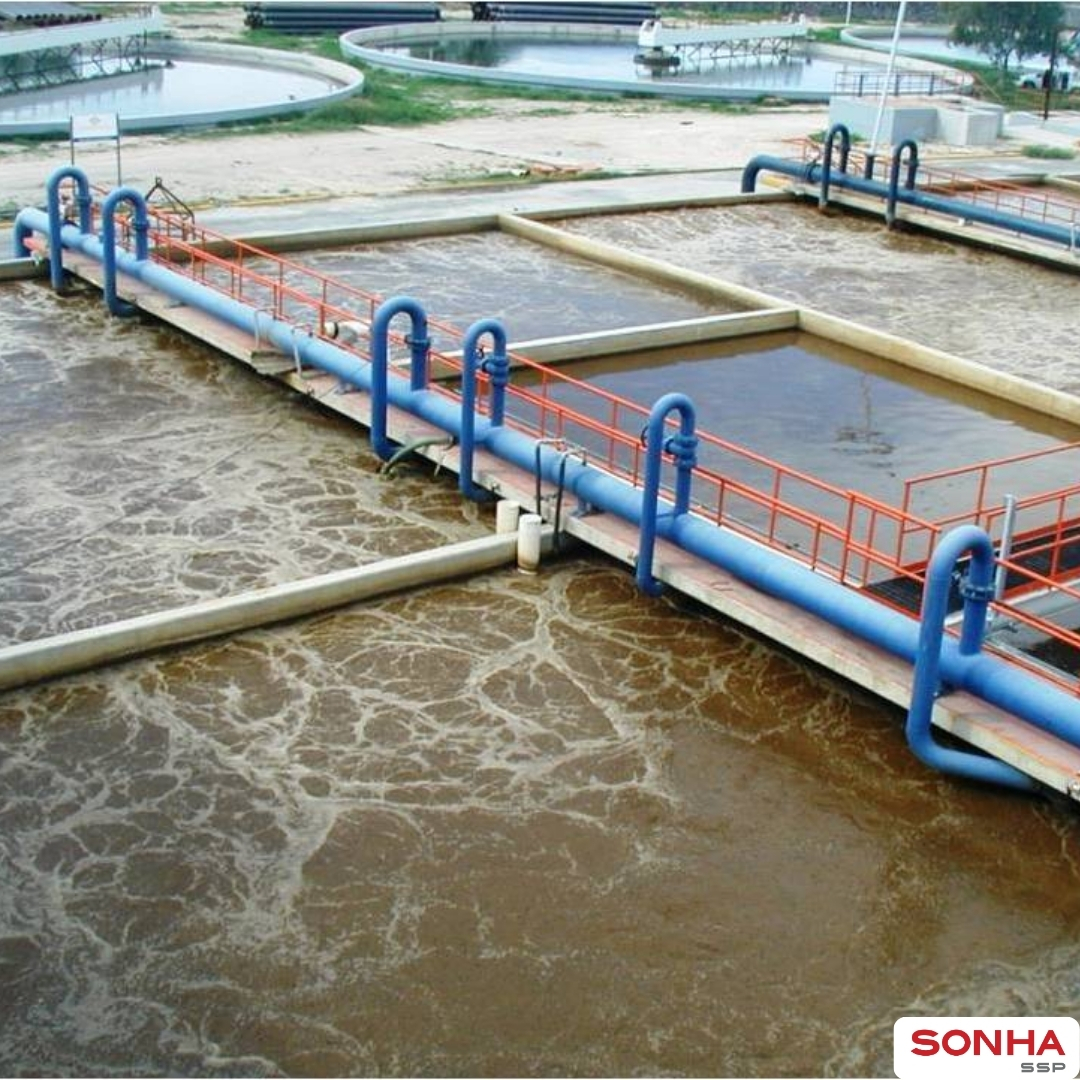
Stainless Steel Pipes in Wastewater Treatment Systems
Stainless steel pipes are widely used in construction and architectural applications due to their durability, corrosion resistance, and modern appearance.
Common applications include:
- Handrails, staircases, gates, and doors
- Roof structures and steel frameworks
- Interior and exterior decorative applications
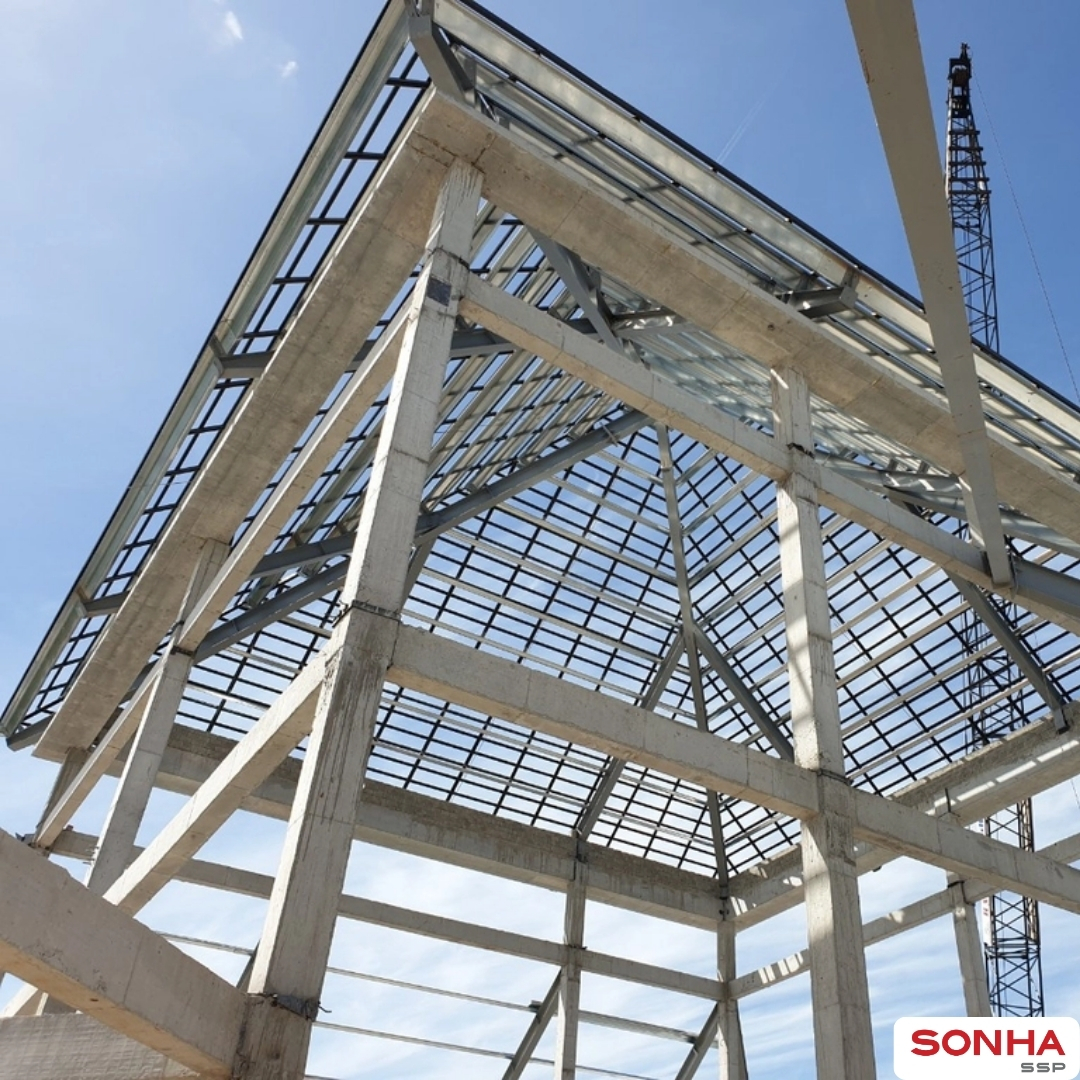
Stainless Steel Pipes for Structural Frames and Roof Trusses
Stainless steel pipes play a critical role in medical and pharmaceutical systems due to their hygienic properties, corrosion resistance, and ease of sterilization.
Common applications include:
- Pharmaceutical fluid distribution systems
- Sterile processing and manufacturing equipment
Residential Applications
Stainless steel pipes and tubes are also widely used in everyday residential applications, including:
- Household products
- Stainless steel home appliances and accessories
5. Latest Stainless Steel Pipe Price Guide – Updated 2025
The price of stainless steel pipes depends on several key factors, including material grade, dimensions, surface finish, and market conditions.
5.1 Stainless Steel Grade
- Stainless Steel 201 – The most economical option.
- Stainless Steel 304 – The most widely used grade with a moderate price range.
- Stainless Steel 316L – Premium grade with the highest price due to its superior corrosion resistance.
5.2 Wall Thickness and Diameter
- Thicker pipes generally have higher material costs and therefore higher prices.
- Industrial stainless steel pipes manufactured according to ASTM A312 standards are typically more expensive than decorative stainless steel tubes produced under ASTM A554 standards.
5.3 Surface Finish
- BA (Bright Annealed), HL (Hairline), and No.4 finishes are generally more expensive than the standard 2B finish due to additional processing requirements.
5.4 Stainless Steel Market Fluctuations
- Changes in nickel prices and global import-export conditions directly impact stainless steel pipe prices.
- Raw material costs, supply chain conditions, and market demand can also influence pricing trends.
Reference Price List (Subject to Change)
The prices listed below are for reference purposes only and may vary depending on material grade, dimensions, order quantity, surface finish, and market conditions at the time of quotation.
| Pipe Type | Reference Price Range | Notes |
| Decorative Stainless Steel 201 Tube | VND 25,000 – 55,000/m | Depending on wall thickness and dimensions |
| Decorative Stainless Steel 304 Tube | VND 65,000 – 125,000/m | BA and HL finishes are typically priced higher |
| Industrial Stainless Steel Pipe | Priced per kilogram or per ton | Contact us for an accurate quotation |
| Stainless Steel 316L Pipe | Highest price range | Suitable for marine and highly corrosive environments |
For a customized and accurate quotation, please contact Son Ha SSP with the following information:
- Required quantity (tons or meters)
- Product dimensions and specifications
- Stainless steel grade (201, 304, 316L, etc.)
- Application and project requirements
Contact us at:
Whatsapp: (+84) 986.434.303
6. Stainless Steel Pipe Manufacturing Process at Son Ha SSP
6.1 Selection of International-Standard Raw Materials (Coils)
Son Ha SSP uses high-quality stainless steel coils that comply with internationally recognized standards, including:
- JIS Standards
- EN Standards
- ASTM Standards
6.2 Rolling, Tube Forming, and Automated TIG Welding
The manufacturing process utilizes advanced production lines to ensure:
- Clean and consistent weld seams
- High dimensional stability
- Excellent mechanical strength and durability
6.3 100% Eddy Current Testing
Every stainless steel pipe undergoes eddy current testing to detect:
- Cracks
- Porosity
- Material inconsistencies
- Surface and subsurface defects
6.4 Polishing and Surface Treatment
All products are processed using modern surface-finishing technologies that meet European manufacturing standards, ensuring excellent appearance and surface quality.
6.5 Quality Assurance and Quality Control (QA/QC)
Each product is subjected to rigorous quality inspections, including:
- Tensile and compression testing
- Hardness testing
- Surface finish and gloss inspection
- PED certification requirements (TÜV Germany)
7. Why Choose Son Ha SSP Stainless Steel Pipes?
7.1 International Quality Standards and Certifications
Son Ha SSP stainless steel pipes comply with globally recognized standards and certifications, including:
- PED Certification (TÜV Germany)
- ISO 9001:2015
- ASTM A312 / ASTM A554
7.2 Strong Manufacturing Capacity
- Annual production capacity exceeding 80,000 tons
- Two large-scale manufacturing facilities
- Exported to more than 50 countries and regions, including Mexico, Peru, Brazil, Canada, Egypt, and many others
7.3 Competitive and Stable Pricing
As a direct manufacturer, Son Ha SSP helps distributors, wholesalers, contractors, and exporters optimize procurement costs while maintaining consistent product quality.
7.4 Technical Support and Fast Delivery
Our experienced technical and sales teams provide professional support throughout the purchasing process, ensuring timely delivery and reliable service.
8. Frequently Asked Questions About Stainless Steel Pipes (FAQ)
8.1 Do Stainless Steel Pipes Rust?
Stainless Steel 304 and 316L offer excellent corrosion resistance and are highly resistant to rust under normal operating conditions.
8.2 What Is the Difference Between Stainless Steel 201 and 304 Pipes?
Stainless Steel 201
- Lower corrosion resistance
- Lower durability and surface finish quality
- More economical
- Suitable for furniture, interior decoration, and household products with limited exposure to corrosive environments
Stainless Steel 304
- Higher corrosion resistance
- Better durability and appearance
- Suitable for outdoor applications, premium kitchen equipment, and demanding environments
8.3 What Standards Are Commonly Used for Stainless Steel Pipes?
The most widely recognized standards include:
- ASTM A312 / ASTM A778 for industrial stainless steel pipes
- ASTM A554 for decorative stainless steel tubes
8.4 What Factors Affect Stainless Steel Pipe Prices?
Stainless steel pipe prices are influenced by:
- Stainless steel grade
- Wall thickness
- Diameter
- Surface finish
- Nickel market prices and raw material costs
8.5 Does Son Ha SSP Offer Custom Manufacturing?
Yes. Son Ha SSP provides customized manufacturing services, including:
- Custom dimensions
- Custom wall thicknesses
- Custom lengths
- Customized surface finishes according to customer requirements
Conclusion
Stainless steel pipes are durable, aesthetically appealing, and safe materials that are suitable for a wide range of industrial and residential applications. When selecting a stainless steel pipe, it is important to consider the stainless steel grade, manufacturing standards, dimensions, and surface finish to ensure optimal performance.
With more than 25 years of industry experience and modern manufacturing facilities, Son Ha SSP is proud to be one of the leading stainless steel pipe manufacturers and exporters in Vietnam and international markets.
Contact Us for a Quotation and Technical Consultation
Get in touch with Son Ha SSP today to receive a customized quotation and professional technical support for your project requirements.
Contact us at:
Whatsapp: (+84) 986.434.303
Next latest post
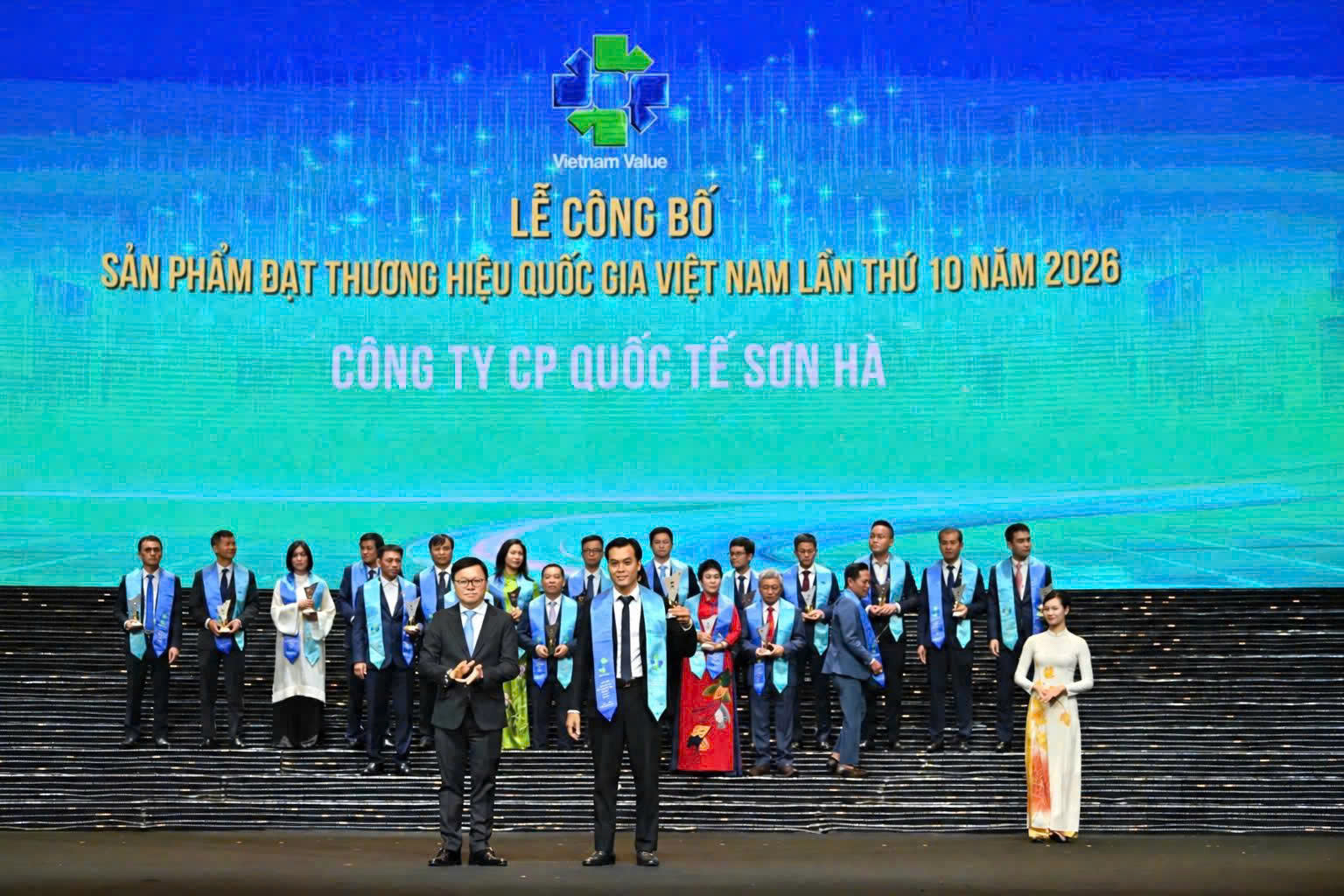
THƯƠNG HIỆU QUỐC GIA VIỆT NAM 2026 VINH DANH 5 SẢN PHẨM SƠN HÀ
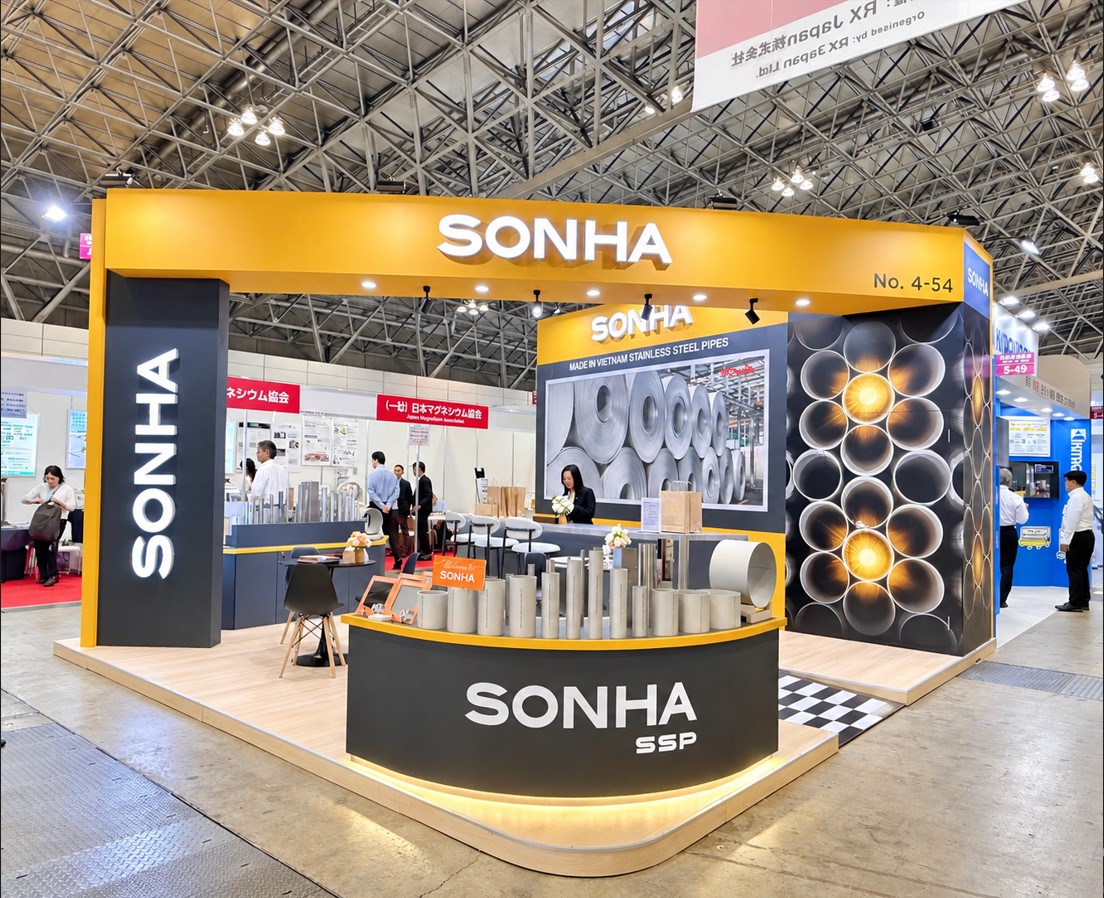
Looking back on SONHA SSP’s journey at highly-functional Material Week Tokyo 2026
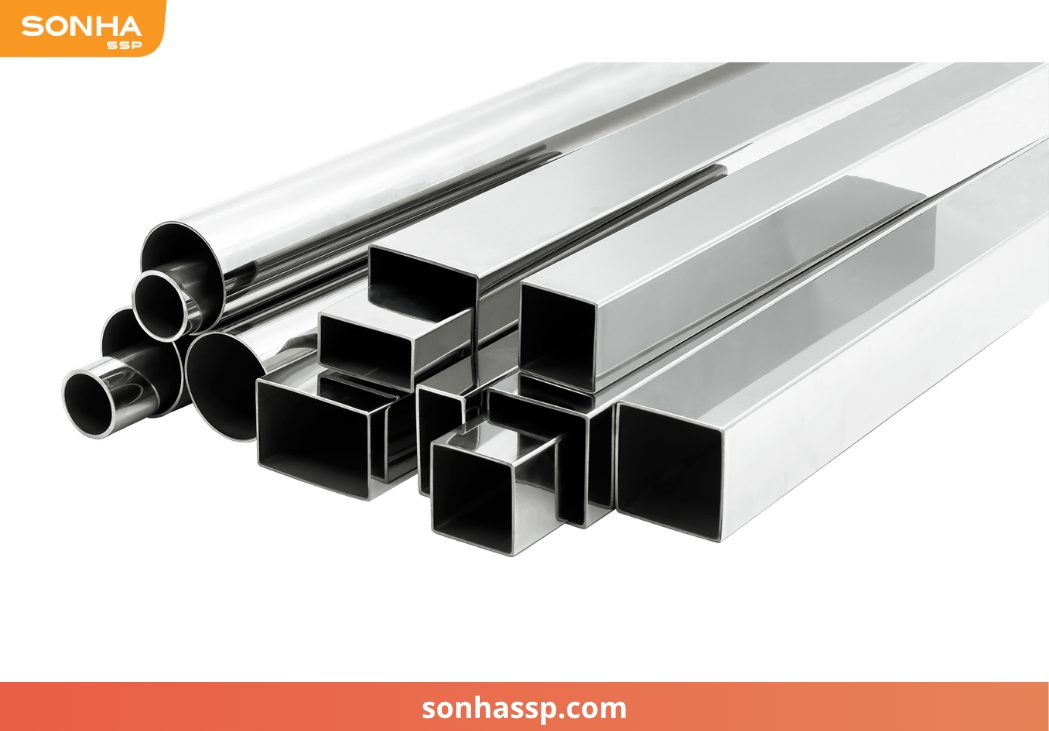
Detailed decorative stainless steel pipe size chart 2026