

What Is a Steel Grade? Current Steel Grade Standards
In construction, mechanical engineering, and technical fields, a steel grade is a key piece of information used to determine the characteristics and applications of steel. Understanding steel grades helps engineers, builders, and buyers select the right type of steel that meets requirements for strength, load-bearing capacity, and structural durability. Let’s explore steel grades in detail through the article below by Sơn Hà SSP.
1. What Is a Steel Grade?
A steel grade is a technical term used to indicate the strength capacity of steel, while also reflecting its chemical composition and mechanical properties.
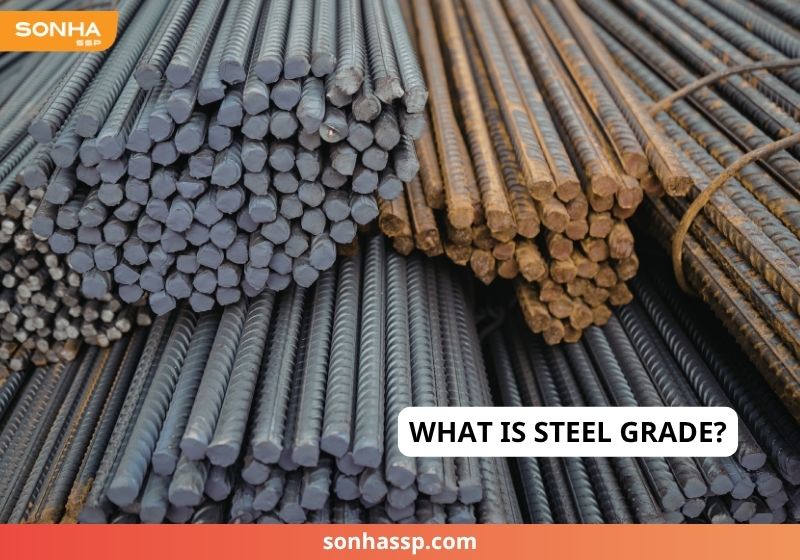
What is steel grade?
Steel grades are defined by Vietnamese and international standards (TCVN, JIS, ASTM, GOST, BS, etc.), helping distinguish different types of steel and ensuring proper technical selection.
For example:
- CT34 (TCVN standard) has a yield strength of 34 kG/mm² (equivalent to 340 MPa).
- SS400 (Japanese JIS standard) has a yield strength of 400 MPa.
2. Common Steel Grades Today
Common steel grades frequently used in construction include: SD295, SD390, Grade 60 (Gr 60), Grade 460, SD490, CB300-V, CB400-V, CB500-V, etc.
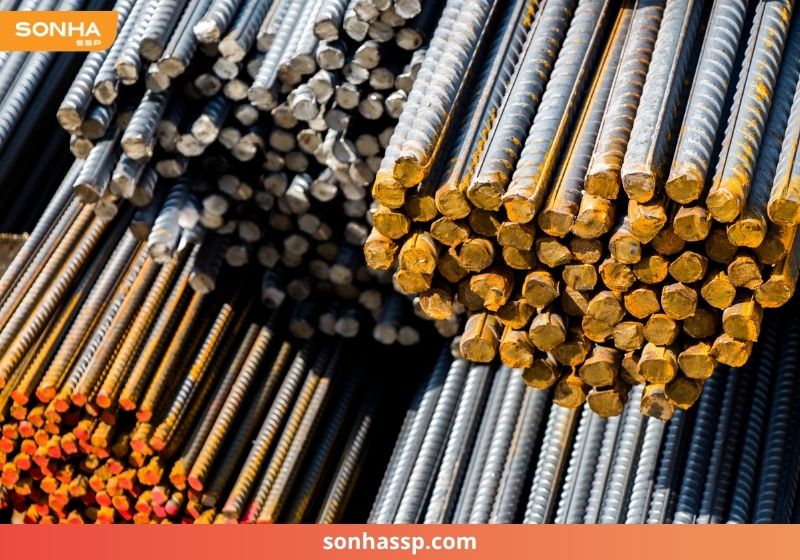
Common types of steel today
Key standards regulating steel grades include:
- TCVN 1651-1985 (Vietnam).
- TCVN 1651-2008 (Vietnam).
- JIS G3112 (1987, Japan).
- A615/A615M-04b (USA).
- JIS G3112-2004 (Japan).
- BS 4449-1997 (UK)
Each steel grade has specific chemical composition characteristics. The main types of steel include:
- Carbon Steel: Contains primarily iron and carbon (0.3–2% carbon). Approximately 90% of steel used today belongs to this category.
- Alloy Steel: Contains alloying elements such as aluminum, copper, chromium, nickel, etc., offering enhanced ductility and formability.
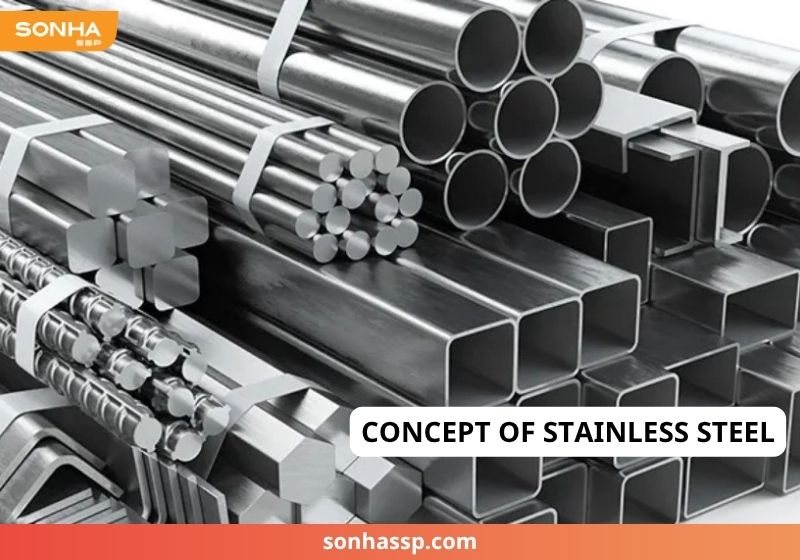
- Stainless Steel: Contains up to 20% chromium. It is highly durable, resistant to oxidation and corrosion, and commonly used in food processing and medical equipment manufacturing.
- Tool Steel: Used to manufacture cutting, drilling, and shaping tools. It contains elements such as vanadium, tungsten, and cobalt, enabling it to withstand high temperatures generated by friction.
3. Current Steel Grade Standards
There are many steel grade standard systems worldwide. Below are some of the most widely used:
3.1 Vietnamese Steel Grade Standards
TCVN 1765–75:
Defines construction steel grades with the symbol CT, divided into three groups A, B, and C.
- Group A (e.g., CT33, CT38, CT51) guarantees mechanical properties (yield strength).
- Group B specifies chemical composition only.
- Group C guarantees both mechanical properties and chemical composition.
For example, CT38 (Group A) has σ ≥ 380 MPa.
TCVN 1651 (2018):
Applies to reinforcing steel bars with the symbol CBxxx.
- “C” indicates grade
- “B” indicates strength
- The number indicates yield strength (N/mm²)
For example, CB300V has a yield strength of 300 N/mm².
Other common grades include CB240, CB400V, and CB500V.
(Example: In Vietnam, Russian CT3 steel is equivalent to CCT34/CCT38 construction steel under TCVN 1651.)
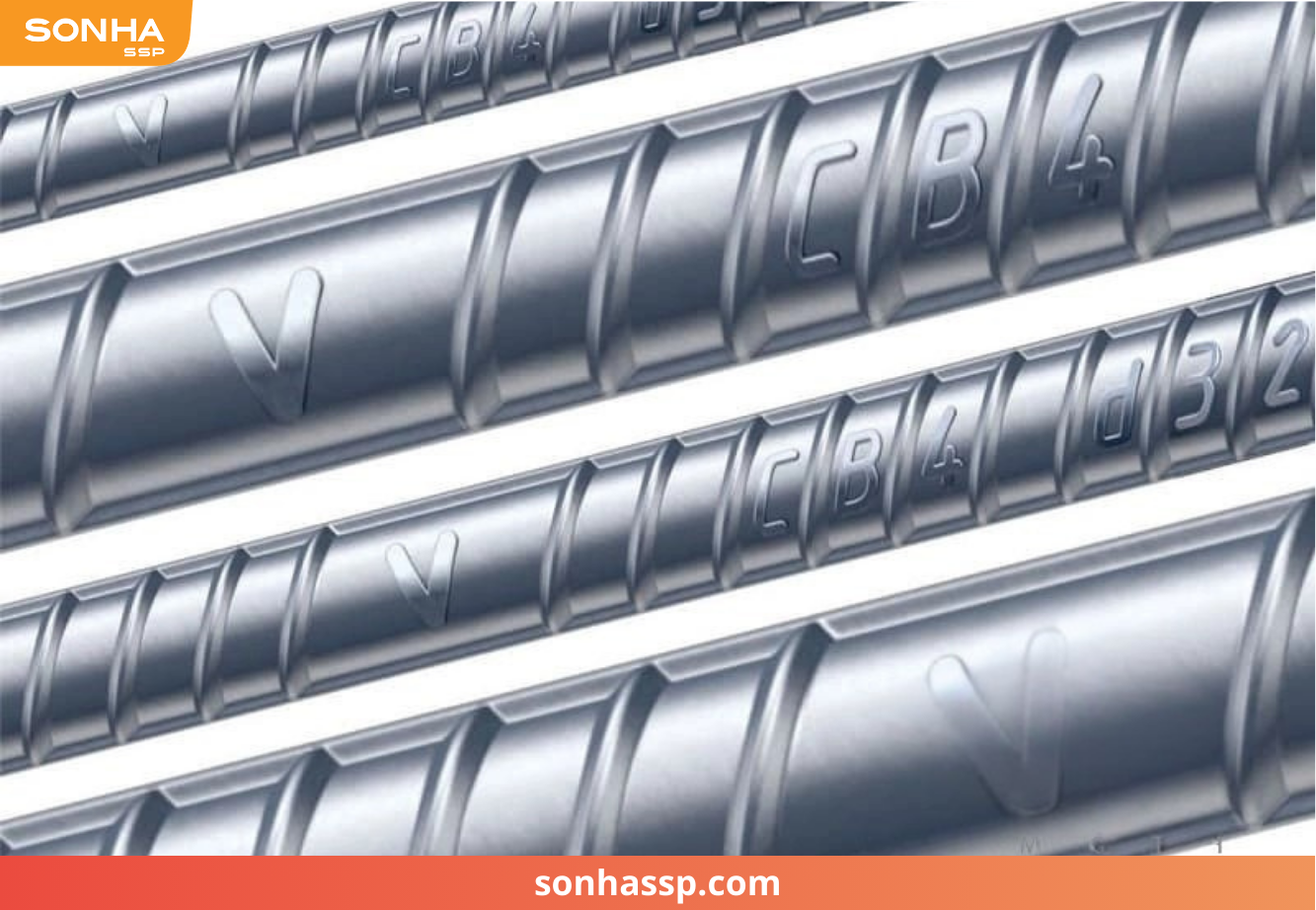
Vietnamese standards for steel grades
3.2 American Steel Grade Standards
ASTM (USA):
Defines steel grades with codes such as Axxx.
- ASTM A312: General structural steel, minimum yield strength ≈ 250 MPa
- ASTM A572 Grade 50: Tensile strength 50 ksi (≈345 MPa)
Other examples: A615, A992, etc.
SAE (USA):
Uses numerical codes such as 9xx.
- The first digit “9” indicates carbon/alloy steel.
- The last two digits indicate minimum tensile strength (ksi)
For example: SAE 950X has a tensile strength of 50 ksi (≈345 MPa). American standards also include special steel grades for automotive and aerospace applications.
3.4 Japanese Steel Grade Standards
- JIS G3112: Applies to deformed reinforcing bars, with the symbol SDxxx, where xxx indicates yield strength (N/mm²).
Examples: SD295, SD390, SD490 correspond to yield strengths of 295, 390, and 490 N/mm². - JIS G3101 / JIS G3106: Applies to steel plates and coils, using symbols such as SSxxx or SMxxx.
- SS400 (JIS) is a hot rolled carbon steel with a yield strength of 245 MPa. Japan also has SM grades for special structural steel (SM400, SM490, etc.).
3.5 Russian Steel Grade Standards
- GOST (Russia): Construction steel commonly follows GOST 380-88/89 with symbol CTx. High-quality steel uses symbol Ст (St), such as Ст3.
For example:
- CT3 (GOST 380-89) contains C ≤ 0.22%, belonging to low-carbon steel.
- GOST also regulates impact-resistant and heat-resistant steels.
In international equivalence tables, CT3 is equivalent to:
- SS400 (Japan)
- A36 (USA)
- Q235 (China)
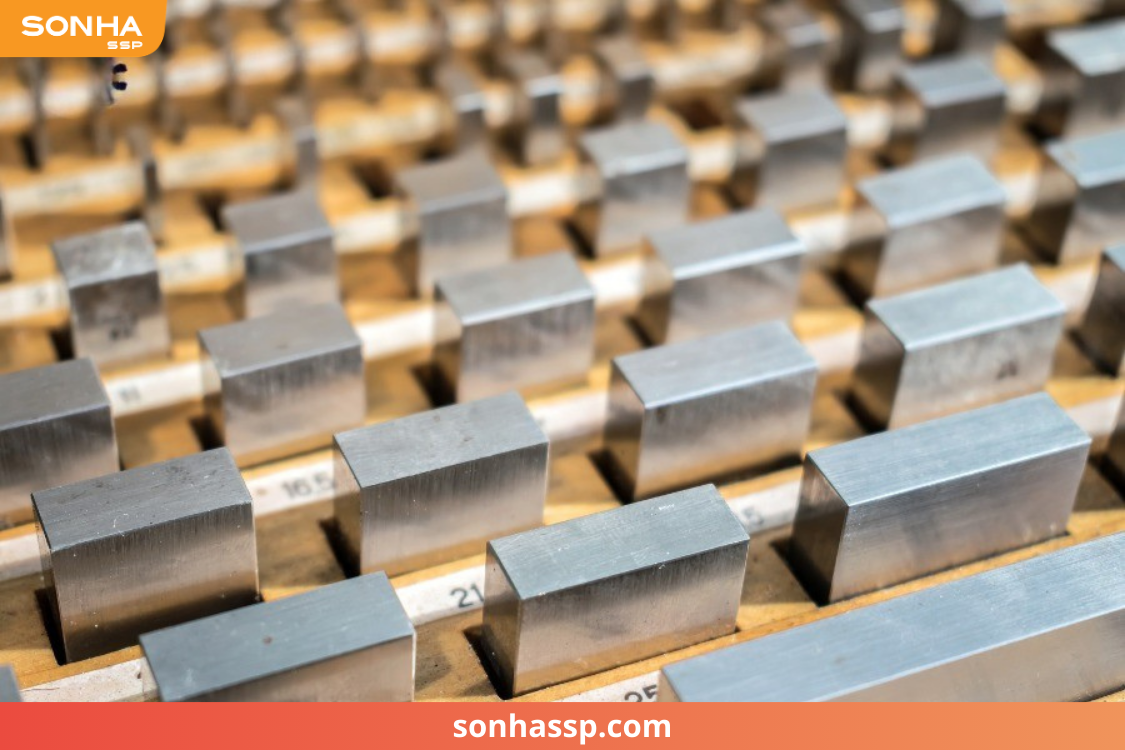
Steel grade standards in Russia
Conclusion
Selecting the correct steel grade is critical for the safety, longevity, and cost-efficiency of any industrial project. Whether you need standard structural steel or high-performance corrosion resistance, understanding global standards ensures your materials can withstand their specific working environments. Sourcing the right material requires a reliable manufacturing partner. At Sonha Group, we specialize in producing premium stainless steel welded pipes and tubes that meet strict global standards, including ASTM A312 TP-304/304L, 316/316L.
Ready to secure high-quality materials for your next project?
>RELATED ARTICLES:
What Is a Ø16 Stainless Steel Pipe? Specifications, Classification, and the Latest Price List
Son Ha SSP Is Honored to Receive the BIS Certification (India)
Decorative Ø40 Stainless Steel Pipe (DN40) – Comprehensive Information from A to Z
How Rigorous is the Production Process of Son Ha SSP Stainless Steel Pipes?
Next latest post
What Is a Hot Rolled Coil? Characteristics, Applications, and Classification
[Q&A] What Is Stainless Steel? Why Is It Called Stainless Steel?
Safe Stainless Steel Pipe Transportation Process and Important Considerations