

The true definition of seamless stainless steel pipes. Why are they critical for high-pressure systems?
In high-pressure industrial systems, pipelines play a critical role in ensuring safety and operational stability. Even a small mistake in material selection can lead to leakage and significant economic losses. Therefore, choosing the right type of pipe for actual working conditions is essential. In this context, seamless stainless steel pipes are highly valued for their continuous structure and superior resistance to pressure, temperature, and corrosion. So, what exactly are seamless stainless steel pipes, and how do they differ from welded pipes? Let’s explore with Sơn Hà SSP.
1. What Is a Seamless Stainless Steel Pipe? Applications in Practice
A seamless stainless steel pipe is a type of pipe manufactured from a solid billet without any longitudinal weld seam. The production process typically starts with a solid round steel billet, which is then heated and pierced to form a hollow, continuous tube. Because there is no weld seam, these pipes offer higher resistance to pressure and temperature compared to many other types of pipes. Common materials used for seamless pipes include grades such as SUS 304, SUS 316, and SUS 321, which meet stringent technical standards required in industrial applications.
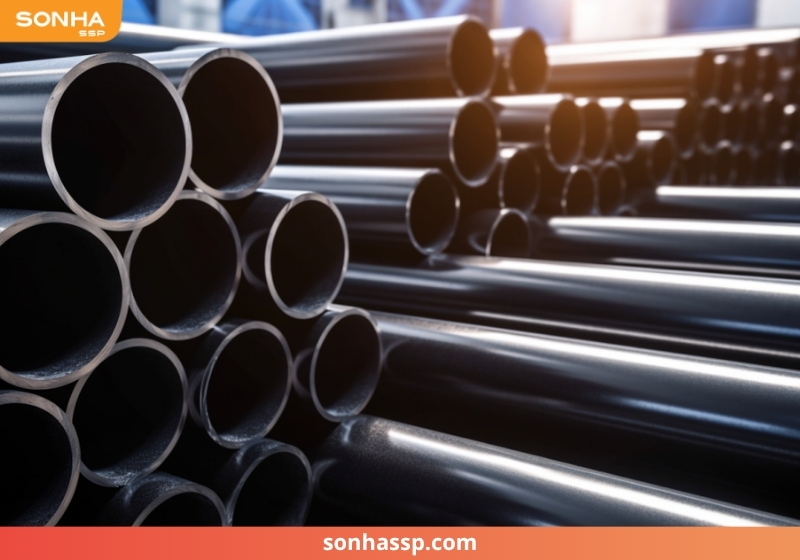
Seamless stainless steel pipes are manufactured using a solid billet process.
Thanks to their seamless structure and superior durability, they are widely used across various industries. Specifically:
- Oil & gas and chemical industries: Seamless stainless steel pipes are used to transport liquids, compressed gases, or highly corrosive chemicals. Their high-pressure resistance and excellent oxidation resistance ensure safe and continuous operation in harsh environments.
- Food, pharmaceutical, and chemical industries: These pipes are used in systems for conveying water, milk, solutions, or steam. Their hygienic properties and corrosion resistance help ensure the quality of end products.
- Other applications: Seamless stainless steel pipes are also used in shipbuilding, boiler manufacturing, fire protection systems, mechanical engineering, and construction projects that require high durability.
It can be seen that seamless stainless steel pipes play a crucial role in many modern technical systems, especially in environments that demand long-term safety and operational stability.
2. Characteristics of Seamless Stainless Steel Pipes
It is no coincidence that seamless stainless steel pipes are preferred in critical industrial systems such as oil & gas, chemicals, or high-pressure boilers. Although their cost is generally higher than that of welded pipes, they offer superior safety and service life. This advantage comes from their mechanical properties.
High-pressure resistance:
Since there is no weld seam, the pipe structure is uniform, minimizing the risk of cracking at welded joints. This allows seamless pipes to operate reliably in high-pressure environments such as steam systems, compressed gas lines, or hydraulic oil systems.
Excellent heat resistance:
Seamless stainless steel pipes can withstand high temperatures without deforming or degrading their mechanical properties. This is especially important in thermal power plants, industrial boilers, and heat exchange systems.
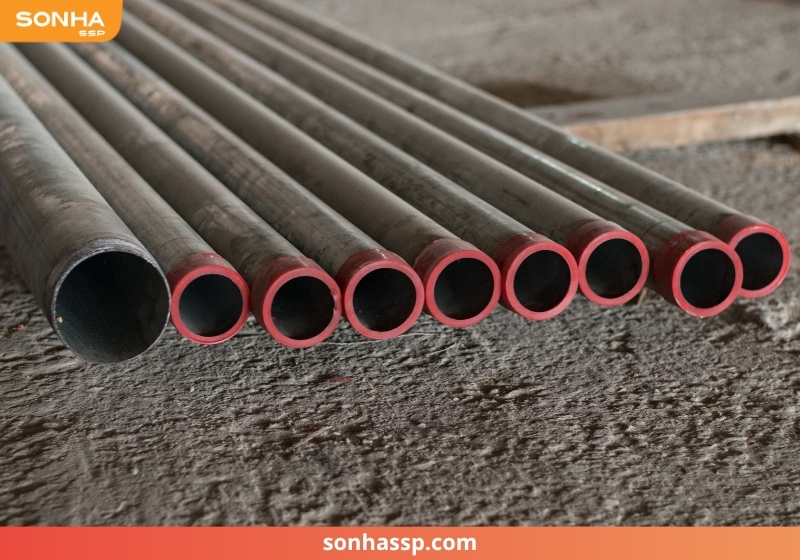
Corrosion resistance is also a key advantage. Depending on the steel grade used, seamless stainless steel pipes can resist the effects of acidic environments, seawater, or strong chemicals. In particular, stainless steel 316, with its molybdenum content, offers enhanced resistance to corrosion in chloride environments.
In addition, seamless pipes have high mechanical strength, good impact resistance, and long service life. The pipe surface can also be polished or pickled to meet both aesthetic and technical requirements.
Thanks to these properties, seamless stainless steel pipes are often selected for projects that require high technical standards and safety.
3. Differences Between Seamless and Welded Stainless Steel Pipes
Currently, the two most common types on the market are seamless and welded stainless steel pipes. Clearly distinguishing between these two types helps businesses choose the right product for their specific needs. To provide a clearer understanding, below is a detailed comparison table.
| Criteria | Seamless Stainless Steel Pipe | Welded Stainless Steel Pipe |
| Manufacturing Method | Solid billet process (seamless) | Welded from stainless steel coil |
| Mechanical Strength | High, excellent pressure and temperature resistance | Moderate, depends on weld quality |
| Aesthetics | Smooth, uniform surface | Weld seam may be visible if not properly finished |
| Cost | Higher due to the complex production process | Lower, suitable for mass production |
| Fabrication Capability | Easy to bend, cut, and join due to ductile structure | Less flexible in shape |
| Typical Applications | Heavy industry, chemicals, oil & gas, etc | Residential use, decoration, and general piping systems |
In practice, not all projects require the use of seamless pipes. For domestic water systems, light industrial applications, and interior or exterior decoration, high-quality welded pipes can fully meet requirements in terms of durability, tightness, and aesthetics, while optimizing investment costs.
In this segment, welded stainless steel pipes manufactured under strict quality control processes, using advanced welding technologies and high-precision weld treatment, can deliver long-lasting performance comparable to seamless pipes.
If your business is looking for stainless steel pipe solutions for various projects, considering high-quality welded ones from reputable manufacturers such as Sơn Hà SSP is a practical approach, ensuring a balance between technical performance and investment efficiency.
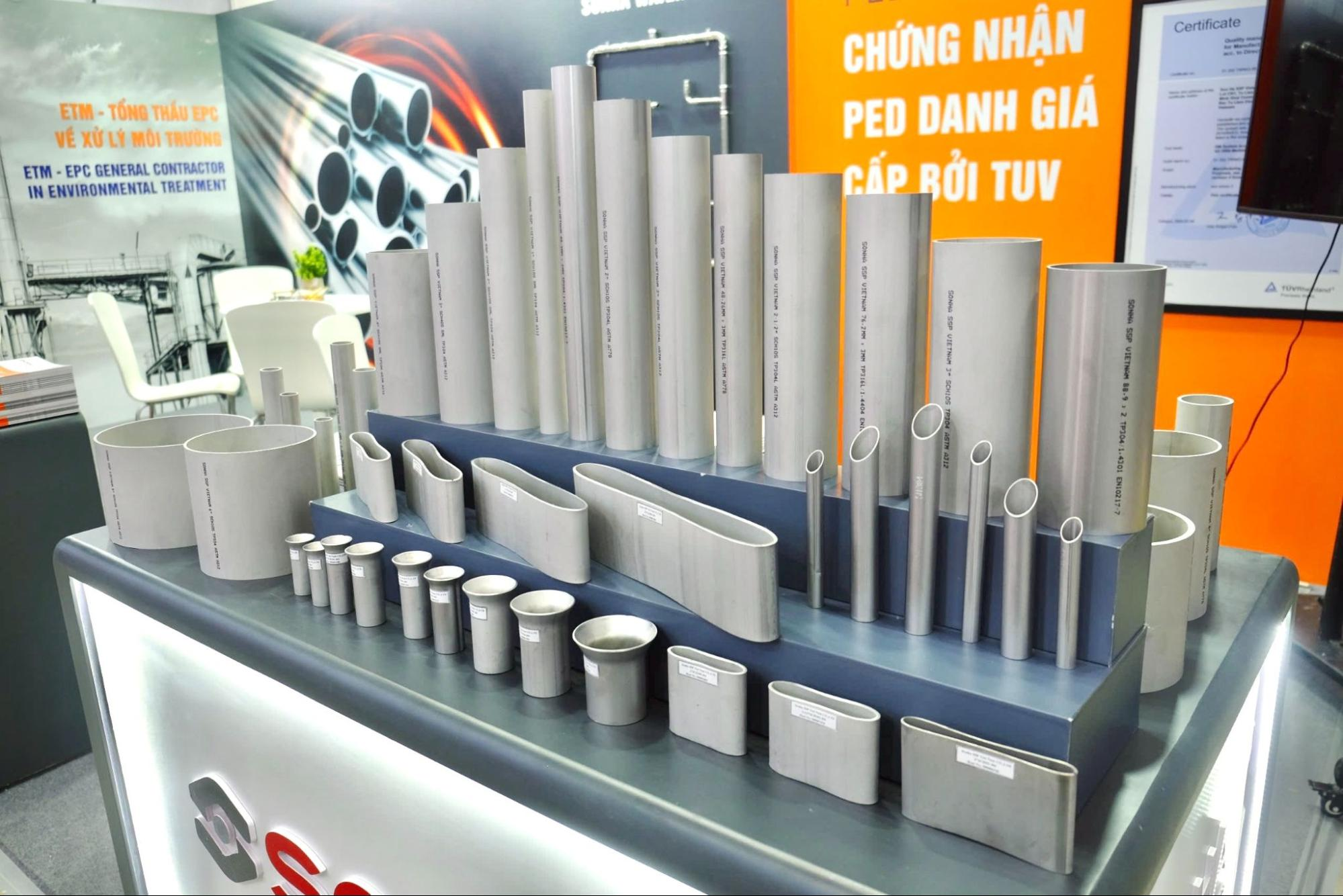
Son Ha SSP Welded Stainless Steel Pipes
4. Where to Buy Reliable Seamless Stainless Steel Pipes
In industrial systems, material costs account for only a portion of total investment, but choosing the wrong material can lead to losses far exceeding the initial value. A pipeline failure due to poor quality can not only disrupt operations but also pose safety and environmental risks.
Therefore, when selecting seamless stainless steel pipes, the key factor is not just price, but also the reliability of the supplier.
Currently, the market offers many suppliers with significantly varying prices. However, not all products meet the required technical standards, steel grades, or thickness as promised. Choosing a reputable supplier is, therefore, a critical step to ensure construction quality and long-term operational durability.
When purchasing, customers should prioritize suppliers that provide full documentation, including:
- Certificate of Origin (CO)
- Certificate of Quality (CQ)
In addition, a reliable supplier should meet the following criteria:
- Products compliant with international standards (ASTM, JIS)
- Wide range of sizes and thicknesses
- Availability of a large inventory
- Clear warranty policies
Moreover, having a highly skilled technical consulting team is essential. They can help customers select the appropriate steel grade and pipe specifications for each specific project, avoiding unnecessary costs or operational risks. Seamless stainless steel pipes are an important material solution across many industries thanks to their seamless structure, high-pressure resistance, and excellent corrosion resistance. Compared to welded ones, they offer clear advantages in systems requiring strict technical standards and harsh working conditions. Through this article, Sơn Hà SSP hopes to have helped you better understand the concept, characteristics, and differences between pipe types, enabling businesses to make the right decisions and optimize investment costs.
📞 Contact us via Hotline 1800 6566 or visit our official website sonhassp.com for consultation and detailed quotations.
>RELATED ARTICLES:
What Is a Ø16 Stainless Steel Pipe? Specifications, Classification, and the Latest Price List
Son Ha SSP Is Honored to Receive the BIS Certification (India)
Decorative Ø40 Stainless Steel Pipe (DN40) – Comprehensive Information from A to Z
How Rigorous is the Production Process of Son Ha SSP Stainless Steel Pipes?
Next latest post
What is a hot rolled coil? Characteristics, applications, and classification
What is a tteel grade? Current steel grade standards
[Q&A] What is stainless steel? Why is it called stainless steel?