

[Q&A] What Is Stainless Steel? Why Is It Called Stainless Steel?
What is stainless steel? Why is this material so widely used today? More than just an ordinary metal, stainless steel possesses outstanding properties that make it a preferred choice for a wide range of projects and products. The article below will help you understand better the nature of stainless steel and why it is increasingly favored in daily life and industrial production.
1. What Is Stainless Steel?
Stainless steel is an alloy containing a minimum of 10.5% chromium and a maximum of 1.2% carbon. The most remarkable feature of this material is its superior corrosion and oxidation resistance compared to ordinary steel, allowing it to maintain durability and aesthetic appeal throughout its service life.
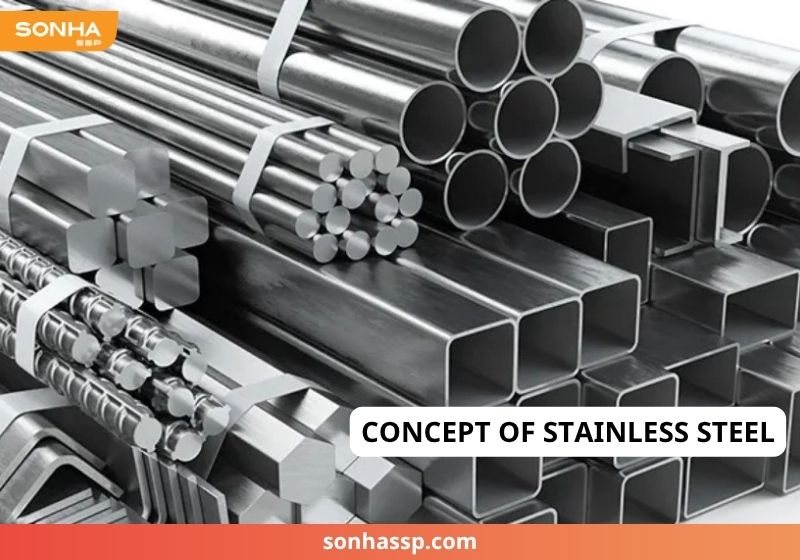
Stainless steel is an alloy of steel
So why is stainless steel so good? The main reason lies in the presence of chromium (Cr). When exposed to oxygen in the air, chromium forms a thin, stable, and tightly adherent chromium oxide layer on the steel surface. This passive layer can self-repair when lightly scratched, thereby protecting the material from corrosive agents in the surrounding environment.
In Vietnam, stainless steel is widely used in various sectors such as construction, mechanical engineering, manufacturing, household appliances, healthcare, and food processing.
2. 5 Outstanding Advantages of Stainless Steel
It is no coincidence that stainless steel is widely used in many projects. Below are its key advantages:
- Superior corrosion and oxidation resistance:This is the most prominent advantage of stainless steel compared to many other metal materials. Thanks to its chromium content, stainless steel can withstand the effects of humid environments, chemicals, and air exposure.
- High heat resistance:Stainless steel can operate stably in high-temperature environments. The material is less prone to deformation when exposed to heat, making it suitable for a wide range of industrial and residential applications.
- Easy fabrication: Stainless steel can be cut, bent, welded, and formed to meet various requirements. The fabrication process is convenient and ensures high precision. As a result, it effectively meets diverse technical specifications.
- Easy to clean: The smooth surface of stainless steel resists dirt buildup, making cleaning and maintenance much quicker and easier.
- Recyclability: Stainless steel is an environmentally friendly material. It can be almost entirely recycled while retaining its mechanical properties. The recycling process does not degrade the material’s quality. Therefore, using stainless steel helps conserve resources and minimize negative environmental impacts.
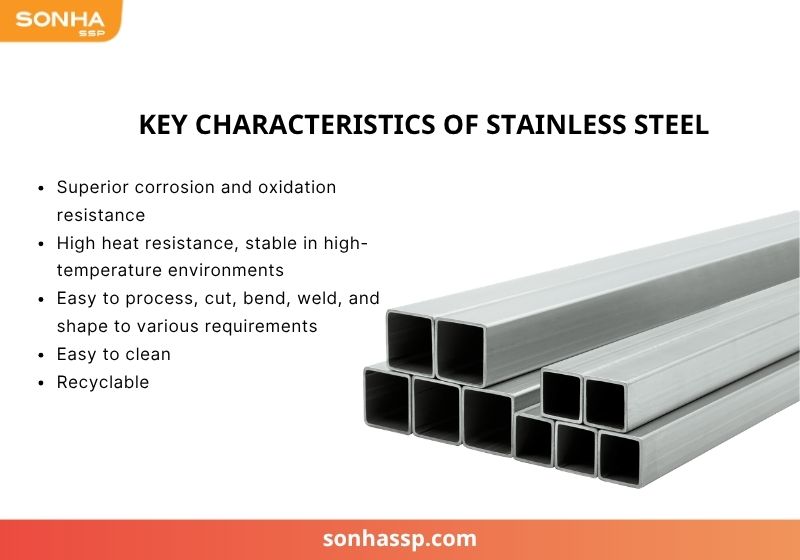
Outstanding Advantages of Stainless Steel
3. How Many Types of Stainless Steel Are There?
There are four main types of stainless steel, classified based on their microstructure and mechanical properties: Austenitic, Ferritic, Austenitic-Ferritic (Duplex), and Martensitic.
3.1. Austenitic Stainless Steel
Austenitic stainless steel is the most widely used type today. This group includes familiar grades such as SUS 301, 304, 304L, 316, 316L, 321, and 310S. Austenitic stainless steel stands out for its excellent corrosion resistance and high heat resistance. The material maintains stable mechanical properties over a wide temperature range and is easy to fabricate.
Thanks to these characteristics, Austenitic stainless steel is widely applied in the production of household appliances, storage tanks, industrial piping systems, ships, and various construction projects.
3.2. Ferritic Stainless Steel
Ferritic stainless steel has mechanical properties relatively similar to mild steel but offers higher corrosion resistance. Typical grades in this group include SUS 430, 410, and 409. Ferritic stainless steel features a stable structure, good heat resistance, and magnetic properties. This type of stainless steel is commonly used in the manufacturing of household appliances, boilers, and interior architectural components, where durability and cost efficiency are important considerations.
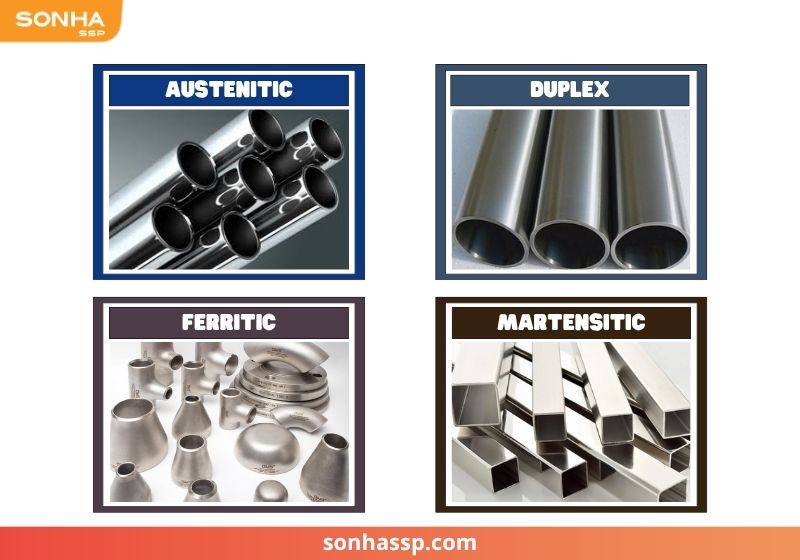
Four Common Types of Stainless Steel
3.3. Austenitic–Ferritic (Duplex) Stainless Steel
Duplex stainless steel is a combination of Austenitic and Ferritic microstructures. As a result, it offers higher mechanical strength than conventional Austenitic stainless steel while still maintaining excellent corrosion resistance. Duplex stainless steel typically contains a higher chromium content and a lower nickel content compared to Austenitic grades. With its strong load-bearing capacity and resistance to harsh environments, Duplex stainless steel is widely used in the petrochemical industry, pulp and paper production, shipbuilding, and heavy industrial construction.
3.4. Martensitic Stainless Steel
Martensitic stainless steel contains approximately 11% to 13% chromium. This type of stainless steel is known for its high hardness and strength. Its mechanical properties can be further enhanced through heat treatment. However, its corrosion resistance is moderate compared to other stainless steel types.Thanks to its strong mechanical characteristics, Martensitic stainless steel is commonly used in manufacturing turbine blades, knives, cutting tools, and machine components that require high hardness.
4. What Is the Difference Between Stainless Steel and Inox?
In reality, stainless steel and inox refer to the same material. “Inox” is simply the common term used in daily life and commercial contexts. The word “inox” originates from the French term inoxydable, meaning “non-oxidizable. ”Meanwhile, “stainless steel” is the technical term commonly used in professional documents, material standards, and in-depth industry publications. Both terms refer to a steel alloy containing chromium, known for its corrosion and rust resistance.
5. Practical Applications of Stainless Steel in Daily Life
Stainless steel appears in almost every aspect of modern life, from household spaces to specialized industries. Specifically:
- In daily life: Stainless steel is widely used in kitchen equipment and household appliances. Products such as sinks, pots, basins, and cooking utensils prioritize stainless steel due to its easy cleaning and long service life.
- In the medical field: Stainless steel is used to manufacture surgical instruments and medical equipment, meeting strict hygiene and antibacterial requirements.
- In interior design and architecture: Stainless steel is utilized for handrails, balustrades, door frames, and decorative details, offering both durability and aesthetic appeal.
- In construction and industry: Stainless steel is applied in piping systems, storage tanks, load-bearing structures, and components exposed to harsh environments.
- In addition, this material plays an important role in the food processing, chemical, and transportation
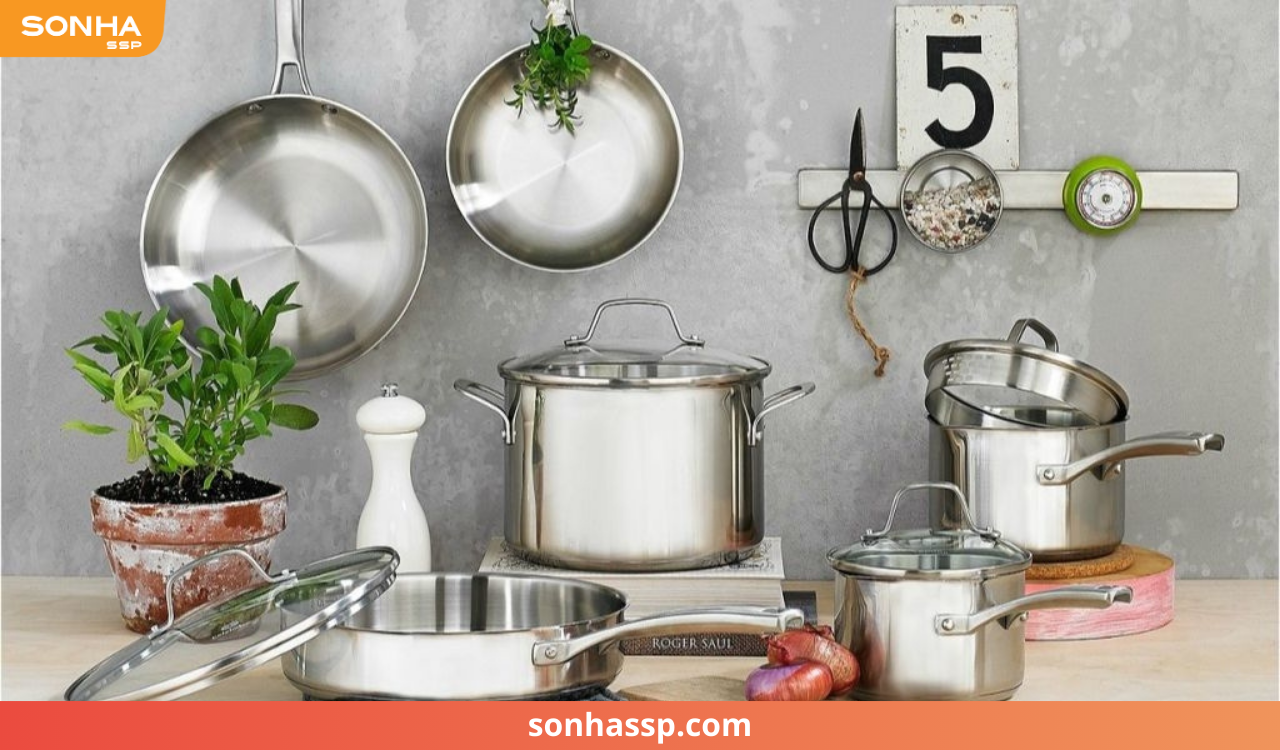
Stainless steel is used to manufacture pots and pans.
>RELATED ARTICLES:
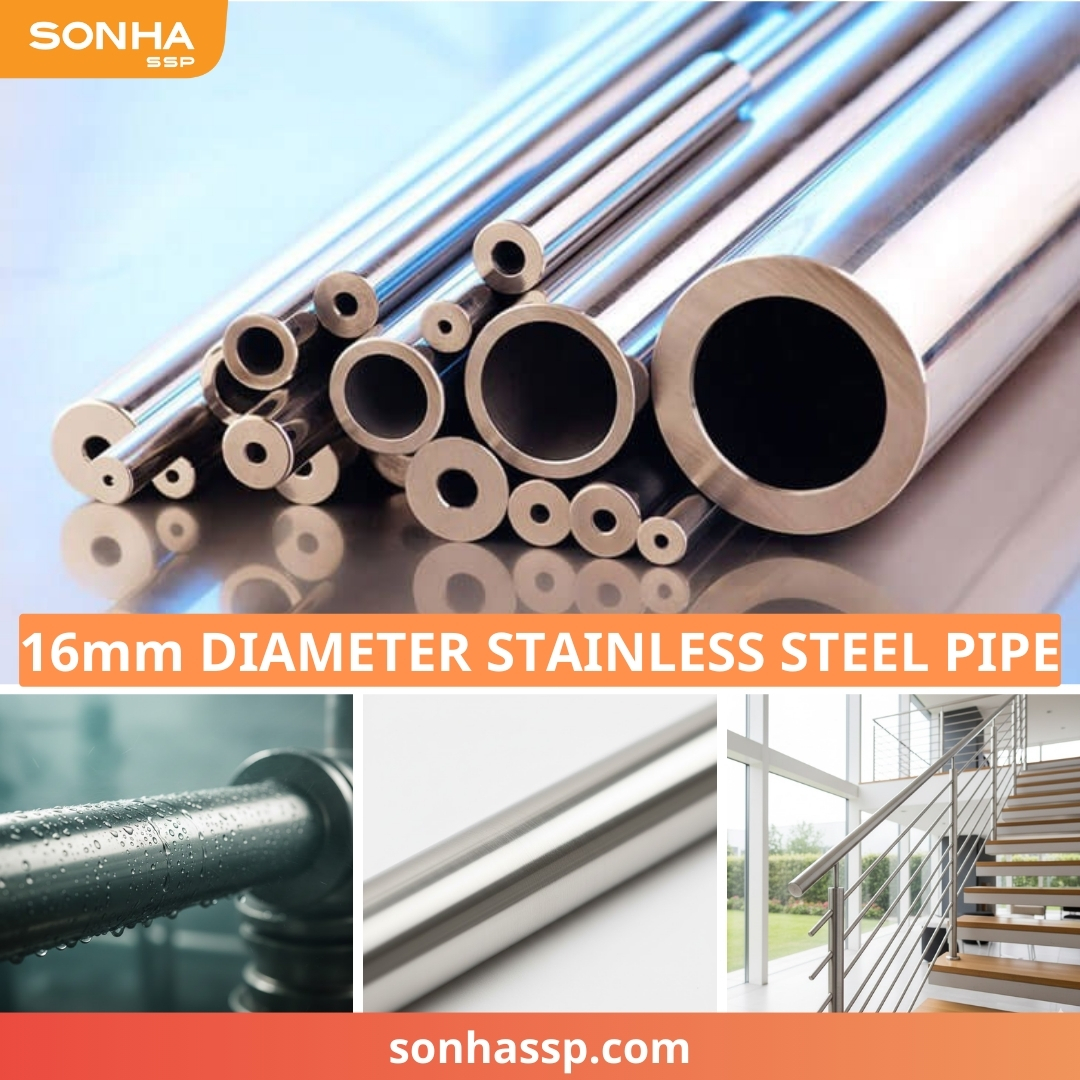
What Is a Ø16 Stainless Steel Pipe? Specifications, Classification, and the Latest Price List
Son Ha SSP Is Honored to Receive the BIS Certification (India)
Decorative Ø40 Stainless Steel Pipe (DN40) – Comprehensive Information from A to Z
Next latest post
What Is a Hot Rolled Coil? Characteristics, Applications, and Classification
What Is a Steel Grade? Current Steel Grade Standards
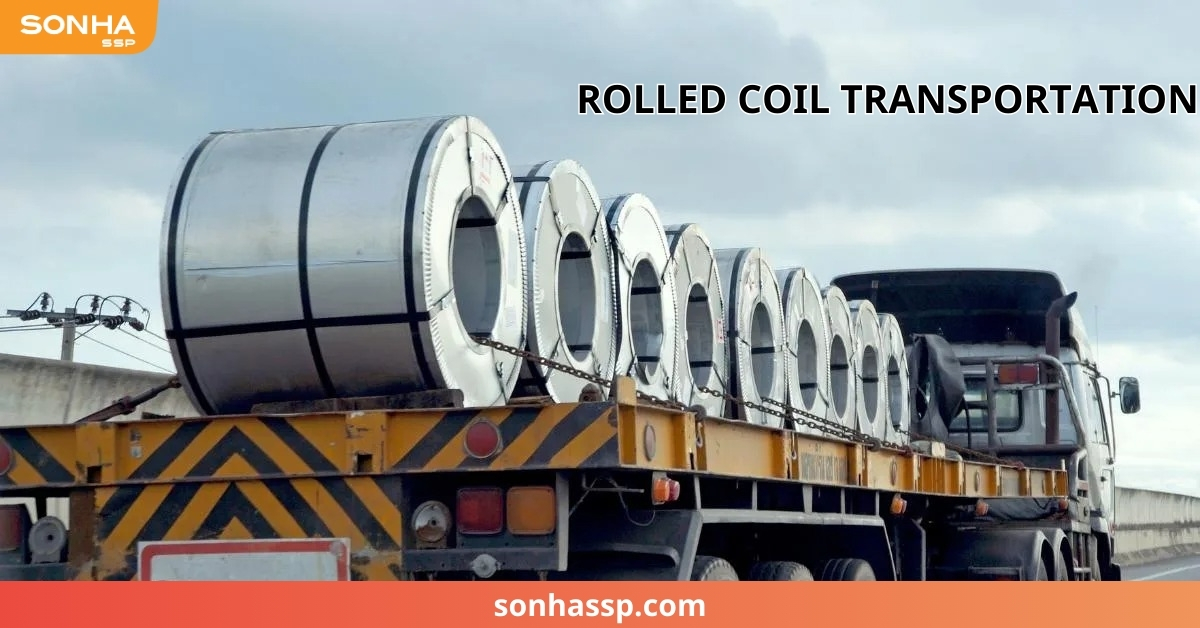
Safe Stainless Steel Pipe Transportation Process and Important Considerations