

Cold-rolled coil: Definition, advantages, and the 5-step production process
In today’s market, steel coils are mainly divided into hot rolled coil and cold rolled coil. Each type has its own technical characteristics and application scope, meeting diverse needs in construction and industry. Among them, cold rolled coil is increasingly preferred due to its high precision, smooth surface, and flexible fabrication capabilities. So, what is cold rolled coil and how is it produced? Let’s explore with Sơn Hà SSP in the article below.
1. What Is a Cold Rolled Coil?
Cold rolled coil is a steel product manufactured by rolling steel at ambient (room) temperature after it has undergone the hot rolling process. This process is used to reduce thickness, improve surface quality, and enhance hardness.
Compared to hot rolled steel, cold rolled coil has:
- A smooth, bright, and aesthetically pleasing surface
- Better thickness and dimensional accuracy
- Improved mechanical properties due to cold deformation and heat treatment
- Suitability for forming, stamping, and bending processes
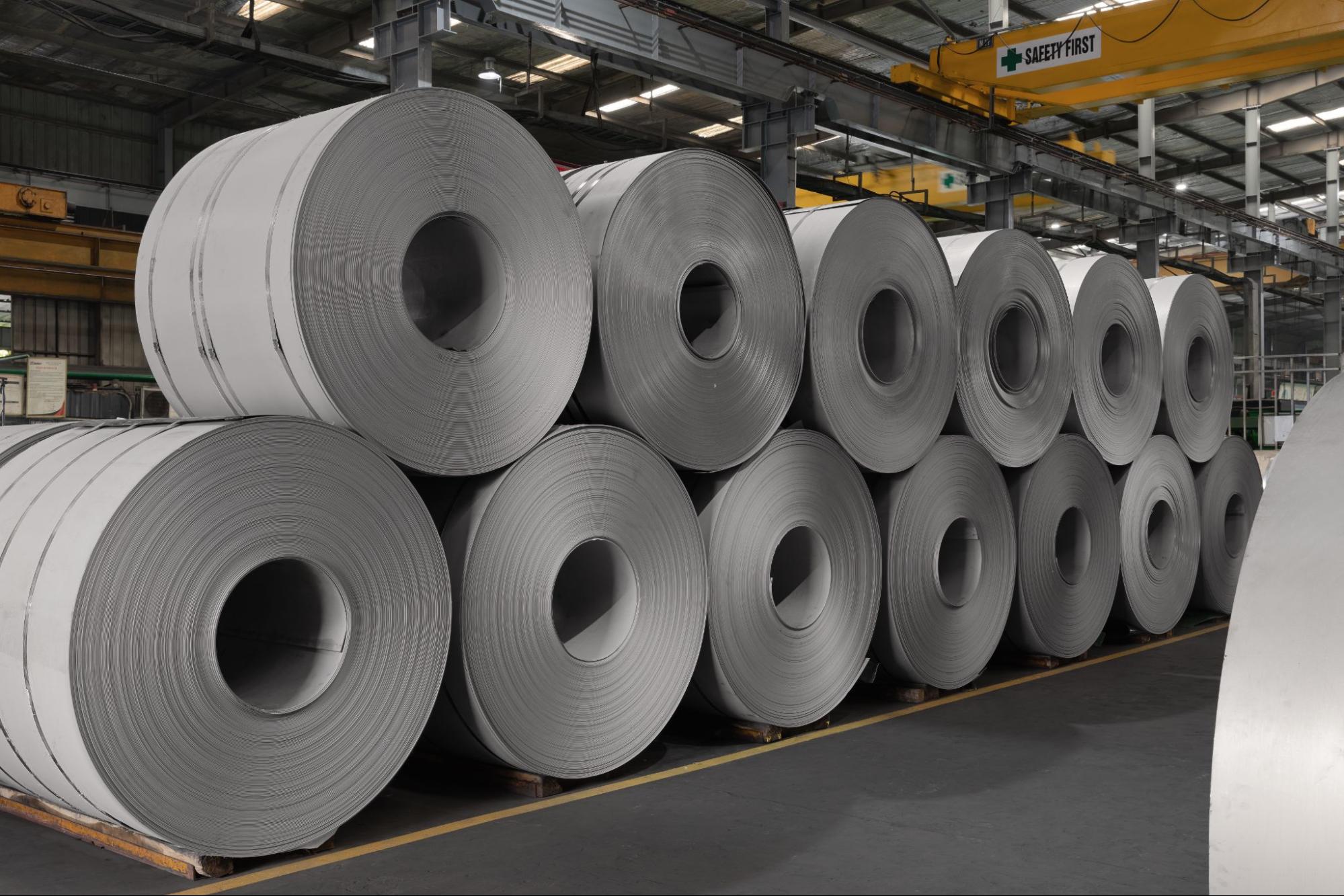
Thanks to these advantages, cold rolled coil is widely used in precision mechanical manufacturing such as automotive and motorcycle production, electrical cabinets, electronic device casings, household appliances, steel pipes, light steel structures, and various industrial products that require high surface quality, strength, and formability.
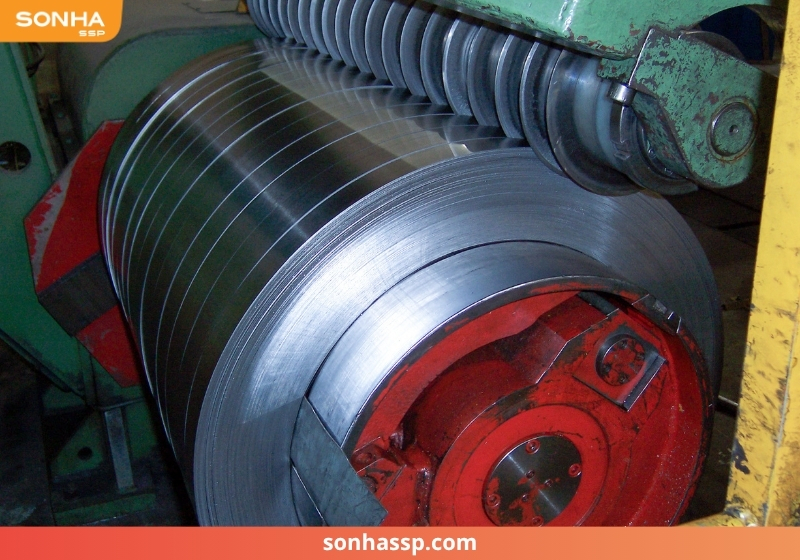
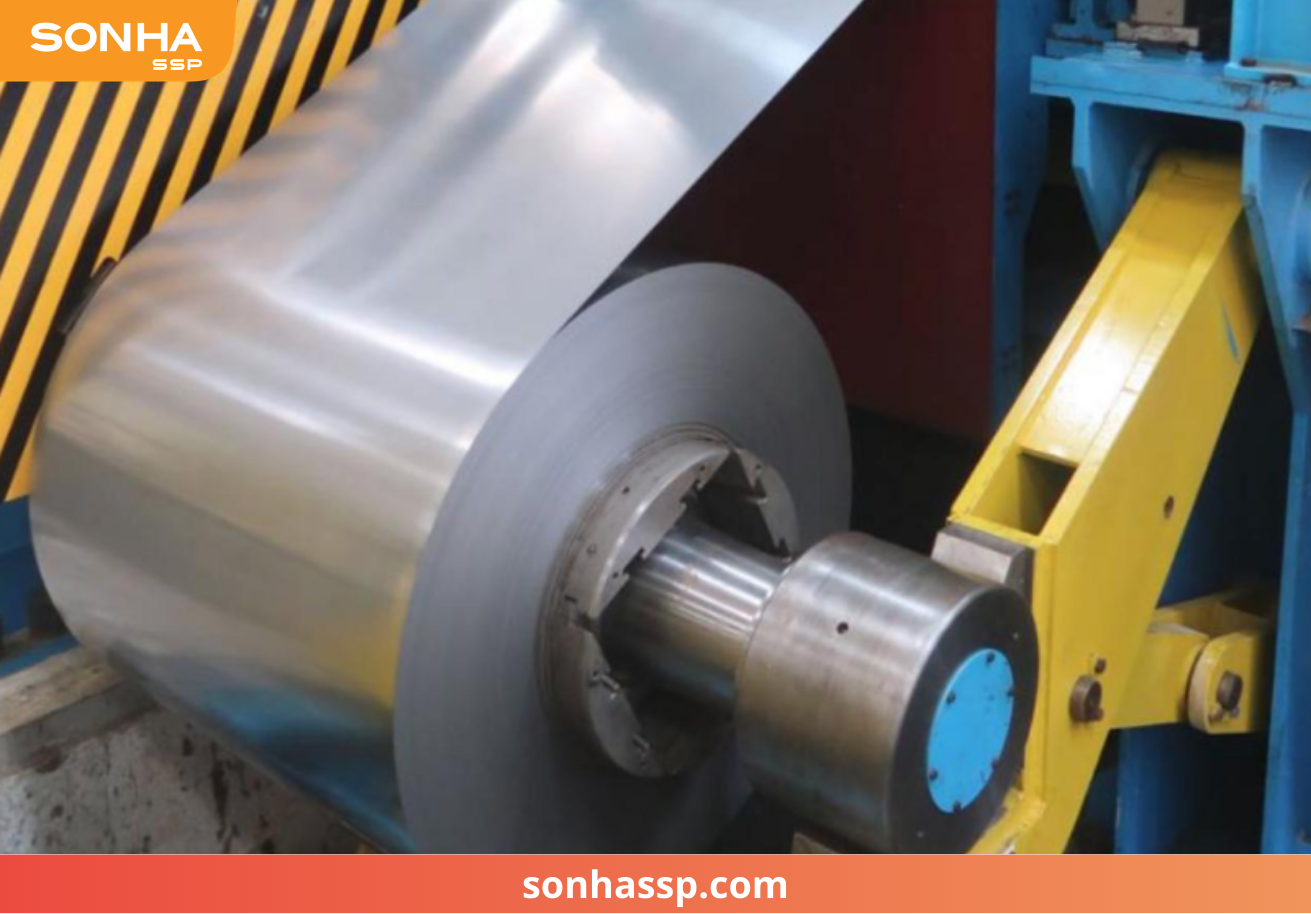
Cold rolled coil has a bright, smooth, and polished surface.
2. 5-Step Process of Cold Rolled Coil Production
To produce a cold rolled coil that meets technical standards, manufacturers must follow a strict production process consisting of the following five main steps.
2.1. Raw
Material Preparation
The first step in the cold rolled coil production process is preparing the input material. The main raw material is hot rolled coil (HRC) that has been previously produced.
At this stage, the factory conducts quality inspections of the hot rolled coils, including:
- Chemical composition
- Thickness
- Surface defects
- Material uniformity
Thorough inspection ensures that the raw material meets technical requirements before entering the cold rolling line. If the input material does not meet standards, the final product will be directly affected in terms of mechanical properties and dimensional accuracy. Once approved, the steel coil is fed into the uncoiling system and prepared for the next processing stage
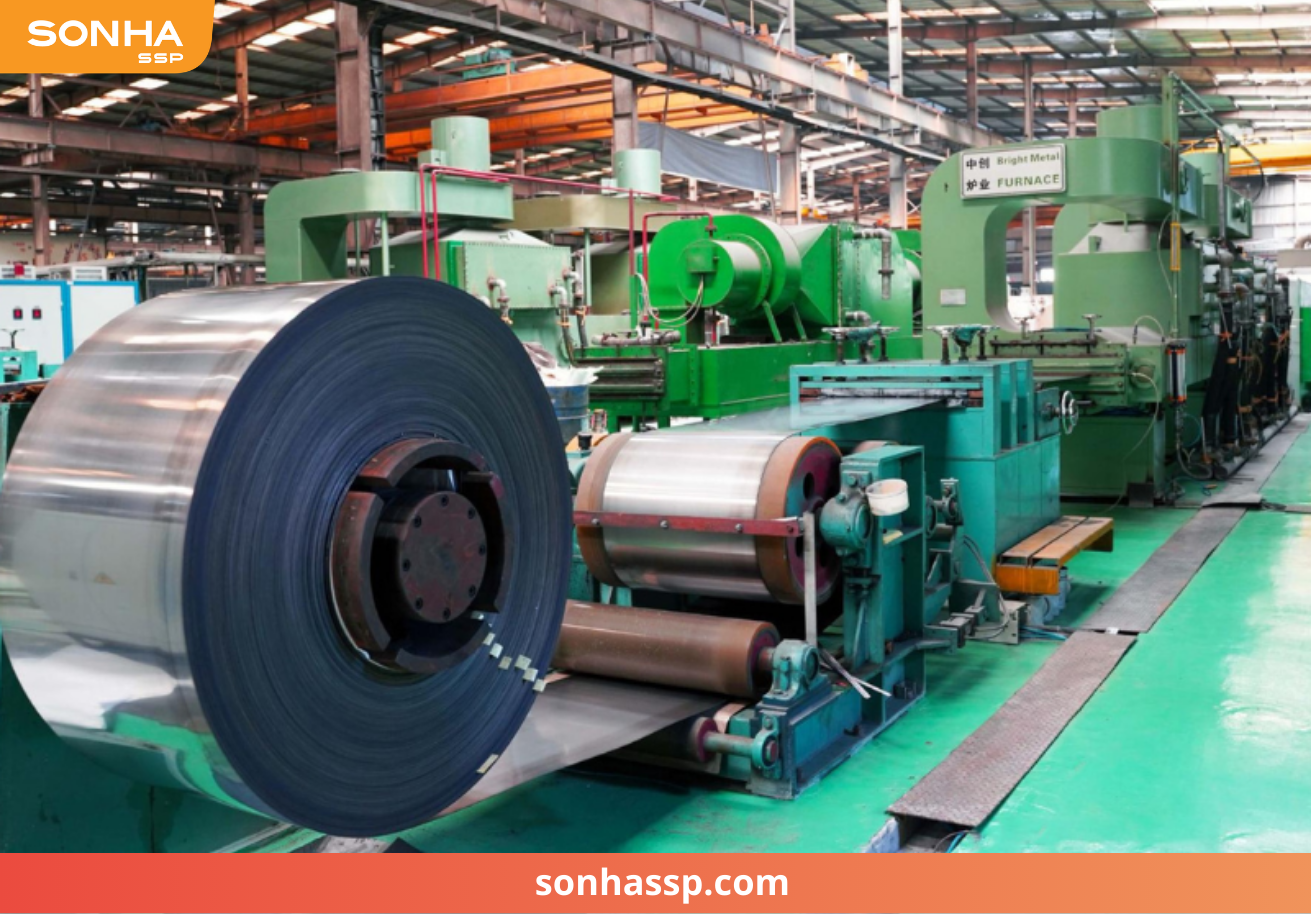
Hot rolled coil is the raw material used to produce cold rolled coil
2.2. Surface Cleaning (Pickling)
Before cold rolling, hot rolled steel must be cleaned to remove oxide scale, rust, oil, and other adhered impurities. This step is known as surface cleaning (pickling). Hot rolled coils are typically cleaned using an acid pickling process.
The steel is passed through acid solution tanks, commonly containing hydrochloric acid (HCl) or sulfuric acid (H₂SO₄), to remove the iron oxide layer formed during hot rolling. If this oxide layer is not removed, it can cause surface scratches and negatively affect the quality of the cold rolling process.
After pickling, the steel is thoroughly rinsed with water, neutralized to remove residual chemicals, and dried before moving on to the cold rolling stage.
This cleaning step plays a critical role, as the cleaner the steel surface, the smoother and more aesthetically refined the final cold rolled product will be.
2.3. Cold Rolling Process
This is the core step in the entire cold rolled coil production process. At this stage, the steel is passed through a rolling mill system consisting of multiple pairs of rollers. The gap between the rollers is gradually reduced to decrease the thickness according to technical requirements.
Rolling Process
Unlike hot rolling, the cold rolling process takes place at room temperature. The steel is not reheated but is directly compressed between high-precision rollers. As a result, the product achieves precise thickness, a smooth and bright surface, good flatness, and improved mechanical properties due to cold deformation.
During rolling, high pressure acts on the steel, causing deformation of its crystal structure, which increases hardness and tensile strength. However, this also reduces the material’s ductility. Therefore, after cold rolling, the steel must undergo annealing to restore the necessary ductility for further processing.
2.4. Annealing Process
After cold rolling, the steel becomes harder and more brittle due to cold deformation. To improve ductility and workability, cold rolled coil must undergo annealing.
The annealing process is carried out in a specialized furnace under strictly controlled conditions, following these steps:
- Step 1: The steel is heated to a temperature calculated and controlled according to technical requirements.
- Step 2: The material is held at a specific temperature for a certain period to ensure uniform heat distribution and stabilize the metal structure.
- Step 3: The steel is slowly cooled in the furnace or in a controlled environment to minimize residual stress and prevent unwanted structural changes.
This process helps recrystallize the metal structure, reduce internal stress, and improve ductility. As a result, annealed cold rolled steel can meet requirements for deep drawing, bending, and forming in manufacturing. Depending on the intended application, manufacturers can adjust the annealing process to achieve desired mechanical properties.
2.5. Inspection and Quality Control
The final step in the 5-Step cold rolled coil production process is inspection and quality control. At this stage, the finished steel coils are comprehensively evaluated based on:
- Thickness and dimensional tolerance
- Flatness
- Mechanical properties such as tensile strength and yield strength
- Surface quality (presence of defects)
3. Conclusion
Cold rolled coil is an essential material in many modern industries thanks to its high precision, aesthetic surface, and stable mechanical properties. To produce high-quality products, manufacturers must strictly follow a 5-step process: raw material preparation, surface cleaning, cold rolling, annealing, and quality inspection.
Understanding the cold rolled coil production process not only helps businesses choose the right products for their needs but also enables them to evaluate the capability of suppliers. In an increasingly competitive market, ensuring quality from the production process is the key factor in creating sustainable value for cold rolled steel products.
Currently, Sơn Hà SSP is a trusted supplier of high-quality cold rolled coils that fully meet stringent technical standards in both domestic and international markets. With modern production lines, a strict quality control system, and an experienced technical team, Sơn Hà SSP is committed to delivering products with high precision, standard surface quality, and stable mechanical properties tailored to each customer’s specific requirements.
>RELATED ARTICLES:
What Is a Ø16 Stainless Steel Pipe? Specifications, Classification, and the Latest Price List
Son Ha SSP Is Honored to Receive the BIS Certification (India)
Decorative Ø40 Stainless Steel Pipe (DN40) – Comprehensive Information from A to Z
How Rigorous is the Production Process of Son Ha SSP Stainless Steel Pipes?
Next latest post
The true definition of seamless stainless steel pipes. Why are they critical for high-pressure systems?
What is a hot rolled coil? Characteristics, applications, and classification
What is a tteel grade? Current steel grade standards